 |
 |
The Self
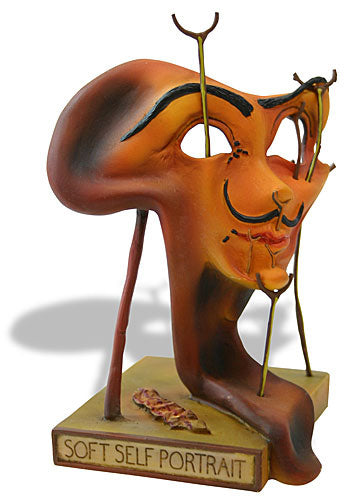
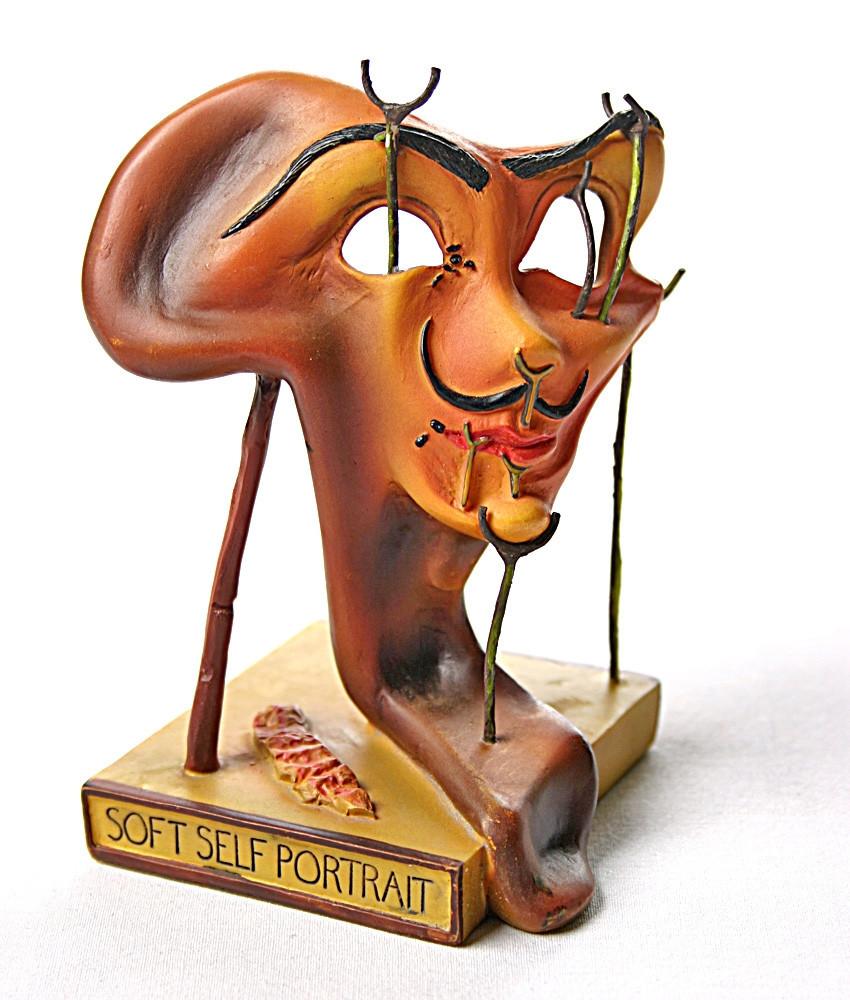
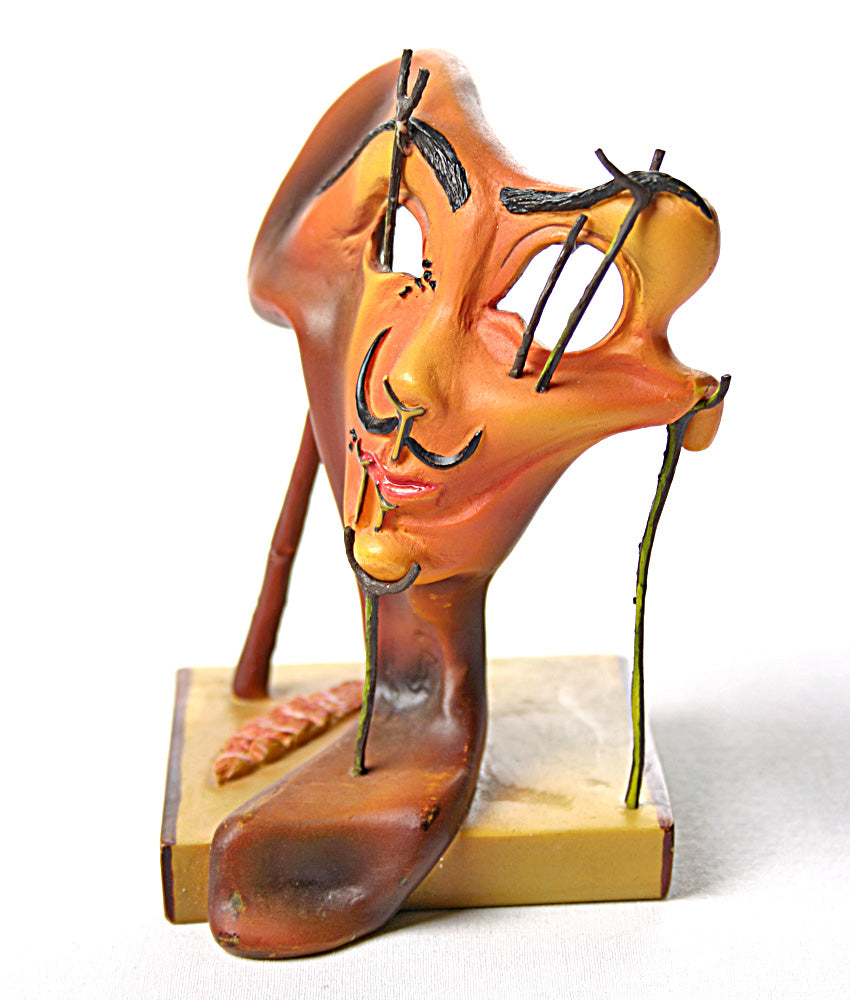
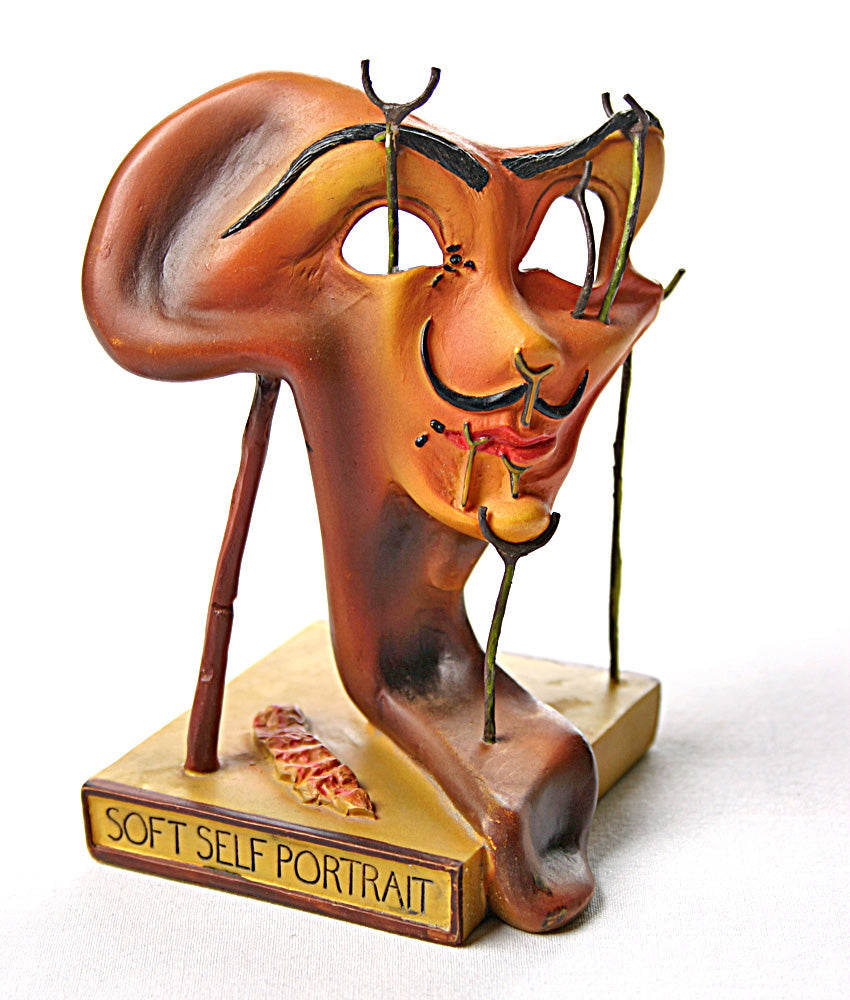
Portrait with Fried Bacon statue by Salvador Dali is a statue adaptation from
his famous painting of the same name. It is part of the Parastone Mouseion 3D Collection.
Dali
himself -- Modern Art Surrealist Master Painter -- styles his
self-portrait as "an anti-psychological self-portrait, instead of
painting the soul, or the inner of one-self, to paint solely the
appearance, the cover, my soul's glove. This glove of my soul can be
eaten and is even a little sharp, like high-bred game; therefor ants
appear together with the fried bacon. As the most generous of all
painters I continuously offer myself as food and thus give our era the
most delicious delicacies." Dali painted this self-portrait during his
eight-year-exile in the United States, where he had fled from the
Spanish civil war. The, sometimes, childlike enthusiasm and the drive of
the American society appealed to Dali and he had a most productive
period there. Under this influence he appeared to reverse his
"paranoid-critical" method. Now he painted more from the inside out, as
his comment on his self-portrait indicates.
|
|
ABOUT THE ARTWORK: As
part of the Surrealism Ar Movement, Dali painted this self-portrait
during his eight-year-exile in the United States, where he had fled from
the Spanish civil war. The sometimes childlike enthusiasm and the drive
of the American society appealed to Dali and he had a most productive
period there. Under this influence he appeared to reverse his
"paranoid-critical" method. Now he painted more from the inside out, as
his comment on his self-portrait indicates.
ABOUT THE ART PERIOD: Dali
(1904-1989) sublimated his life in his art of painting. Relying on
great craftsmanship, acquired in all sorts of art experiments, he lifted
surrealism, in an inimitable self-willed manner, to exceptional
heights. He photographed, as it were, associatively what was enacted in
his mind. Incited by, at the time, new psychological insights he tried
to fix his subconscious with images, and to visualize his dreams in all
their inscrutable symbolism. It was for this purpose that he developed
his famous "paranoid-critical" method. To us, one dimensional mortal
souls, only the paintings and other expressions remain as fascinating
witnesses to a literally unbelievably intense and active life. Perhaps
we are so drawn to them because not only do they allow us to have a look
inside Dali’s subconscious, but they also are a mirror reflecting our
own souls.
|
|
|
 |