


Dali Dream Caused by a Bee Pomegranate Sculpture – Surreal Tiger Replica
Dali Dream Caused by a Bee Pomegranate Sculpture – Surreal Tiger Replica
SKU:SD09
In stock
Couldn't load pickup availability
A Tiger's Leap From a Dream, Frozen in Dali's Surreal Style
This Dali Dream Caused by a Bee statue adapts one of Salvador Dali's most explosive dream visions into a dramatic three-dimensional sculpture. A snarling tiger launches from the mouth of an enormous fish, capturing the instant before waking. Inspired by Dali's dream imagery and Freud's ideas about external stimuli shaping dreams, this surrealist figurine brings motion, tension, and symbolism into one compact display. Place it on a desk or shelf to spark conversation and curiosity about Dali's dream-based art.
- Measures 8.25 in H x 5.25 in L x 1.5 in D. Weighs 0.4 lbs with detachable metal stand.
- Material: Hand-painted resin with detailed color accents.
- Includes full-color artwork card and multilingual description card.
- Part of the collectible Parastone Mouseion 3D Collection. PN SD09.
- Licensed adaptation created with approval from the Dali Foundation.
The Tiger, the Fish, and Dali's Dream Logic: Dali Dream Caused Bee
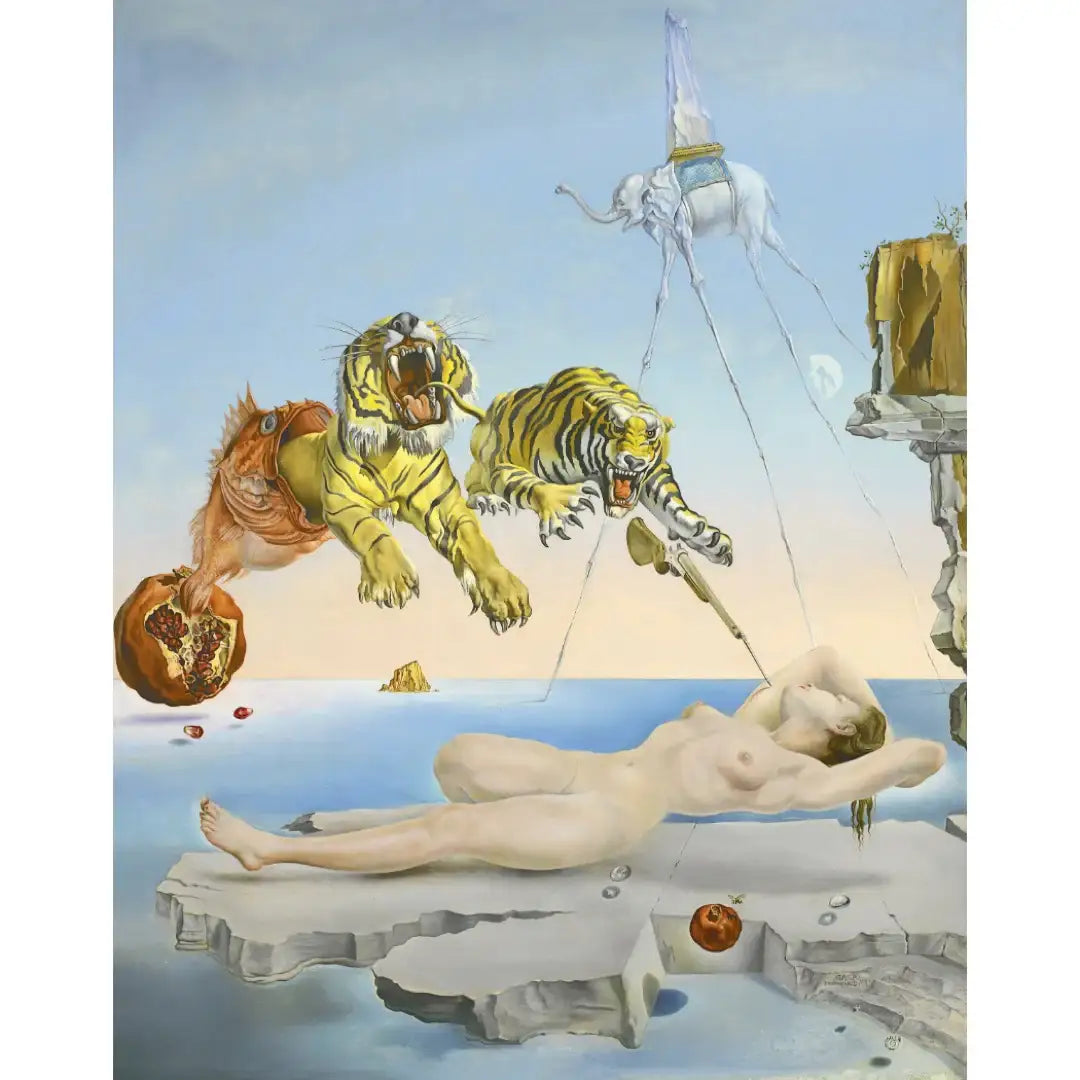
The sculpture captures the exact moment a tiger erupts from a fish's mouth in a burst of dreamlike energy. The image comes from Dali's 1944 painting, titled "One second before awakening from a dream caused by the flight of a bee around a pomegranate." This Dali Dream Caused by a Bee statue focuses on the central tiger figure as it leaps forward in mid-snarl. The curved line of the fish and the extended tiger body show Dali's interest in sudden movement inside dream scenes. Pair it with other pieces from our Dali and Surrealism collection for a complete dreamscape display, such as Elephant with Thin Legs.
Freud, Dreams, and Dali's Imagination
Dali used Freud's theories as inspiration for many works that explore the subconscious mind. In this painting, a bee buzzing near Gala's sleeping body becomes the trigger for the violent dream. The rifle pointing toward her symbolizes the shock that wakes her, while the fish and tiger represent the speed and intensity of the imagined moment. This sculpture recreates that brief second between stimulus and awakening. It reflects Dali's belief that dreams can explode with meaning even when caused by a simple sound. The piece works well alongside surreal book titles from our art and history book collection.
Mysticism, Symbolism, and Dali's Surreal Style
Dali's postwar style often blended religious themes, psychological ideas, and dream analysis. The pomegranate appears as both a lure for the bee and a symbol of hidden meaning. Floating forms, elongated shadows, and sudden movement show Dali's interest in spiritual imagery mixed with dream logic. In the background of the original painting, an elephant with long, thin legs defies gravity, just like the elephants found in our Dali replicas. The Dali Bee Dream statue keeps these elements alive through careful sculptural detail.
From Dali's Canvas to a 3D Sculpture by Parastone
Dali Dream Caused by Bee painting shows the fish and tiger in a single flat explosion of movement. To adapt this scene into sculpture, Parastone had to imagine the hidden sides and invent depth consistent with Dali's surreal style. The tiger's muscles, fish scales, and curved motion lines were recreated to feel as if the figures burst outward from the painting. Like their other Dali pieces, Parastone balanced faithfulness to the artwork with creative interpretation. The metal stand keeps the tiger suspended in mid-air, echoing Dali's frozen split-second imagery.
Surreal Art Lovers Get Dreamy Over It
This sculpture appeals to collectors who enjoy bold dream scenes and unexpected symbolism. The tiger's fierce expression and the fish's dramatic shape make it an eye-catching display piece. It suits desks, shelves, and art-inspired room decor. Pair it with the Dali Rearing Horse from the same series of dream imagery.
For more reading from the web, we suggest:


FAQs
Got a question? We are here to answer