


Garden of Earthly Delights Small Ceramic Vase – Hieronymus Bosch Art
Garden of Earthly Delights Small Ceramic Vase – Hieronymus Bosch Art
SKU:VAS06JB
In stock
Couldn't load pickup availability
Small Ceramic Vase with Bosch’s Garden of Earthly Delights
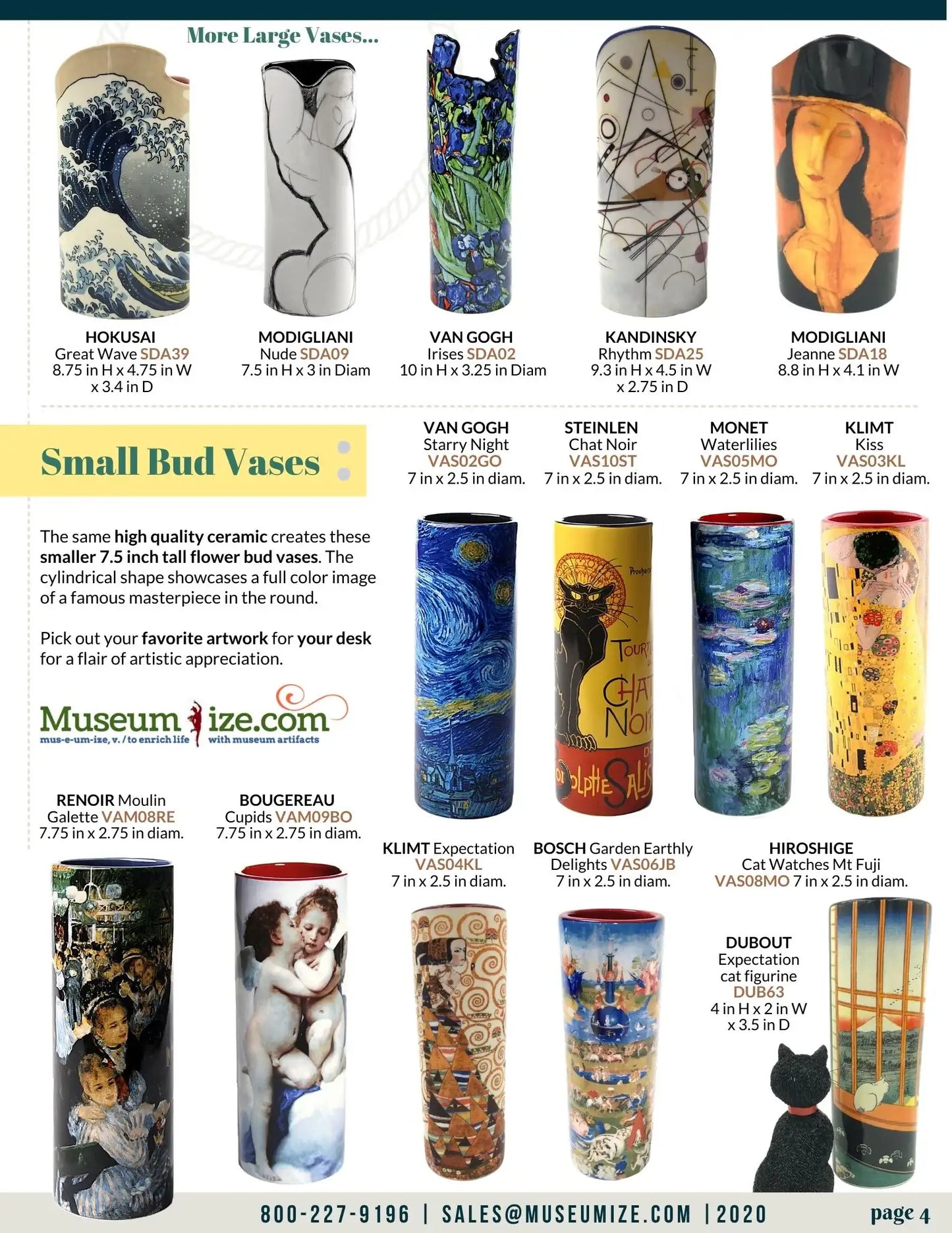
This small Hieronymus Bosch vase wraps a famous painting around a functional everyday object. The central panel of The Garden of Earthly Delights appears on all four sides in full-color printing. Nude figures, strange structures, and hybrid creatures turn the vase into a tiny tour through Bosch’s imagination.
The compact size makes it ideal for a desk, nightstand, or bookshelf. It works beautifully for a few flower stems or a simple bud arrangement. This Garden of Earthly Delights vase lets you enjoy Renaissance art in a small, friendly format that fits easily into modern spaces.
Design and Imagery on the Vase
Each side of the Hieronymus Bosch vase shows a different section of the central panel. You can turn the vase to follow the clusters of figures and animals as they move through the scene. Bosch filled this part of the triptych with people enjoying fruit, play, and unusual encounters. The imagery feels light at first glance, but it carries deeper meaning about desire and choice.
The ceramic surface gives the images a smooth, glossy finish. Colors appear bright and clear, echoing the original painting. The narrow rectangular shape makes the piece easy to place on a shelf or narrow table. It works as a Bosch ceramic art gift for anyone who loves museums, symbolism, or slightly mischievous décor.
A Small Vase with Big Art History
In the original triptych, the central panel of The Garden of Earthly Delights shows a world full of activity. Figures enjoy pleasures without thinking of the consequences. Many scholars see this as a vision of humanity caught in worldly delight. The left panel suggests paradise, while the right panel shows a darker, hellish future. This small Hieronymus Bosch vase focuses on the bright, crowded middle scene.
The imagery hints at questions Bosch posed to his viewers. What happens when sensation and curiosity replace careful judgment? What is the line between joy and excess? With this Garden of Earthly Delights vase on a shelf, you keep those questions close at hand, in a very approachable way.
About Hieronymus Bosch
Hieronymus Bosch (c. 1450–1516) lived and worked in ’s-Hertogenbosch in the Duchy of Brabant. He belonged to a family of painters and absorbed the visual language of medieval manuscript illumination. At the same time, he responded to changing ideas in the early Renaissance. His art combines moral teaching with inventive, often surprising imagery.
Bosch used hybrid creatures, crowded scenes, and unusual landscapes to explore temptation and spiritual danger. His style combines sharp detail with dreamlike invention. This Hieronymus Bosch vase reflects that legacy. It places a complex painting into a small format you can enjoy every day.
About the Vase and Parastone
This small Hieronymus Bosch vase is part of the Parastone Museum Gift Collection. The company specializes in adapting famous artworks into accessible objects for the home. The vase is made from ceramic with four-color printing on the exterior. It is sized for a few stems rather than a large bouquet.
- Material: Ceramic with four-color printed decoration.
- Collection: Parastone Museum Gift Collection, item VAS06JB.
- Size: 7 in H × 2.5 in W × 2.5 in D.
- Weight: 14 oz.
- Use: Ideal for a few flower buds or a small arrangement.
- Browse more Bosch designs: Visit the Bosch Collection .
Display and Gift Ideas
This Bosch ceramic art gift works nicely on a work desk with a single flower, on a bookshelf beside art books, or on a small side table. Pair it with one of your Bosch figurines to create a miniature “cabinet of curiosities” at home. The vase also makes a thoughtful gift for someone who has visited European museums or who enjoys Northern Renaissance art.
For More Reading
- Learn more about the painting in context on Wikipedia’s article on Bosch’s Garden of Earthly Delights .
- For an accessible art-historical discussion, visit SmartHistory’s overview of the triptych .


FAQs
Got a question? We are here to answer