


Degas Spanish Dancer Statue – La Danse Espagnolle Ballerina Study Sculpture
Degas Spanish Dancer Statue – La Danse Espagnolle Ballerina Study Sculpture
SKU:DE06
In stock
Couldn't load pickup availability
A Dancer’s Practice Pose: Degas Spanish Dancer Statue
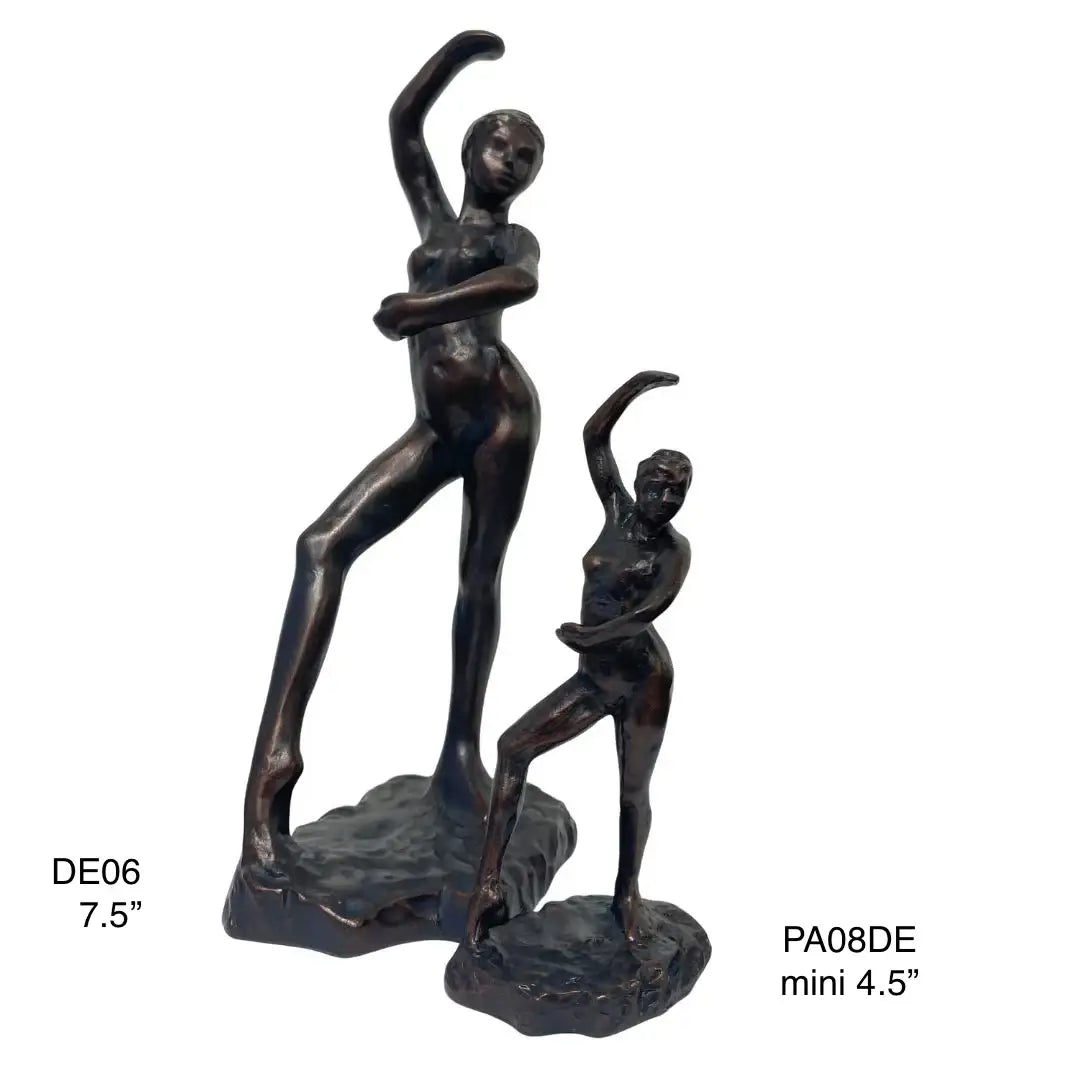
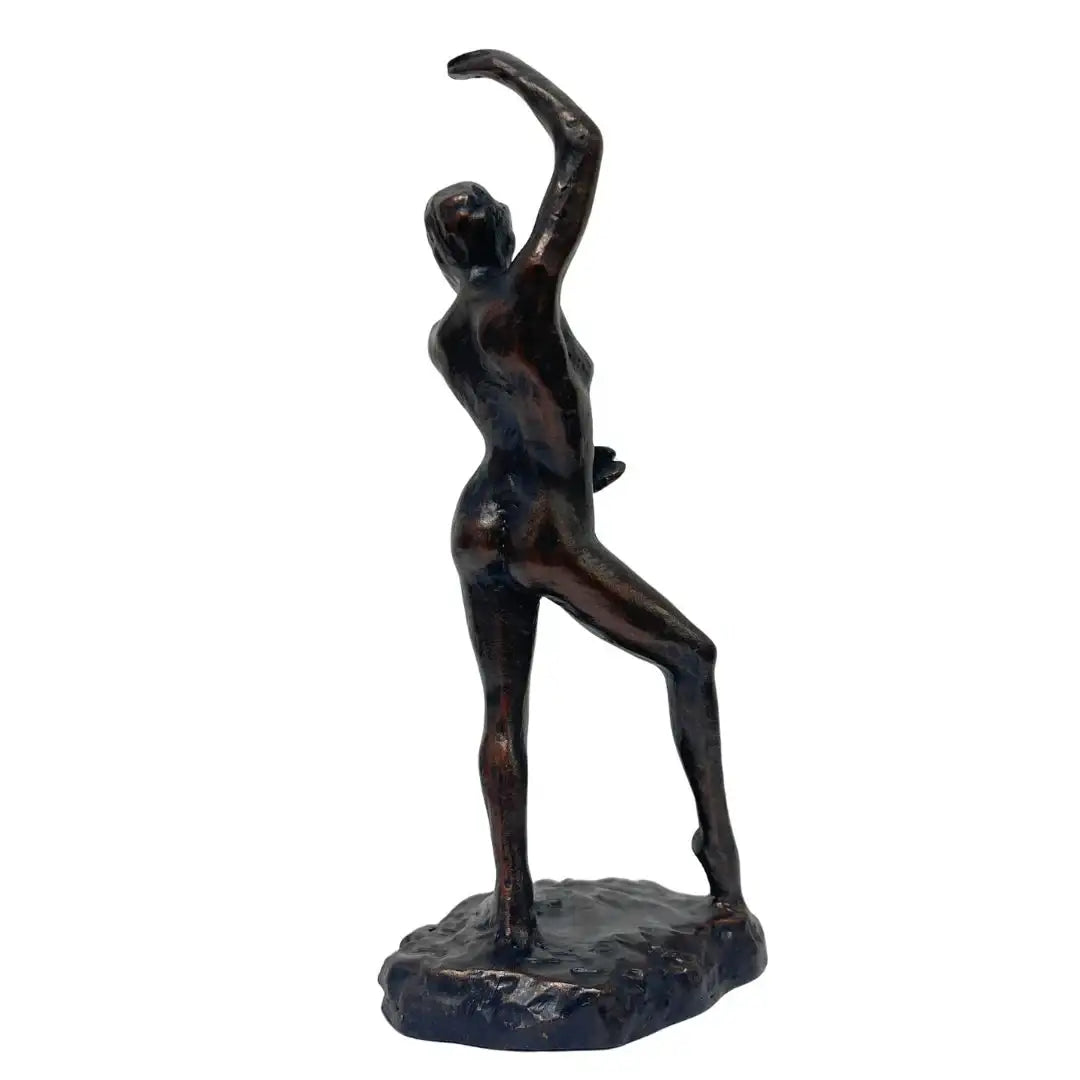
This Degas Spanish Dancer statue is a museum replica of Spanish Dance (1882–1885). The figure is also known as La Danse Espagnolle. Degas modeled a nude dancer holding a controlled practice pose. The raised arm and turned torso suggest balance and training.
Degas found lifelong inspiration in the Paris Opera Ballet. He studied rehearsals, lessons, and backstage routines. This Degas Spanish Dancer statue reflects that working world. It shows the body as discipline, not decoration.
Parastone Museum Replica with Bronze Finish
This reproduction is part of the Parastone Mouseion 3D Collection. The sculpture is made with a bronze-style finish. Degas’ signature appears on the underside of the base. A color description card is included in four languages.
Assorted Sizes Available
Choose the size that fits your shelf or display. Many collectors enjoy pairing both sizes together. The smaller version works well for desks and gift giving. The larger version reads strongly across a room.
- Miniature: PA08DE, 4.5 in H × 1.5 in W × 2 in D, 4 oz, gift boxed
- Small: DE06, 7.5 in H × 3.5 in W × 3 in L, Weight 0.5 lbs
Why Degas Modeled Dancers
Degas returned to dancers because they offered repeated movement. He explored how bodies learn through routine. He also explored how weight shifts in a held pose. This La Danse Espagnolle statue captures that study.
The pose is elegant, but it is also practical. You can imagine a teacher counting time. You can imagine the dancer holding the line. Degas often focused on effort behind beauty.
Explore More Degas Museum Replicas
Build a focused Degas display with related pieces. These pair well with the Degas Spanish Dancer statue:
- Degas Little Dancer statue
- Degas Woman in Le Tub statue
- Degas “The Star” ballerina ceramic vase
- Visit the full collection: Edgar Degas collection
For More Reading
- Metropolitan Museum of Art collection entry: Degas object record at The Met
- J. Paul Getty Museum collection entry: Degas object record at the Getty
- Degas context and collecting history: Degas article at the Los Angeles Times
EDGAR DEGAS (1834-1917)
The course of life of the Parisian painter had few dramatic peaks. Being the eldest son of a well-to-do family, the cynical, snobby loner was able to devote his life to the arts. Furthermore, he remained a bachelor because: 'There is love and there is work, and we only have one heart.'
His classical education can be recognized in his earlier work, in particular the strict composition and line inspired by Ingres whom he greatly admired. Degas took a special position within the group of artists led by his friend Monet, who regularly got together in the Cafe Guerbois. His cynicism and sharp tongue however, made his difficult in company and many ideas from Zola, Renoir and Monet did not appeal to him. Although he referred to himself as an 'independent realist', he was very much involved in the impressionistic revolution and the themes and techniques developed the traditional and modern art of painting.
In 1874, together with Monet, he organized the first exhibition of the 'independents', which was named the 'the impressionists' by a critic. A realist: 'I know nothing of inspiration, spontaneity and temperament.' He locked himself up inside his studio and used photos as a mnemonic device, whilst others went outside with the tubes of paint which had recently come onto the market. Degas considered that utter nonsense:'Painting is not a sport!', besides: 'I do not have the habit of painting when I am in the countryside.'
In his fifties he began to encounter financial problems and on top of that his eyesight began to deteriorate. However, according to Renoir only then 'the real Degas' emerged through his paintings'. Degas himself said: 'Anyone can be talented when his is twenty-five, what count is to have talent when you are fifty.'
- Bronze Finish Statues
- Degas Ballerina Dancers Art
- In Stock Museum Gifts | Ready to Ship Art & Collectibles
- Museum Statues
- Nudes Human Form Studies
- One Left - Limited Availability!
- Parastone Museum Replicas and Art Sculptures
- Size Medium 12 to 23 in
- Size Miniature Under 4 in
- Size Small 4 to 11 in
- Statues




FAQs
Got a question? We are here to answer