


Etruscan Man with Hat Thin Statue, Etruscan Art Collection 13.5H
Etruscan Man with Hat Thin Statue, Etruscan Art Collection 13.5H
SKU:ETR02
In stock
Couldn't load pickup availability
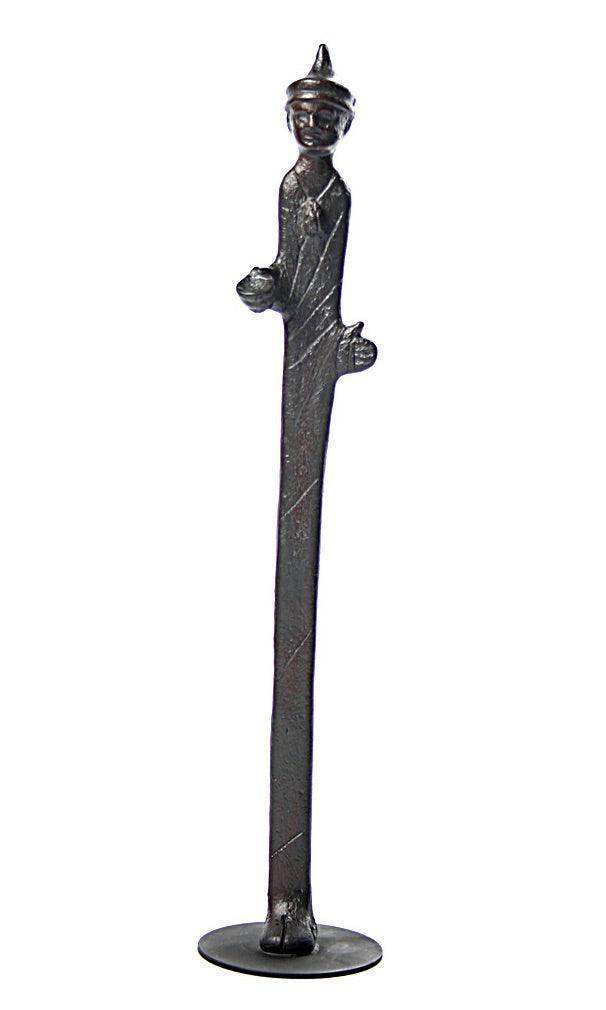
Etruscan Stretched Figure – Museum Replica Inspired by Ancient Bronze Art
This Etruscan stretched figure is based on one of the most famous elongated bronzes discovered in nineteenth-century Italy. According to legend, a farmer unearthed the original near Volterra in 1870 and unknowingly used it as a fire poker for many years. Its distinctive long limbs and stylized form later fascinated modern artists, especially the sculptor Giacometti, who drew inspiration from these elegant and abstract shapes.
The stretched figures are among the most recognizable creations of Etruscan art. They reveal a unique approach to the human body, one that values expressive form over anatomical accuracy. This Etruscan stretched figure replica reflects the charm and quiet power of those early bronzes, offering a glimpse into a culture that shaped later Roman artistic traditions.
- Museum Replica: Part of the collectible Parastone Mouseion 3D Collection. PN ETR02.
- Material: Resin with hand-painted matte and glossy detailing.
- Dimensions: 13.5 in H × 2.75 in D; weighs 1 lb.
- Style: Based on ancient bronze figures from Southern Etruria, known for elongated silhouettes.
Etruscan Bronze Figures
Etruscan artists developed a bold sculptural style influenced by Greek kouroi and korai, yet distinctly their own. While Greek sculptors pursued idealized anatomical structure, the Etruscans favored expressive, elongated bodies with flattened forms. These stretched figures emerged between the fifth and second centuries BC. Many were initially cut from thin sheets of metal and shaped into tall, stylized silhouettes.
These bronzes often carried symbolic roles as votive offerings or household figures. Their abstract design gives them a strikingly modern appearance, explaining their continued influence on twentieth-century artists. This Etruscan stretched figure carries that legacy forward with careful detailing inspired by historic originals.
Etruscan Culture in Ancient Italy
The Etruscans lived in Etruria, the region north of Rome now known as Tuscany. Their culture flourished from the eighth century BC and grew wealthy through trade in wine, ceramics, and iron. They maintained powerful maritime networks and were known throughout the Mediterranean for their craftsmanship and bold naval activity.
By the fifth century BC, neighboring Celtic and Italian tribes challenged Etruscan dominance. Later, a fleet from Syracuse destroyed key ports, beginning a slow decline. By the third century BC, the Etruscans had been absorbed into Roman rule. Their art continued to influence Rome, inspiring religious rituals, decorative styles, and metalworking traditions.
Etruscan women held a notable degree of social freedom, unusual for the ancient world. They participated in social events and appeared alongside men in public imagery. Roman writers later viewed this equality with fascination and suspicion, adding to the mystique of the Etruscan people.
To explore related art forms, visit our Greek and Roman Collection, where many Mediterranean traditions are preserved in classical sculpture.
Curator Comments
One of the most important Etruscan sites is the ancient city of Veii, now preserved within the Veii Archaeological Park near Rome. Veii was a major Etruscan center during the early first millennium BC and controlled critical trade routes. Archaeologists uncovered temples, fortifications, and terracotta sculptures that reveal the remarkable skill of Etruscan artisans. The Temple of Portonaccio, dedicated to Minerva, once displayed dramatic life-size terracotta statues above its roofline. These discoveries help illuminate the cultural world that produced expressive bronzes like the Etruscan stretched figure. The site offers valuable insight into daily life, religious practice, and artistic innovation in early Etruria.


FAQs
Got a question? We are here to answer