


Ears with Knife Unusual Anatomy – Hieronymus Bosch Statue (JB02, JB23)
Ears with Knife Unusual Anatomy – Hieronymus Bosch Statue (JB02, JB23)
SKU:JB02
In stock
Couldn't load pickup availability
Symbolism and Fantasy in the Hieronymus Bosch Statue Collection
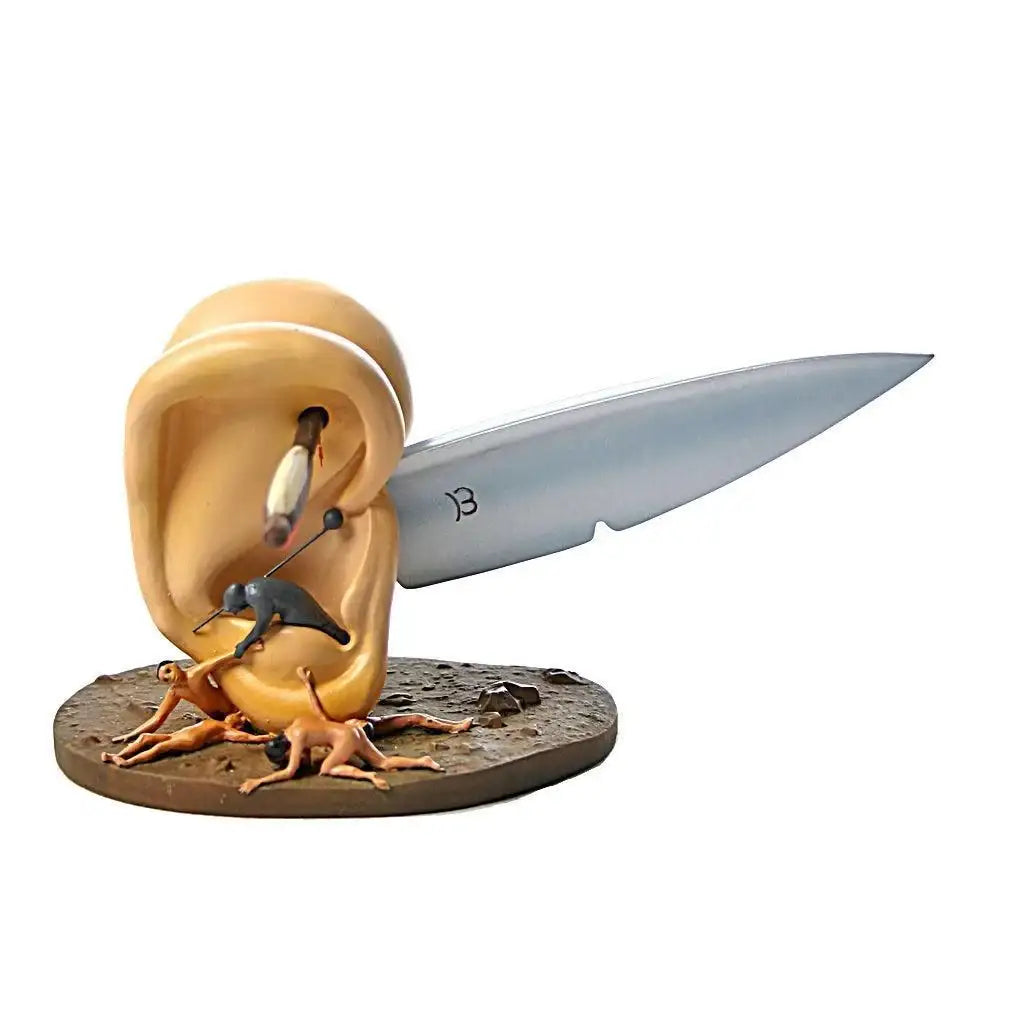
This Hieronymus Bosch statue reproduces the famous Ears with Knife motif from The Garden of Earthly Delights. Two enormous ears rise from the ground. A long knife pierces them from behind. An arrow binds the ears together. The form looks humorous at first. The meaning becomes darker when studied closely.
Medieval viewers asked the same questions we ask today. Is this an allegory about careless listening? Is this a warning about gossip? Or is it a scene from hell showing eternal pain? Bosch gives no clear answer. The monogram on the knife brings more mystery. Some think the letter shows an M. Others see Bosch’s own B. Bosch enjoyed adding puzzles that refuse simple explanations. This Hieronymus Bosch statue preserves that sense of mystery.
The scene also includes tiny figures on the ground. They cling to the base near the ear. They stretch across the dirt as if crawling from the noise. The large statue includes these small figures. The small statue keeps only the ears and knife. Both versions show Bosch’s strange view of human weakness. They also show his humor.
Bosch lived during a tense religious period. Artists created moral scenes filled with symbols. Bosch used hybrid forms to express temptation and spiritual danger. The ears show vulnerability. The knife shows sudden harm. The arrow binding the ears suggests forced unity or painful truth. Bosch likely intended many interpretations. That freedom gives his art lasting strength.
Ears with Knife: Special Significance to Auriculotherapists (ear acupuncturists)
This image developed a surprising use in modern Europe. The Ears with Knife gained meaning in the acupuncture community. Practitioners noticed the arrow pierces a major acupuncture point. The point is called Shenmen. In English it means “Spirit’s Gate.” It sits near the top of the inner ear. Bosch placed the arrow precisely on that location. The demon’s spear shows two more locations. The upper point became “the Bosch point.” It is sometimes called “the Garden of Delights point” after the painting. The lower point became “Point de Jerome.” The Bosch point raises libido. The Jerome point lowers libido. Some practitioners also use them for insomnia. This connection led to claims that Europe discovered new ear points before China. The erotic energy in Bosch’s scene strengthens that theory. The mix of pain, desire, and flesh makes this Hieronymus Bosch statue a conversation piece.
This sculpture also demonstrates Parastone’s creative skill. Bosch painted the image in two dimensions. Parastone must invent the unseen back. Artists study Bosch’s brushwork. They decide how the ears curve behind the knife. They imagine how the arrow passes through the forms. They add texture and volume consistent with Bosch’s style. This method creates a complete figure that feels authentic. The final Hieronymus Bosch statue looks natural from every angle.
Collectors enjoy displaying this piece with other Bosch creatures. It pairs well with the Egg Monster Bird (JB10). It also complements the Owl Dancer (JB28) and the dramatic Tree Man (JB21). These combinations build a small world of Bosch imagery. You can explore the full lineup in our Hieronymus Bosch collection.
- Small Size: 2.5" × 4" × 2". Weight 0.2 lbs. PN JB02.
- Large Size: 3.5" H × 6" L × 7" W. Weight 0.6 lbs. PN JB23. Includes small figures and ear details.
- Material: collectible resin with hand-painted details.
- Includes description card with artwork information.
The Garden of Earthly Delights remains one of Bosch’s greatest works. The triptych shows paradise, earthly life, and hell. The Ears with Knife sits in the hell panel. Bosch shows the results of unchecked desire and careless choices. The ears remind viewers to listen wisely. The knife warns about sudden harm. This Hieronymus Bosch sculpture preserves that symbolic message in a detailed collectible form.
For more reading from the web, we suggest:


FAQs
Got a question? We are here to answer