


La Folie des Grandeurs (Megalomania) – Large Magritte Statue 7H (MAG06)
La Folie des Grandeurs (Megalomania) – Large Magritte Statue 7H (MAG06)
SKU:MAG06
In stock
Couldn't load pickup availability
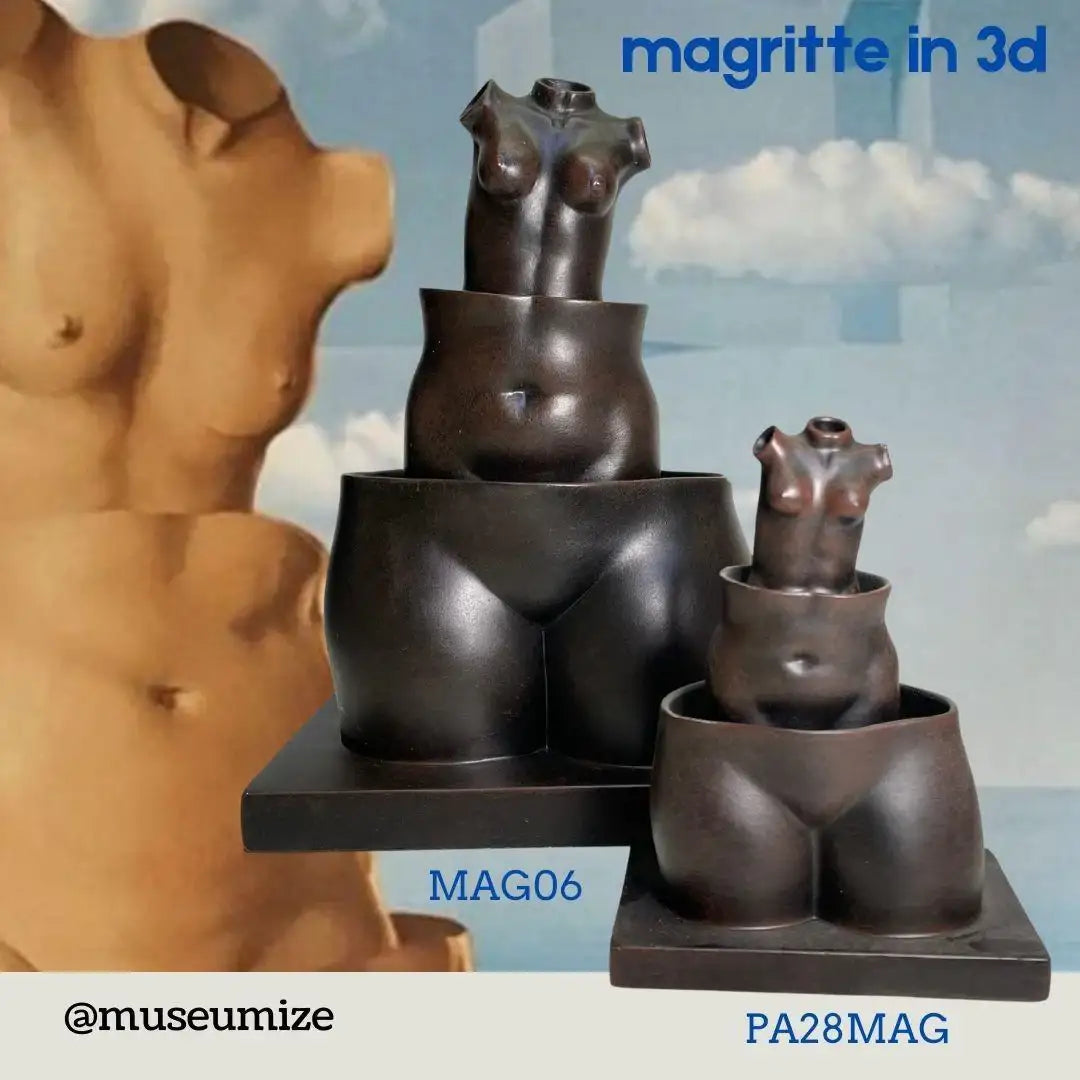
La Folie des Grandeurs – Large Magritte Statue in Three Tiers
This large Magritte statue is inspired by René Magritte’s La Folie des Grandeurs (Delusions of Grandeur), also known as Megalomania. The figure appears as a female nude separated into three interlocking tiers. Each tier opens into a smooth cavity, like a quiet interior chamber. The result feels calm, precise, and deeply surreal.
The 7-inch scale changes how the work feels in a room. You notice the silhouette first. Then you notice the openings. Then you realize the body is both present and absent. That is the strange “magic trick” Magritte loved. This Magritte statue invites slow looking.
What the Three Tiers Suggest
The stacked form reads like architecture. Wide hips support a slimmer midsection. The torso and bust rest above in a stable, balanced pose. The cavities interrupt that stability. You can see “inside,” yet nothing is explained. This Magritte statue uses empty space as meaning.
Surrealism often shifts reality with one clean change. Here, the change is not distortion. It is reorganization. The figure remains graceful, but logic breaks. The openings feel deliberate, not violent. They create mystery without horror.
Why the Cavities Matter
The smooth interior voids are the heart of the work. They make the viewer pause and look again. The openings imply depth, but not anatomy. They feel like sculpted silence. This Magritte statue turns the body into a question.
Many artworks focus on surface beauty. Magritte adds a second layer of attention. The interior spaces challenge certainty. They suggest hidden meaning, but avoid a single answer. That uncertainty is a core Surrealist pleasure.
Large Version Compared to the Miniature
This 7-inch Magritte female nude statue has a stronger “museum object” presence than the Pocket Art miniature. Its size makes the tiers easier to read at a distance. The cavities also feel more architectural at this scale. If you want the smaller companion piece, it is available here: miniature size PN PA28MAG .
Together, the two sizes show how scale affects Surrealism. Small feels intimate and playful. Large feels iconic and formal. Either way, the idea remains the same. Magritte turns the familiar body into a puzzle.
Bronze Finish and Sculptural Presence
This Magritte statue is made from resin with a bronze finish. The finish supports a gallery-style look. It also highlights edges, curves, and the clean interior openings. Under soft light, the tiers create gentle shadows. Those shadows strengthen the sense of depth.
The piece works well as a focal object. It fits on a bookshelf, console, or study table. It pairs beautifully with modern art books. It also suits collectors who enjoy thoughtful conversation pieces. It is quiet, but it is unforgettable.
If you collect Surrealism, you may also enjoy browsing our Dalí, Magritte & Surrealism collection . It brings together artists who made reality feel unstable.
Product Details
- Collection: Parastone Mouseion 3D museum reproduction collection.
- Part Number: PN MAG06.
- Medium: Resin with a bronze finish.
- Size: 7 in H × 5 1/8 in W × 3 1/2 in D.
- Weight: About 2.6 lbs.
- Licensing: Licensed reproduction.
- Miniature companion: Pocket Art version PN PA28MAG .
Magritte, Iolas, and the Move Toward Sculpture
Late in Magritte’s life, the gallery owner Alexandre Iolas asked him about sculpture. Magritte considered it seriously. He wanted sculptural works based on motifs from his paintings. He produced dimensioned sketches for a sculpture called Megalomania. Wax models were assessed and corrected by Magritte at a foundry in Verona.
The story matters for this Magritte sculpture. It explains why the form feels designed, not improvised. The tiers are measured and intentional. The openings are clean and controlled. The work looks dreamlike, yet it is engineered. That combination is very Magritte.
Video
For More Reading
- A Magritte overview for broader context: Neomania Magazine – Magritte .
- A short article on Magritte’s Surrealist approach: Art Hub Magazine – Magritte and Surrealism .
- Smithsonian object record related to Magritte: Smithsonian – Object Record .


FAQs
Got a question? We are here to answer