


Auguste Rodin, Study for The Secret Clasping Hands – Pocket Art Miniature, Parastone
Auguste Rodin, Study for The Secret Clasping Hands – Pocket Art Miniature, Parastone
SKU:PA20RO
In stock
Couldn't load pickup availability
Rodin’s Hands as a Symbol of Togetherness
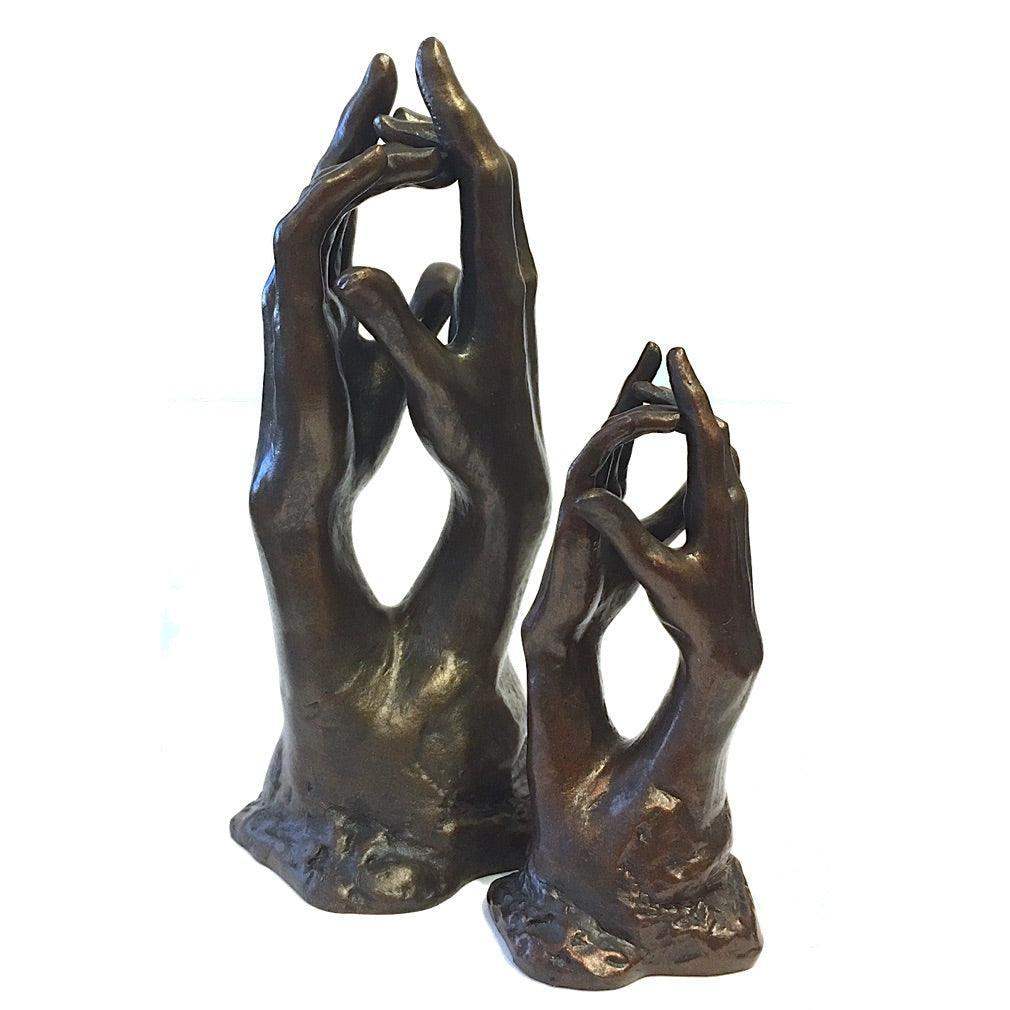
Auguste Rodin (1840- 1917), the great French sculptor, was endlessly fascinated by the human hand. From his earliest student sketches to his late studio experiments, he believed hands could express emotion as powerfully as a face. This miniature museum replica of Rodin Clasping Hands depicts two hands about to interlock and unite, capturing a moment of trust, tension, and tenderness.
For Rodin, hands were never just anatomical details. He studied them obsessively from live models, making countless plaster fragments and clay studies. A single hand could suggest struggle, prayer, strength, or vulnerability. In many of his sculptures, including The Thinker and The Kiss, the hands are key to the emotional impact of the whole work.
This piece is a study for Rodin’s sculpture The Secret. In the full composition, two right hands protect a small, abstract “secret,” like a precious inner life cupped in the palms. This Pocket Art miniature of Rodin clasping hands focuses on the instant just before contact. It is quiet, intimate, and surprisingly powerful at a small scale—an invitation to look closely, the way Rodin himself did in his studio.
- Artwork inspiration: Rodin, study for The Secret (clasping hands)
- Collection: Parastone Mouseion 3D Museum Collection
- Part number: PA20RO
- Materials: Resin with hand-painted details, matte and glossy finish
- Included: Gift presentation box, artwork card, and artist card (four languages)
- Size: 3 7/8 in H × 1 3/4 in W × 1 3/4 in D
- Weight: 7 oz
Rodin’s Lifelong Study of Hands
Rodin often treated hands as complete sculptures in their own right. He would isolate a hand or a pair of hands from a larger figure, enlarge them, rotate them, and study how light moved across the surface. Without faces or props, the gesture alone carries the feeling—hesitation, longing, devotion, or protection.
One of his most famous hand sculptures is The Cathedral, where two right hands curve toward each other to form a vaulted interior space. The gesture recalls Gothic church architecture and the sense of something sacred held between them. In works like this, Rodin showed that hands could “speak” without words or facial expression.
This is why collectors are drawn to Rodin clasping hands. They feel both personal and universal: you recognize the emotion immediately, yet it never tells just one story. The clean silhouette reads beautifully from every angle, making this miniature museum replica an ideal piece for a desk, bookshelf, or bedside table.
About Auguste Rodin
Rodin (1840–1917) is widely considered the father of modern sculpture. His career, however, was marked by controversy and slow acceptance. For many years the public and critics were divided over his work. His rough surfaces, fragmented figures, and intense physicality did not fit the polished ideals of his time.
Rodin felt little connection to the strict formulas of academic Romantic sculpture, and he did not fully identify with the detached light-and-color experiments of the Impressionist painters. Instead, he developed his own language of form—rooted in the human body, strong emotion, and careful observation from life. He insisted on working from living models and believed he could not be truly creative without them in front of him.
Hands, in particular, became a focus of his research. Rodin kept boxes of plaster hand studies in his studio and would combine and recombine them into new compositions. A bent wrist, tense fingers, or a gently cupped palm could express more to him than a perfectly composed, idealized figure.
“In everything I follow nature and I never pretend I am able to control her. My only ambition is to be subservient and faithful to her,” Rodin said. In another often-quoted remark about his sometimes erotic, controversial works, he answered critics by saying that “art is actually nothing more than a manifestation of lust, which only arises from the potency to love.” For Rodin, the living body—its gestures, its weight, its hands—was the truest path to powerful sculpture.
Why Rodin Made “Hand Studies”
Rodin clasping hand studies allowed him to isolate emotion. By removing the rest of the figure, he could ask: what can a single gesture say? A relaxed hand conveys calm; a clenched hand, anguish or resistance; clasped hands, like those in this sculpture, suggest connection, support, and shared experience.
In the studio, Rodin and his assistants modeled hands over and over, experimenting with scale and proportion. Some hands are larger than life, monumental and architectural. Others, like this miniature, invite a more intimate, almost private viewing. At any size, they reward close looking—precisely the kind of slow attention Rodin gave them.
Compare Sizes and Related Museum Replicas | Rodin Clasping Hands
This listing is for the smaller Pocket Art version of Rodin clasping hands shown in the two-size photo. If you prefer a larger statement piece about 50% bigger, you can choose the full-size companion sculpture: The Secret by Rodin (RO15).
We also offer reproductions of Rodin’s Cathedral hand sculptures, where two hands create a chapel-like space between them: RO17 Cathedral 10H and RO26 Cathedral 6H.
Explore more museum replicas in our Rodin collection, or browse the full Pocket Art miniature museum replicas series.
Video: Rodin and the Language of Sculpture
For More Reading
- Northwestern Science in Society: “Bread Crumbs in Bronze” (art + materials thinking)
- University of Chicago Divinity School (Sightings): “Embodying Religion: Rodin’s The Cathedral”
- National Gallery of Art: “Study for The Secret” (object page)


FAQs
Got a question? We are here to answer