


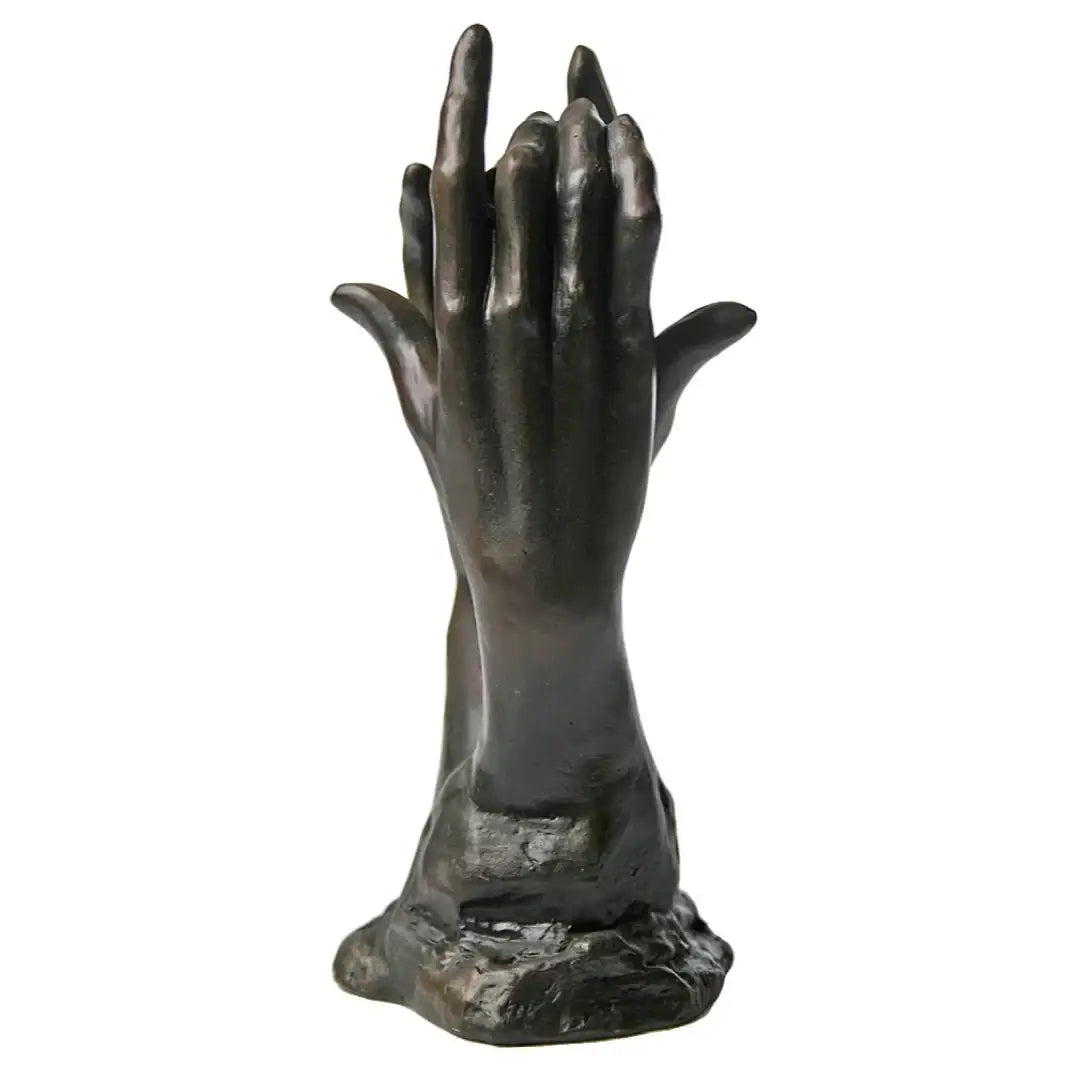
Rodin Study for The Secret – Clasping Hands Statue 6H
Rodin Study for The Secret – Clasping Hands Statue 6H
SKU:RO15
In stock
Couldn't load pickup availability
The Language of Hands in Rodin’s Sculpture
Auguste Rodin returned to hands again and again because a symbolic hands statue can “speak” without a face. A wrist tilt can suggest hesitation. A curl of the fingers can suggest longing. In Study for The Secret, two elegant hands rise and hover in a poised, almost ceremonial gesture.
This museum-style replica is part of the Parastone Mouseion 3D Museum Collection (PN RO15). It is cast in resin with hand-painted details and subtle matte and glossy accents. The form reads beautifully from multiple angles. It also makes a thoughtful object for quiet spaces and reflective shelves.
Rodin Clasping Hands as a Symbol of Togetherness
The phrase Rodin clasping hands fits this sculpture for a reason. Rodin isolates the gesture so the hands become the entire message. Their closeness suggests trust. Their shape suggests protection. Their lift suggests a shared intention.
If you loved Rodin’s hand studies like The Cathedral, this piece feels like a close cousin. In The Cathedral, the hands echo Gothic architecture. Here, the hands hint at secrecy and shared knowledge. Rodin’s genius is that he can make a small fragment feel monumental.
About the Original Idea: “The Secret”
This sculpture is described as a study for The Secret, a marble work in which two right hands clutch an abstract, rectangular “secret.” In this study version, the focus is on the gesture itself. The hands become a visual metaphor for what is held back, protected, or quietly shared.
Rodin often treated the body as a tool for psychology. He did not need a full figure to tell a story. A hand can be a portrait. It can be a memory. It can be a whole relationship.
Historical Context: Rodin and the Power of Fragments
Auguste Rodin (1840–1917) helped redefine modern sculpture. He broke away from polished, ideal surfaces. He favored living presence and emotional truth. Rodin also embraced fragments as complete works. Hands, torsos, and heads could stand alone and still feel “whole.”
Rodin’s studio practice encouraged studies like this symbolic hands statue. He explored a pose repeatedly. He adjusted the angle and pressure. He studied what a gesture could communicate. That approach makes pieces like Study for The Secret especially compelling for collectors. You are holding a moment of thinking, not just a finished pose.
Parastone Replica Details
Parastone is known for producing collectible museum replicas with careful attention to form and finish. This version of Rodin clasping hands keeps the emphasis on touch and tension. It is sized for easy display, but it still carries visual weight.
- Artwork: Study for The Secret (Clasping Hands)
- Artist: Auguste Rodin
- Collection: Parastone Mouseion 3D Museum Collection
- Part Number: RO15
- Material: Resin with hand-painted details
- Finish: Matte and glossy accents
- Included: Full color card with artwork image and info (four languages)
- Size: 6 in H × 2.5 in D
- Weight: 0.7 lbs
Miniature Version Available
Want the same theme in a smaller scale? This listing is for the larger version. For the miniature, see Pocket Art Rodin 'The Secret' (miniature clasping hands) . The smaller version is about half the size.
Build a Rodin Hands Display
Rodin hand studies are wonderful to group together. Each piece explores a different emotional “dial.” One sculpture leans spiritual. Another leans intimate. Another leans playful and human.
- Explore the full collection: Rodin sculpture collection
- Architectural symbolism in hands: Rodin Cathedral Hands (Small, RO26) and Rodin Cathedral Hands (Large, RO17)
- A different kind of connection: Rodin Two Holding Hands (RO25)
- A tiny companion piece: Rodin Clasping Hands (Miniature)
Where to Display This Sculpture
This piece reads well in calm, personal spaces. Try it on a desk for a daily “pause and breathe” moment. It also works on a bookshelf next to poetry or art history. The gesture draws the eye without shouting for attention.
Because it can be appreciated from multiple angles, it is also a strong object for artists. Many collectors use Rodin's hand studies as references for drawing. The forms are simplified but anatomically believable.
For More Reading
- Rodin’s life and artistic approach: Rodin Museum: About Auguste Rodin
- A museum overview of Rodin’s themes of love and human feeling: North Carolina Museum of Art on Rodin’s The Kiss
- A broader look at symbolism in the “kiss” motif in art: Essay on the symbolism of the kiss in art


FAQs
Got a question? We are here to answer