


Venus of Lespugue Prehistoric Goddess Statue – Paleolithic Art Replica
Venus of Lespugue Prehistoric Goddess Statue – Paleolithic Art Replica
SKU:VEN02
Out of stock
Couldn't load pickup availability
An Ice Age Figurine with a Big Afterlife
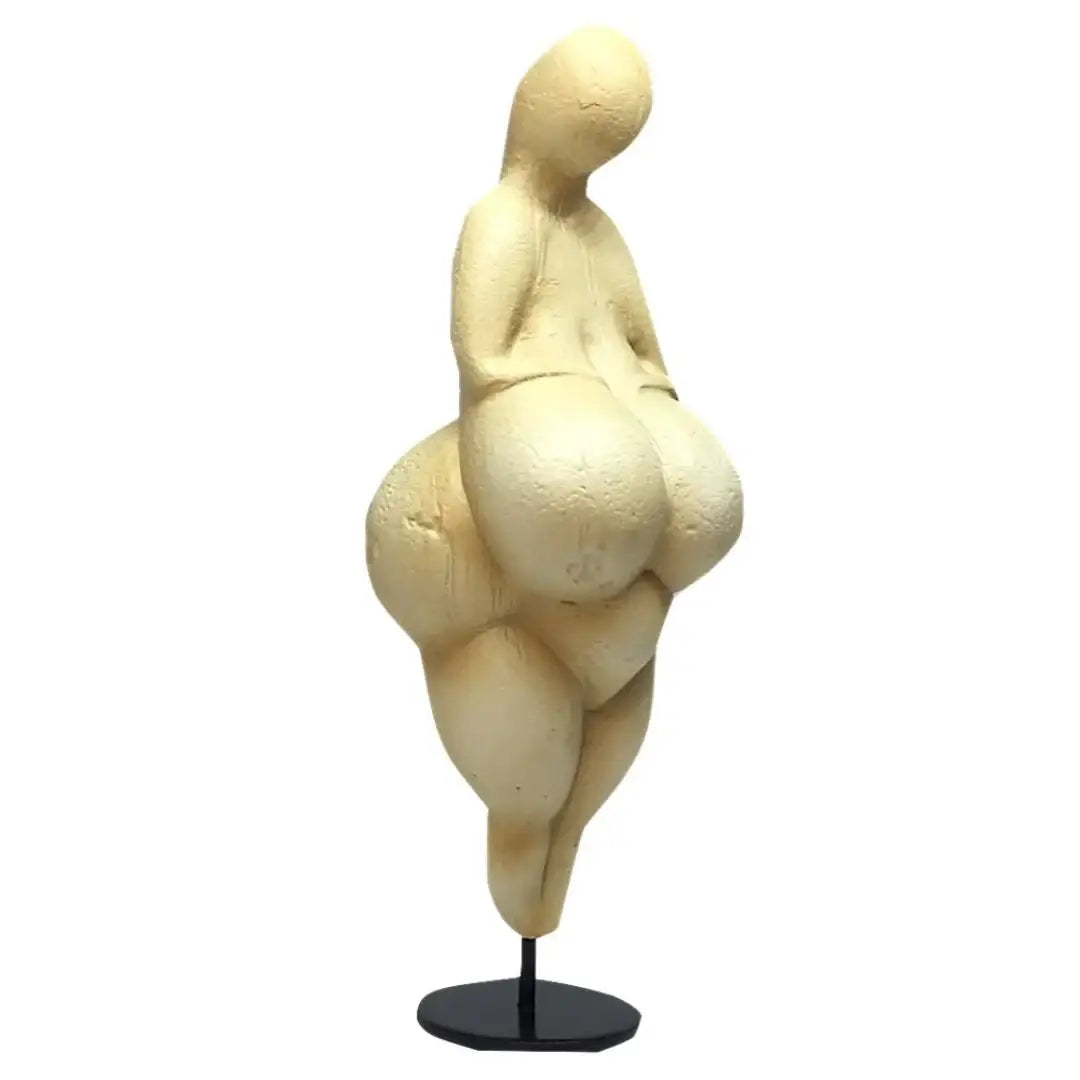
The Venus of Lespugue statue is a museum replica of an abstract female figurine from the high-Paleolithic period. The original dates to about 20,000–18,000 BC. It was found in 1922 in the cave of Rideaux near Lespugue, in Haute-Garonne, at the foothills of the Pyrenees.
The original figure was heavily damaged when discovered. It was later restored to a large extent, which means our modern understanding of the object is shaped by both Ice Age carving and 20th-century recovery. Even so, its form remains one of the most striking survivals from prehistoric art.
The Discovery at Lespugue and What Survives
Your Venus of Lespugue statue is based on a figurine discovered in 1922 in the cave of Rideaux. The cave context matters. These objects were not made for museums. They were made for people who lived by hunting and gathering, in environments shaped by seasonal movement and survival.
Because the original was damaged, it is often discussed alongside the challenges of archaeological recovery. Breakage and restoration can affect how we interpret proportions and surface detail. That uncertainty is part of the story. It also explains why this figurine feels both ancient and strangely modern. It is an image we inherit through time, chance, and repair.
Why They Are Called “Venus Figurines”
Venus figurines is a collective term used for prehistoric female figurines. The nickname did not come from Paleolithic makers. It comes from modern scholarship and collecting history. The label became common after the Marquis de Vibraye named a prehistoric nude figurine Venus Impudique (an “indecent Venus”). The name is a wordplay on the classical Venus Pudica tradition of later Greco-Roman art.
This matters because the label can quietly smuggle in assumptions. These figures are not “Venus” in the Roman sense. They are prehistoric works from a vastly different world. Still, the modern label helped group them as a family of objects and sparked debates that continue today.
Fertility, Prosperity, or Something Else?
The true meaning of Venus figurines is unknown. No written explanations survive from this period. One common interpretation is that, within hunter-gatherer societies, corpulence signaled prosperity, fertility, or well-being. That interpretation can fit the visual emphasis. It is still a theory, not a settled fact.
The Venus of Lespugue statue presents female sexual characteristics explicitly and enlarged. In contrast, the face, arms, and legs are reduced. The imbalance appears deliberate. It suggests the maker wanted viewers to focus on certain ideas or symbols, rather than individual identity.
Lespugue and Willendorf in a Shelf Pairing
In the range of Venus figurines that survive, the Venus of Willendorf is often described as having the most exaggerated corpulence. The Venus of Lespugue sculpture belongs in that conversation too. It shares the same bold insistence on the body’s volume and sexual features, while minimizing other anatomy.
Many collectors like to display this piece beside the Venus of Willendorf replica. Together, they show how varied and intentional prehistoric abstraction could be, even within one modern “type.”
Parastone Museum Replica Details | Venus of Lespugue statue
This Venus of Lespugue statue is made from resin with an antique finish and includes a removable black metal stand. The Paleolithic Venus sculpture replica comes with a color description card in four languages. It is part of the Parastone Museum Collection (Mouseion 3D) from Europe, which pays tribute to important artworks across cultures and time periods.
- Material: Resin with antique finish
- Display: Removable black metal stand
- Included: Color description card (four languages)
- Size: 6.5 in H x 2.5 in W x 2 in D (including stand)
- Weight: 0.6 lbs
Explore Related Museumize Collections
If you enjoy early sacred and symbolic forms, you may also like our Mother Goddess and Fertility collection. Many pieces explore themes of creation, protection, and continuity across time.
For more from the deep past, browse our Prehistoric Art collection. It’s a strong way to build a “timeline shelf,” connecting ancient objects through form and purpose.
For More Reading
- Scholarly article on prehistoric figurines (NIH/PMC): Obesity and survival
- APA PsycNet entry on related research: Figurines had a power feature
- Overview of Venus figurines: various examples on Wikipedia
- Visual timeline of Venus figurines: Venus figurines in chronological order
Follow-Up: The Value of Re-Homed Art Replicas
Choosing a Venus of Lespugue statue replica supports long-lasting decor and ongoing learning. It keeps museum-style looking and thinking active at home. It also reduces disposable trend buying. A well-made replica can be displayed for years, then passed along.
Art replicas also preserve attention for older craftsmanship. They keep ancient visual languages in circulation. They invite conversation about culture and time. They remind us that humans have been making meaning through form for a very long time.


FAQs
Got a question? We are here to answer