


Chelyabinsk Meteorite - Classic Riker Box Specimens
Chelyabinsk Meteorite - Classic Riker Box Specimens
SKU:80-112-0253-201-40
In stock
Couldn't load pickup availability
A Chelyabinsk Meteorite Fragment From the Sky Over Russia
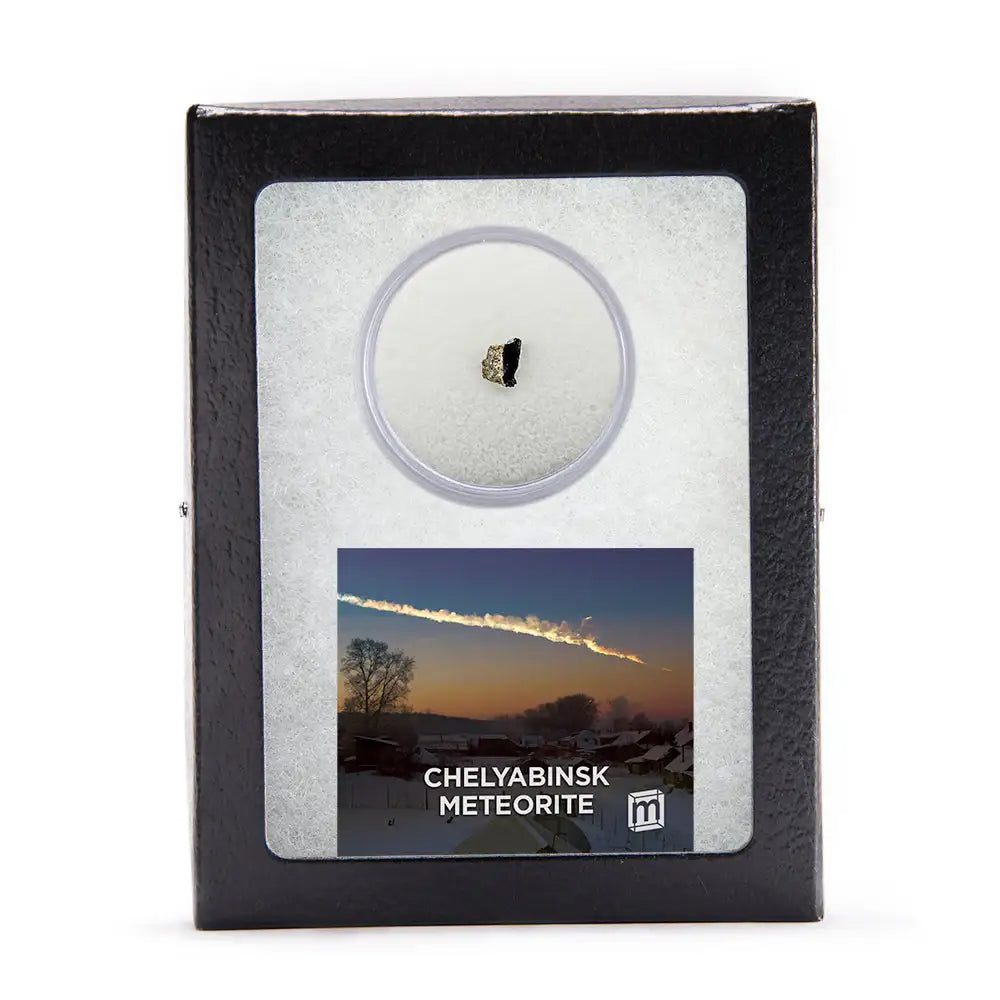
This Chelyabinsk meteorite is a real fragment of the stone that burst over Russia on February 15, 2013. It sits in an acrylic jar inside a glass-topped riker box measuring 4.5 in x 3.5 in. Small and medium fragments are offered.
Product Details
- Origin: Chelyabinsk, Russia
- Fall date: February 15, 2013
- Specimen: Fragment of the Chelyabinsk meteorite, a 2013 meteor specimen
- Type: Ordinary chondrite, a stony meteorite
- Sizes: Small and medium fragments
- Display: Acrylic jar inside a glass-topped riker box, 4.5 in x 3.5 in
- Includes: Information card that serves as the certificate of authenticity
- Edition: Part of the First Edition collection, offered again as a stand-alone specimen
The Morning the Sun Was Outshone
Just minutes after sunrise, an object about 60 feet wide exploded high over the city of Chelyabinsk. For a moment it shone brighter than the Sun. NASA calls it the largest known meteor explosion since the 1908 Tunguska event.
The shock wave broke windows across the region. More than 1,000 people sought medical care, mostly for cuts from flying glass. No deaths were reported.
Fragments From Lake Chebarkul
Pieces of the Chelyabinsk meteorite fell west of the city, and one large mass was recovered from Lake Chebarkul. The stone is an ordinary chondrite, a meteorite packed with small round mineral grains. Each Russian meteor fragment here comes from that single fall.
Explore more rocks from space in our Natural History Collection.
Display and Care
Keep the box away from damp air and direct sun. The jar protects the Russian meteor fragment, so there is no need to open it. The card inside explains the fall and acts as your certificate.
About Chondrites
Chondrites are among the oldest solid material in the solar system, formed about 4.5 billion years ago. Their round grains, called chondrules, formed in the early solar nebula. This 2013 meteor specimen is a small, tangible sample of that era.
For More Reading from the Web
- Watch NASA's visualization of the 2013 explosion. Chelyabinsk Meteor - NASA Scientific Visualization Studio


FAQs
Got a question? We are here to answer