

Homo Habilis Cranial Cast | Hominid Series Museum Reproduction 8L
Homo Habilis Cranial Cast | Hominid Series Museum Reproduction 8L
Share this product
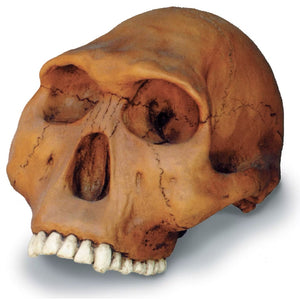
Homo Habilis Cranial Cast | Hominid Series Museum Reproduction | Museumize
Museum-quality Homo Habilis cranial cast � the first toolmaker in the human lineage. Hand-cast in compound stone in the USA with an aged finish. 8L.
SKU:5112Z
In stock
Couldn't load pickup availability
Meet the first known maker of stone tools. Homo habilis � Latin for handy man � lived approximately 1.5 to 2 million years ago in Eastern Africa and marks a threshold in the human story: the moment our ancestors began deliberately shaping the world around them. This Homo Habilis cranial cast is a full-size hominid series museum reproduction cast from authenticated specimen molds and finished to the standard of a professional natural history collection.
The First Toolmaker, Rendered in Stone
Hand-poured in compound stone in the USA, each cast is finished with an aged patina that evokes the mineral-weathered surface of an authenticated fossil find. The enlarged braincase, reduced brow ridge, and more rounded cranial profile that distinguish H. habilis from the earlier australopithecines are all faithfully rendered � visible evidence of the cognitive leap that separated tool-users from everything that came before. This earliest Homo genus fossil replica belongs in any serious study of human evolution.
The Homo Habilis Cranial Cast in the Hominid Series
H. habilis had a brain roughly 50% larger than Australopithecus afarensis. That expansion is captured in this compound stone prehistoric cranium: a higher, more vertical forehead and a cranial vault that signals the beginning of the cognitive revolution. Place it alongside Australopithecus, Homo Erectus, and Neanderthal casts to see that trajectory unfold across 3 million years. Dimensions: approx. 8 in L _ 5 in W _ 4 in H. Weighs approximately 2 lbs.
Browse the full Hominid Series in our Prehistoric Collection and our Natural History Collection.
Product Details
- SKU: 5112Z
- Dimensions: 8"L _ 5"W _ 4"H
- Weight: Approx. 2 lbs
- Material: Compound stone, hand-cast in the USA
- Finish: Aged archaeological patina
For further reading, visit the Smithsonian Human Origins Program � Homo habilis.
