


Theropod Tooth Fragment - Authentic Javelina Formation Fossil Specimen
Theropod Tooth Fragment - Authentic Javelina Formation Fossil Specimen
SKU:80-112-0496-201-40
In stock
Couldn't load pickup availability
A Theropod Tooth Fossil From the Javelina Formation of Texas
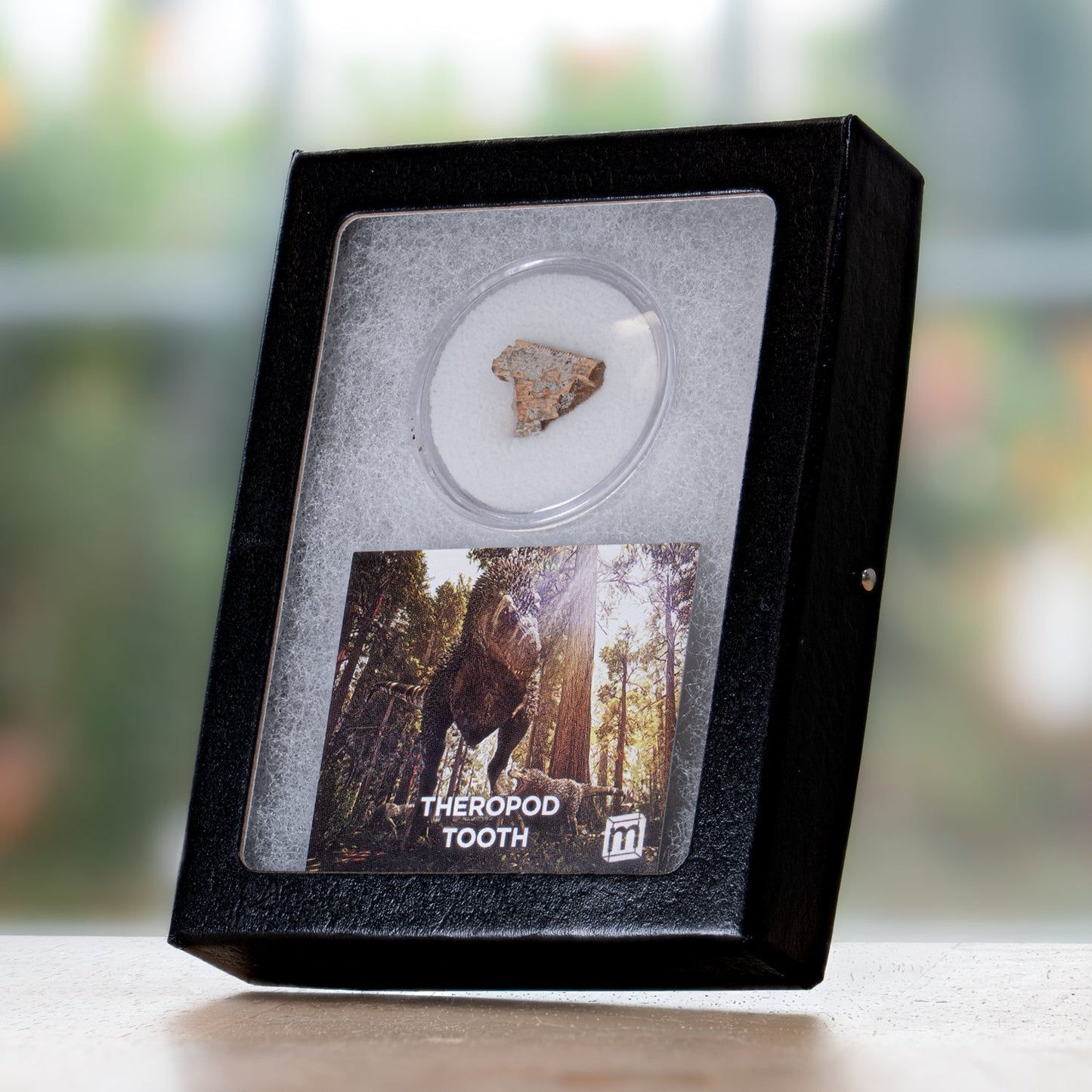
This theropod tooth fossil is a real fragment of a tooth from a meat-eating dinosaur. It is a Javelina Formation fossil from West Texas. Fragments measure about 0.5 to 1 in.
Product Details
- Specimen: Tooth fragment from an unidentified theropod
- Specimen size: About 0.5 in to 1 in
- Formation: Javelina Formation, West Texas
- Age: Latest Cretaceous, about 69 million years ago
- Display: Padded acrylic gem jar in a glass-topped riker case
- Includes: Informational card with an authenticity guarantee
- Note: Supply is limited
What Is a Theropod?
Theropods are two-legged, mostly carnivorous dinosaurs. They appeared about 240 million years ago, and birds are their living descendants. They were the only dinosaurs to become apex predators.
Megalosaurus, named in 1824, was among the first dinosaurs documented by science. This tooth belongs to an unidentified theropod.
The Javelina Formation in Big Bend
The National Park Service dates the Javelina Formation to about 69 million years ago. It was a floodplain crossed by meandering rivers and tall gallery forests. Every Big Bend dinosaur lived in that setting. Every Javelina Formation fossil dates to the latest Cretaceous.
Hadrosaurs are the most common dinosaur fossils in the park. Horned dinosaurs and the giant sauropod Alamosaurus lived there too. A partial Tyrannosaurus jaw has also been found. See more in our Authentic Fossil Specimens and our Natural History Collection.
Display and Care
Keep the riker case away from direct sun and damp. The padded jar protects the tooth, so there is no need to open it. Treat this Texas dinosaur tooth as you would any fossil.
About Theropod Diets
Most research suggests large tyrannosaurids both hunted and scavenged. Many theropods wore feathers. One theropod tooth fossil cannot say which habit this animal had. Still, a Texas dinosaur tooth marks where a predator once lived.
For More Reading from the Web
- Meet each Big Bend dinosaur in the park's fossil record. Fossils of the 2018 National Fossil Day Artwork - National Park Service


FAQs
Got a question? We are here to answer