


Van Gogh Pollard Willows at Sunset Ceramic Oval Flower Vase 10.5H
Van Gogh Pollard Willows at Sunset Ceramic Oval Flower Vase 10.5H
SKU:SDA43
In stock
Couldn't load pickup availability
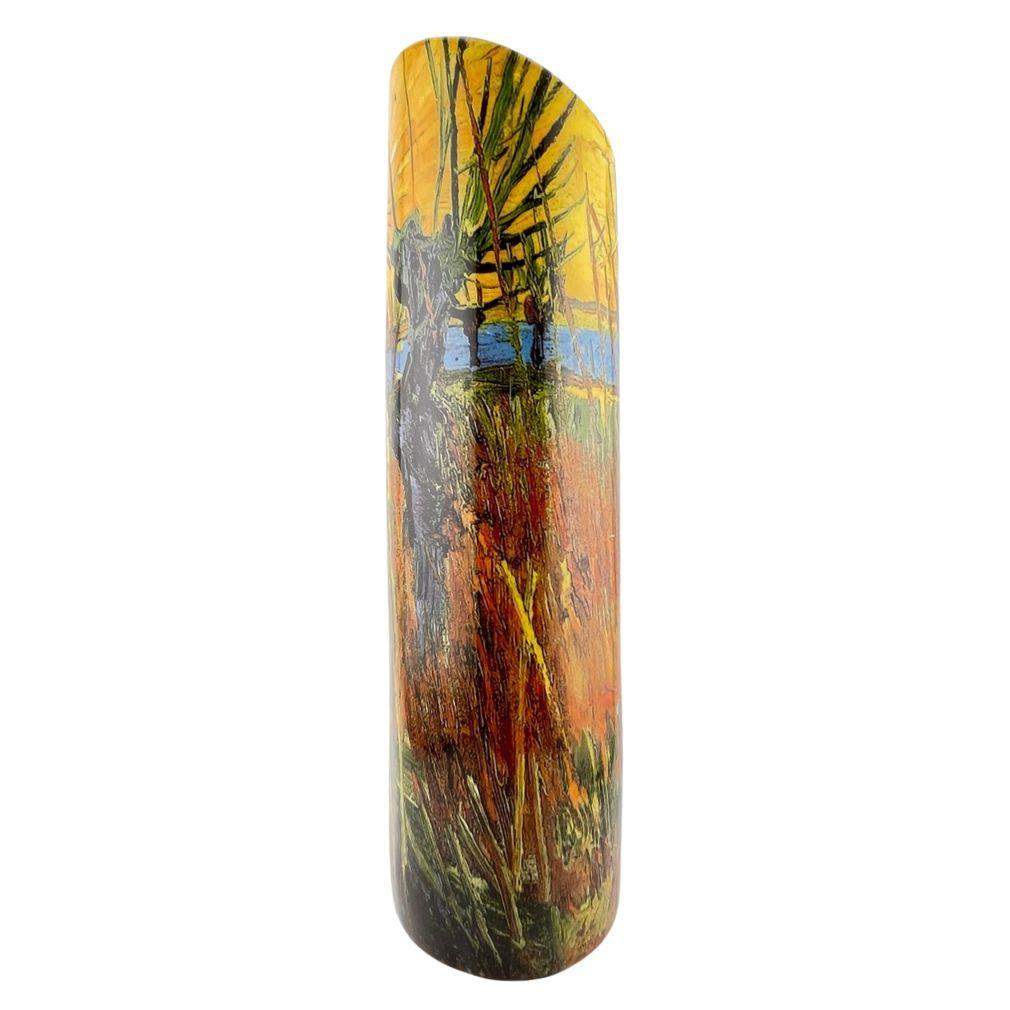
This Van Gogh Pollard Willows ceramic vase adapts Vincent van Gogh’s painting Pollard Willows at Sunset (Arles, 1888) into a functional work of art. The landscape wraps continuously around the oval vase, allowing the scene to unfold from every angle.
NOTE: If you love Van Gogh's Sunflowers, this vase pairs well because it features a large, bright Sun as a focal point.
The composition features a glowing yellow sun setting low in the sky, framed by tightly pruned pollard willows. A dark, expressive tree cuts through the warm tones, adding contrast and emotional depth. The kiln-fired ceramic surface enhances the saturated yellows, oranges, and reds with a soft gloss finish.
- Artwork: Pollard Willows at Sunset, Arles, 1888
- Material: kiln-fired ceramic with glazed color finish
- Shape: oval
- Size: 10.5 in H × 4 in W × 3 in D
- Weight: approx. 2.2 lbs
- Collection: Silhouette d’Art Vase Collection
- Made by: Parastone and John Beswick
- Product number: SDA43
Pollard Willows and Van Gogh’s Late Arles Period
Pollarded willows were a familiar subject from Van Gogh’s youth in the rural Netherlands. During his time in Arles, he returned to these forms while working intensively and often in isolation. The autumn light in this painting reflects both the energy and fatigue he experienced in late 1888.
The bold colors and rhythmic tree forms express movement and mood rather than strict realism. The strong contrast between the glowing sky and dark tree creates tension, a hallmark of Van Gogh’s late landscape work.
This Van Gogh Vase of Pollard Willows emphasizes that contrast through its oval shape and cut edge, allowing the image to shift as the vase is turned.
Explore more Van Gogh–inspired pieces in our Van Gogh museum gifts collection or browse other functional art vases in our vases and functional art collection. Pair this piece with other Van Gogh imagery:
For other artworks inspired by gardens and flowering landscapes, see our Flower Garden Landscape collection.
What Are Pollarded Willows?
Pollarded willows are willow trees that have been regularly pruned using a traditional method called pollarding. In this practice, upper branches are cut back to a main trunk, creating a distinctive knotted form. This keeps the trees at a manageable height while encouraging new growth.
Styling and Display
This vase works well as a centerpiece on a table, sideboard, or desk. Its height allows for longer stems, while the oval opening supports a compact floral arrangement. It also displays beautifully on its own as a sculptural object.
Care Notes
Place on a stable surface. Lift from the base when moving. Clean with a soft, dry cloth. Avoid abrasive cleaners.
For More Reading from the Web
- Kröller-Müller Museum – Pollard Willows at Sunset
- Van Gogh Worldwide – Pollard Willows at Sunset (F572)
Vincent van Gogh and His Place in Art History
Vincent van Gogh (1853–1890) was a Dutch Post-Impressionist painter whose work reshaped the direction of modern art. Although he sold very little during his lifetime, his paintings later became among the most influential and recognizable in the world.
Van Gogh used bold color, expressive brushwork, and simplified forms to convey emotion rather than visual accuracy. His landscapes, still lifes, and portraits reflect his inner life as much as the physical world around him. Color was not decorative for Van Gogh; it was emotional and symbolic.
During his years in France, particularly in Arles, Van Gogh produced some of his most powerful works. Paintings of wheat fields, olive groves, sunflowers, and pollard willows reveal his fascination with nature as a living, expressive force. These works influenced later movements, including Expressionism and early modernism.
Today, Van Gogh is recognized as a pivotal figure in art history. His approach to color, rhythm, and emotional honesty continues to shape how artists and viewers understand the relationship between feeling and form.
- Flowers | Gardens
- In Stock Museum Gifts | Ready to Ship Art & Collectibles
- Museum Gifts Collection
- Museum Gifts on Sale – Clearance Art Replicas
- MUSEUM GIFTWARE
- Museum Vases Collection: Historical Form Meets Home Decor
- New Museum-Inspired Art Replicas & Gifts
- Parastone Museum Replicas and Art Sculptures
- Size Small 4 to 11 in
- Vases Functional
- Vincent Van Gogh | Starry Night


FAQs
Got a question? We are here to answer