


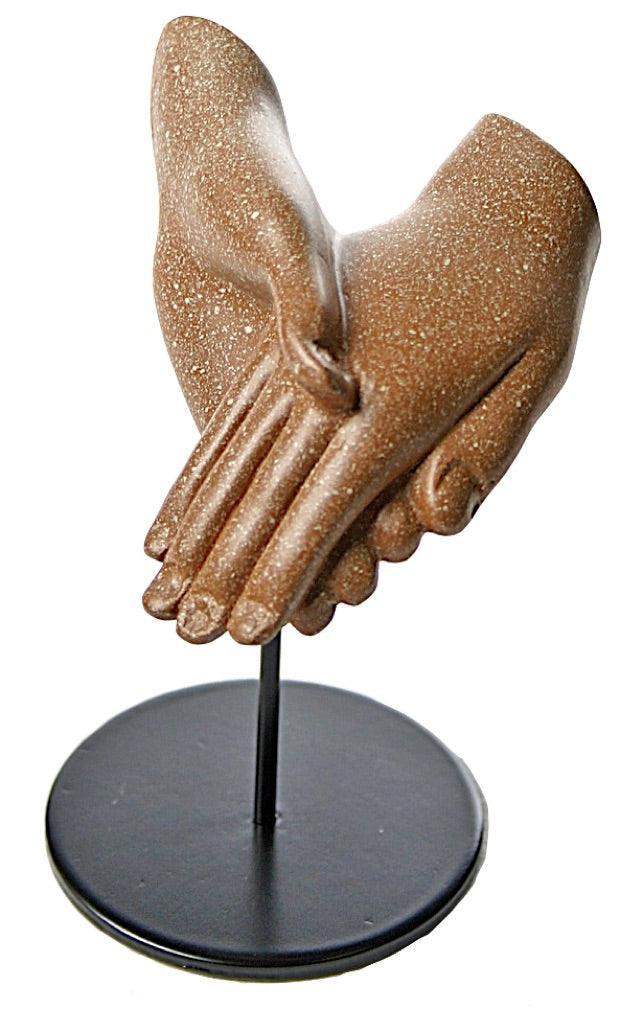
Egyptian Lovers Hands Clasping Statue, Akhenaten and Nefertiti 4H
Egyptian Lovers Hands Clasping Statue, Akhenaten and Nefertiti 4H
SKU:EG06
Out of stock
Couldn't load pickup availability
Hand in Hand for Eternity: The Akhenaten Nefertiti Hands Statue
This Akhenaten Nefertiti hands statue shows two hands that grasp in timeless, everlasting love. It measures 4 in H x 3.5 in W x 3 in D including its stand.
The hands belong to Pharaoh Akhenaten and his queen Nefertiti. The resin replica rests on a removable black metal base.
Product Details
- Material: Resin with a black metal base
- Base: Black, removable
- Dimensions: 4 in H x 3.5 in W x 3 in D including stand
- Weight: 0.4 lbs
- Collection: Parastone Mouseion 3D Collection of museum replicas
- Original: Lovers' hands, Egypt, New Kingdom, 18th Dynasty, about 1350 BC
- Product number: EG06
A New Naturalism
This sculpture is evidence of a new naturalism in Egyptian art. Akhenaten was Amenhotep IV, the father of Tutankhamun.
He cared less about war than his predecessors and more about religion and the arts. His reign freed artists from some old rules.
Gods and pharaohs could then appear in poses from daily life. We call the result the Amarna style, after the city of Tell el-Amarna.
Family Ties in Stone
The Met notes that Amarna sculptors made group statues linking family members by held hands or interlaced arms. Our Egyptian lovers hands figurine belongs to that tradition.
See more in our Egyptian Museum Replicas and the wider Parastone Museum Replicas.
Display and Care
At 0.4 lbs, the Akhenaten Nefertiti hands statue suits a desk or shelf. Lift this clasped hands Egyptian replica from its stand to dust it. Keep it away from damp air.
Amarna in Brief
Akhenaten ruled from 1353 to 1336 BC. He made Aten, the sun disk, the chief god. An Amarna style hands statue like this one keeps his tender image of the royal family.
For More Reading from the Web
- Read how Akhenaten's reign transformed Egyptian art, from long faces to tender family scenes. Art, Architecture, and the City in the Reign of Amenhotep IV (Akhenaten) - The Metropolitan Museum of Art

FAQs
Got a question? We are here to answer