


Akua'ba Fertility Statue | Asante Ghana African Art
Akua'ba Fertility Statue | Asante Ghana African Art
SKU:AFR03
Out of stock
Couldn't load pickup availability
An Akua'ba Fertility Figure from the Asante Kingdom, Ghana
The Akua'ba fertility statue is one of the most recognizable forms in West African art. These carved figures were made and carried by Asante women hoping to conceive, or by pregnant women seeking a healthy, well-formed child. The name comes from a story still told in Ghana: a woman named Akua, unable to conceive, visited a priest who instructed her to commission a carved wooden figure and carry it at her back as she would carry a real child. When she became pregnant, her neighbors, who had mocked her — calling the figure "Akua's child," or Akua ba — gave the object its name.
The Asante are the largest ethnic group in Ghana, historically centered around Kumasi in the Ashanti region. The Asante Kingdom rose to dominance in the late 17th century under Asantehene Osei Tutu and became one of the most powerful states in West Africa, known for its goldwork, textile traditions, and centralized political structure. The Akua'ba figure emerged within this culture as an object with both spiritual and social function — not a decorative ornament, but a carried companion with a specific purpose.
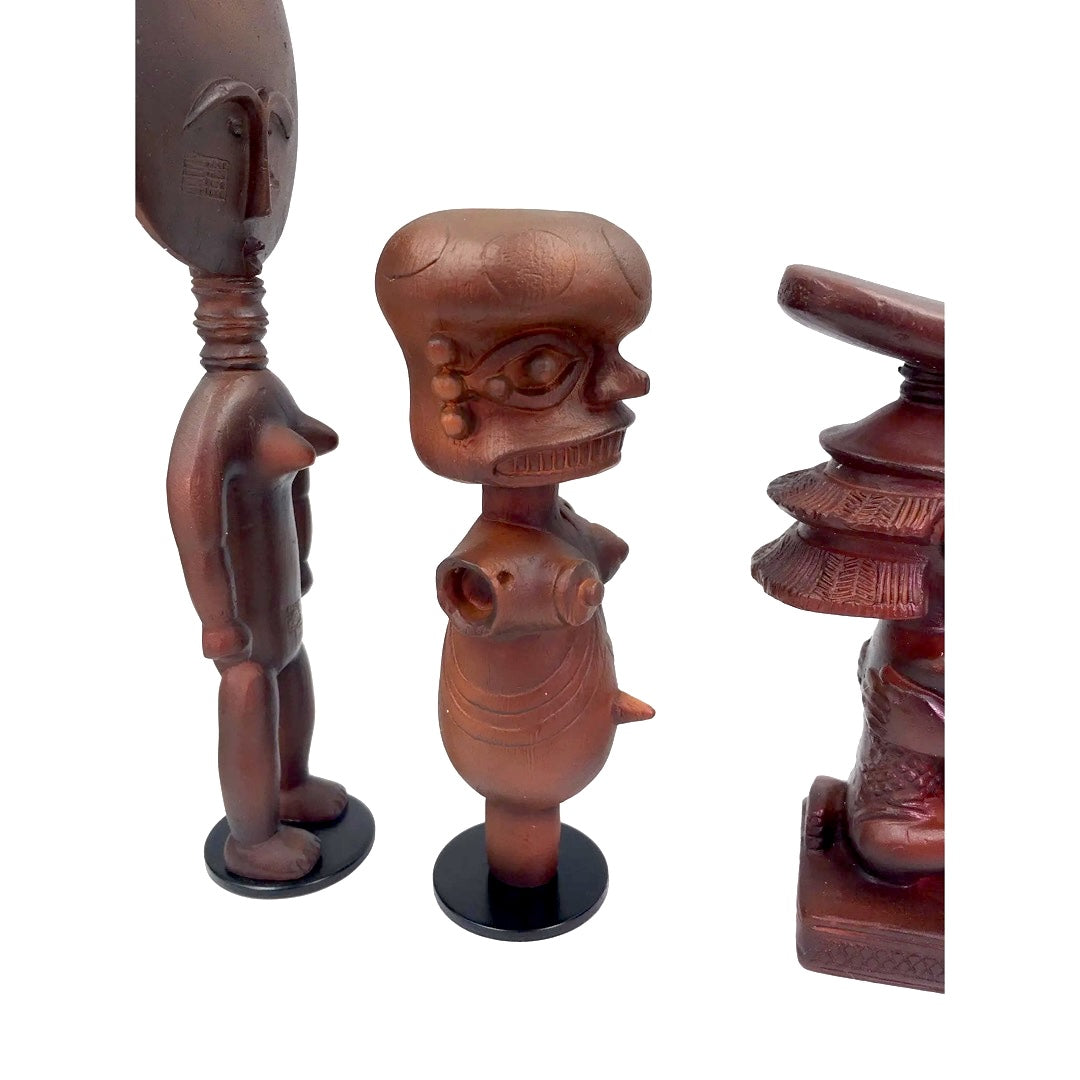
This African fertility figurine replica is based on 19th-century Asante examples. The disc-shaped head is the figure's most distinctive feature: a wide, flat circle atop a cylindrical neck, with simplified horizontal arms and a compact lower body. In Asante aesthetics, a broad, smooth forehead was considered a mark of beauty and was associated with the desired qualities of an unborn child. Women would wrap the figure in cloth, adorn it with beads, and carry it at the small of the back — the same position in which an infant would be carried. When a child was born healthy, the figure was sometimes donated to a shrine.
This Asante Ghana fertility statue is part of the Parastone African Collection. It is cast in resin with a wood finish and includes a black metal base.
- Material: Resin with wood finish
- Base: Black metal
- Size: 8 in H x 3.5 in W x 1.25 in D
- Weight: approx. 1.6 lbs
- Collection: Parastone African Collection
- Product Number: AFR03
The Asante Kingdom and Its Visual Culture
The Asante Kingdom developed a sophisticated visual culture in which objects carried social and spiritual weight. Gold regalia, kente cloth, and carved wooden figures were not status symbols alone — they encoded rank, history, and belief. Akua'ba figures were produced by professional carvers and commissioned by families, priests, or shrines. Multiple regional variants exist across the Akan-speaking peoples of Ghana, but the flat disc head associated with Asante examples is the most widely recognized form in museum collections worldwide.
The Female Figure's Form
Original 19th-century the Akua'ba fertility statue was carved from wood — typically Sese wood — and often finished with a dark, smooth surface achieved through charcoal, oil, or handling over time. The abstracted form is intentional: the emphasis falls on the head rather than the body, reflecting which features were culturally associated with vitality and beauty. Arms are often rendered as simple horizontal bars; the lower body is minimal. This replica preserves the proportions and silhouette of period examples, with a resin cast finished to suggest the dark wood surface of the originals.
Displaying Your Akua'ba Fertility Statue
The black metal base keeps the figure stable on a flat surface. The vertical silhouette and strong circular head make it a clear focal point in a shelf arrangement or cultural collection display. It pairs well with other West African or Akan-related works. Dust with a soft, dry cloth. Avoid harsh cleaners and prolonged direct sunlight. Lift from the base when moving.
For More Reading


FAQs
Got a question? We are here to answer