

Allosaurus Fossil-in-Rock Cast | Museum-Quality Paleontological Reproduction 12L
Allosaurus Fossil-in-Rock Cast | Museum-Quality Paleontological Reproduction 12L
Share this product
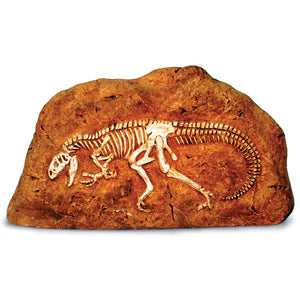
Allosaurus Fossil-in-Rock Cast | Museum-Quality Paleontological Reproduction | Museumize
Allosaurus fossil-in-rock cast � a complete dinosaur skeleton embedded in matrix, as found in the field. 12 inches, compound stone. Museum-quality paleontological reproduction. Made in USA.
SKU:SK730
In stock
Couldn't load pickup availability
Before a fossil ever reaches a museum display case, it passes through the most dramatic phase of its existence: the moment of discovery, still locked in the surrounding rock matrix exactly as it was deposited millions of years ago. This Allosaurus fossil-in-rock cast captures that moment permanently -- a complete Allosaurus skeleton embedded in stone, frozen in the position in which it was found, as if the excavation stopped the instant the field crew brushed it clean.
The Field Discovery, Preserved Forever
This dinosaur skeleton embedded in rock replica measures 12 in L x 6 in W and reproduces the skeletal layout of Allosaurus fragilis -- the dominant predator of the Late Jurassic Morrison Formation -- with the surrounding matrix intact. The compound stone fossil display USA is hand-cast and hand-detailed in the USA, with surface textures that convincingly distinguish bone from matrix. Every rib, vertebra, and limb element is visible within the stone, creating a piece that reads as both a natural history artifact and a sculptural object.
The Allosaurus Fossil-in-Rock Cast for Display and Education
This museum-quality paleontological reproduction is ideal for natural history educators who want to show students what a field specimen actually looks like before preparation -- still in situ, still in matrix, still telling the story of its discovery. For collectors, it occupies a unique visual niche: neither a mounted skeleton nor a loose bone cast, but something closer to the experience of fieldwork itself. Weighs approximately 8 lbs.
Explore more in our Prehistoric Collection and our Natural History Collection.
Product Details
- SKU: SK730
- Dimensions: 12 in L x 6 in W
- Weight: Approx. 8 lbs
- Material: Compound stone, hand-cast in the USA
- Finish: Hand-painted matrix and bone detail
For a natural history context, visit the Smithsonian National Museum of Natural History.
