


Ankylosaurus Dermal Armor Scute Fragment - Authentic Hell Creek Fossil Specimen
Ankylosaurus Dermal Armor Scute Fragment - Authentic Hell Creek Fossil Specimen
SKU:80-112-0042-201-36
In stock
Couldn't load pickup availability
An Ankylosaurus Armor Fossil From the Hell Creek Badlands
This Ankylosaurus armor fossil is a fragment of an Ankylosaurus scute, a bony plate that covered the animal. It measures about 0.5 in (2 cm). It was recovered on private land in the Hell Creek Formation, South Dakota.
Product Details
- SKU: 80-112-0042-201-36
- Specimen: Ankylosaurus scute fragment, a dinosaur armor fossil
- Specimen size: About 0.5 in (2 cm)
- Formation: Hell Creek Formation, South Dakota (private land)
- Display: Glass-topped riker case, 4.5 in x 3.5 in
- Includes: Information card that serves as the certificate of authenticity
- Note: Each Hell Creek dinosaur fossil fragment varies in size and shape
Armor That Grew in the Skin
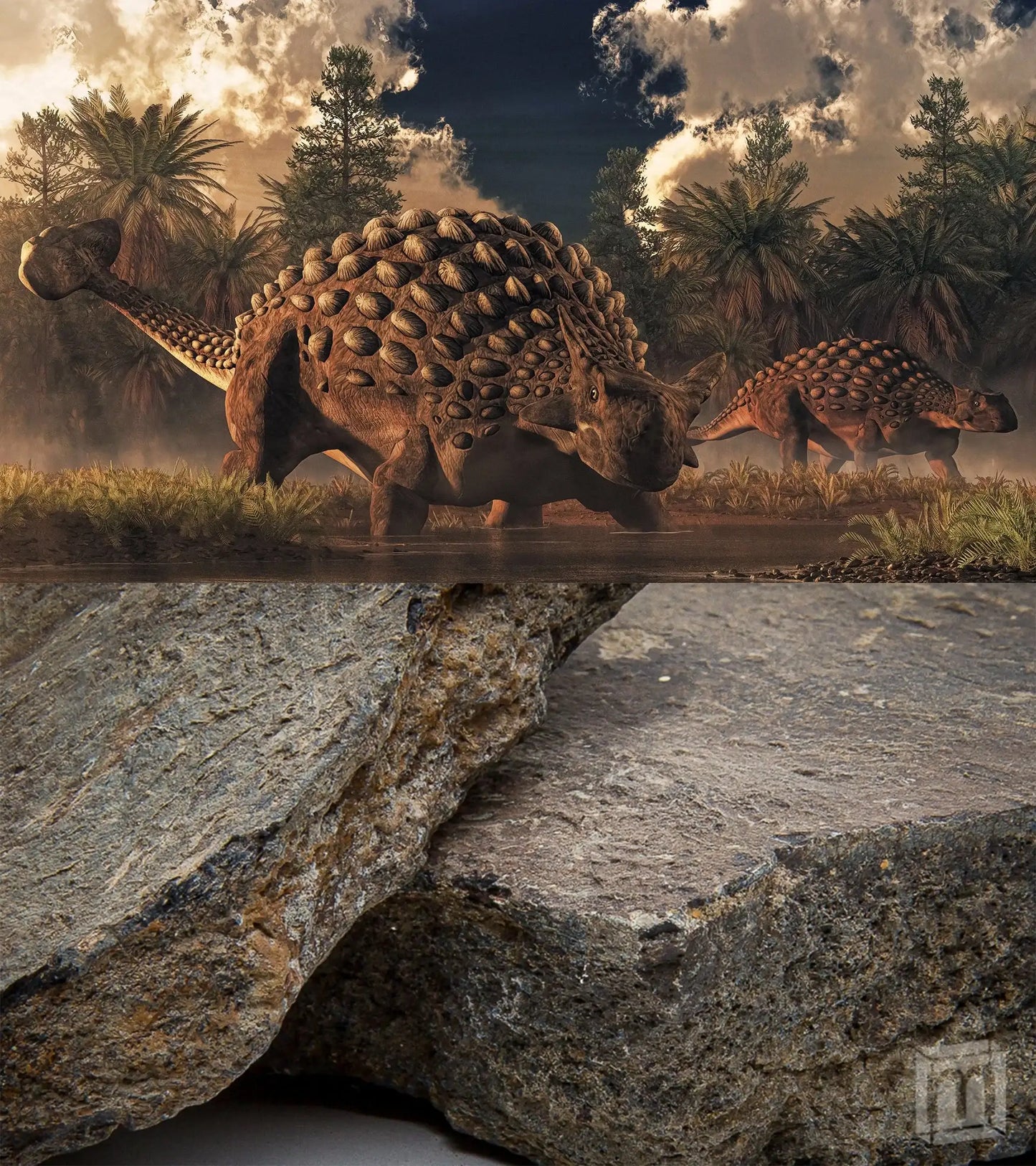
The plates of Ankylosaurus were not part of the skeleton. They formed within the skin, a type of growth called an osteoderm. Crocodiles and armadillos grow armor in a similar way.
A scute like this was large and oval, and it helped guard the neck and shoulders. This Ankylosaurus armor fossil was once a shield against predators such as T. rex.
A Heavy Tank of the Cretaceous
Ankylosaurus was about 8 m long and weighed roughly 8,000 kg. It lived in North America from about 68 to 66 million years ago. A heavy tail club was likely swung from side to side to fend off attackers.
The first bones were found in 1906 in the Hell Creek Formation of Montana. Any Hell Creek dinosaur fossil adds to that story. See more in our Prehistoric Collection and our Natural History Collection.
Display and Care
Keep the Ankylosaurus armor fossil case away from direct sun and damp air. Open it only when necessary, since this dinosaur armor fossil can chip. The card names the specimen and the formation.
About the Ankylosaurs
Ankylosaurs spread across the world and span more than 90 million years of the fossil record. Their bodies were covered in plates and spikes. Few other dinosaurs carried so much natural armor, which makes any Ankylosaurus armor fossil special.
For More Reading from the Web
- Meet Ankylosaurus, from its first discovery to the tail club that defended it. Ankylosaurus - Natural History Museum, London

FAQs
Got a question? We are here to answer