

Aztec Solar Calendar Precolumbian Wall Art Hanging Relief Plaque 10.75H
Aztec Solar Calendar Precolumbian Wall Art Hanging Relief Plaque 10.75H
SKU:T110590
In stock
Couldn't load pickup availability
The Sun Stone Keeps Time: An Aztec Solar Calendar Plaque
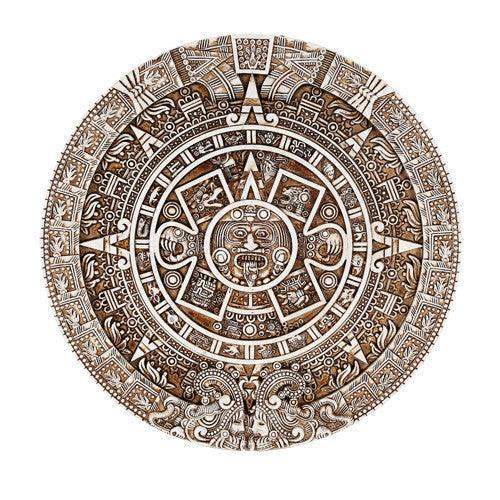
Concentric rings of glyphs surround the fierce face of the sun god. This Aztec solar calendar plaque reproduces the great Mexica stone calendar. The original is in the National Museum of Anthropology in Mexico City. It is cast in resin with an aged finish.
The original stone is about 11 feet across and weighs some 25 tons. It records the Aztec view of time, including the five suns, or ages, of the world. We live in the fifth. A Mexica calendar relief is a vivid link to that world.
The Aztecs kept two calendars. The Xiuhpohualli counted the solar year, and the Tonalpohualli counted sacred days. This Aztec Sun Stone replica brings that sacred order to a wall.
Cosmos Carved in Stone
Each ring holds symbols for days, ages, and directions. The sun's face sits at the center, tongue extended. This Precolumbian wall art rewards close study. This Aztec Sun Stone replica is a conversation starter.
See more in our Precolumbian collection. The Aztec solar calendar plaque comes with a bracket on the back for easy hanging.
Product Details
- Subject: Aztec Sun Stone, Mexica calendar
- Original: National Museum of Anthropology, Mexico City
- Material: Resin, aged finish
- Size: 10.75 in H x 10.75 in W x 0.75 in D
- Weight: 3-4 lbs
- Mounting: Bracket on back
- SKU / PN: New Attic
Display Notes
Hang the Aztec solar calendar plaque on a secure wall hook using the back bracket. Raking light brings out the relief. Dust it gently. Every Aztec solar calendar plaque suits a study or library.
The Aztec Sun Stone
Carved in the late 1400s, the stone was buried after the Spanish conquest. Workers rediscovered it in Mexico City's main square in 1790. It is often called a calendar, though scholars debate its exact purpose. Today it is a national symbol of Mexico and a masterpiece of Mexica art.
For More Reading
FAQs
Got a question? We are here to answer