


Egyptian Cat Bastet Pierced Drop Earrings Museum Jewelry
Egyptian Cat Bastet Pierced Drop Earrings Museum Jewelry
SKU:6720
In stock
Couldn't load pickup availability
A Sacred Cat at Your Ear: Bastet Cat Earrings
A small seated cat hangs from each ear in antique gold plate, its ears pricked and its body upright. These Bastet cat earrings are one inch long and half an inch deep.
The Egyptian cat earrings are adapted from figures made in the Late Dynastic period, 717 to 332 BC.
Product Details
- Material: 24K gold plate over pewter
- Ear wires: Sterling silver
- Dimensions: 0.5 in front to back x 1 in L
- Style: Bastet drop earrings, cat goddess jewelry
- Origin: Made in USA
Bastet, Lady of the Home
Bastet, also spelled Bast, was the goddess of love and the protector of home, mothers and children. Cats were her special animal.
Egyptians read the male cat as the sun god in animal form. The female cat stood for the solar eye, a guardian who watched over the household.
Cats in Bronze
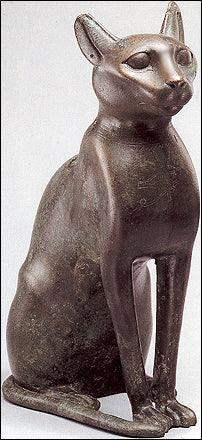
Cat figures became very common in the Late Period. A hollow-cast bronze cat at the Brooklyn Museum dates from 664 to 343 BC. It has a wedjat eye incised on the neck and a scarab on the brow.
Its ears are pierced, probably for gold loops. Egyptian cat earrings echo that detail of ancient dress.
Wearing and Display
The sterling silver ear wires suit most ears. Keep the Bastet cat earrings dry and wipe them with a soft cloth. Store them in a small box.
Cat goddess jewelry looks best with hair swept back. See more in our Egyptian Museum Replicas and Museum Jewelry Earrings. Bastet drop earrings are light enough for all day.
About Bastet
Bastet began as a fierce lioness goddess and slowly became a gentle cat. Her cult centered on the city of Bubastis in the Delta. Bastet cat earrings carry that softer side. Bastet drop earrings and other cat goddess jewelry make a quiet nod to Egypt.
For More Reading from the Web
- Meet a real bronze cat from the Late Period, with a sacred eye on its neck. Egyptian cat earrings begin with figures like this. Cat (Bastet) - Brooklyn Museum

FAQs
Got a question? We are here to answer