


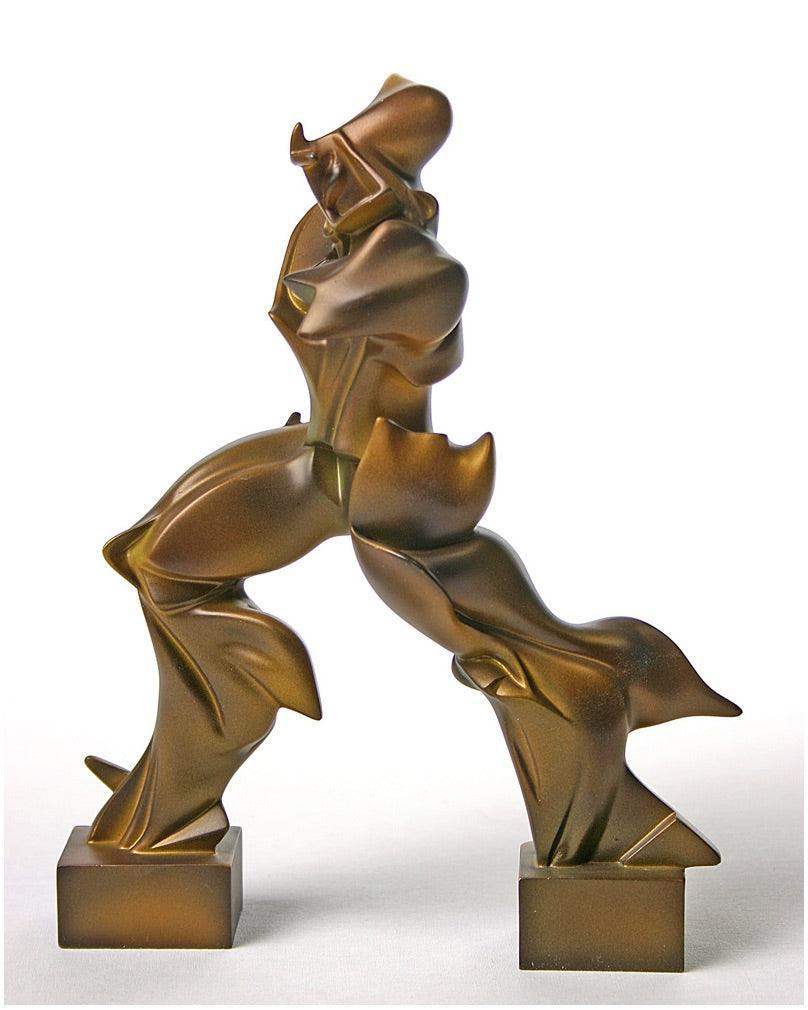
Futuristic Man Statue by Umberto Boccioni, Unique Forms of Continuity in Space 8H
Futuristic Man Statue by Umberto Boccioni, Unique Forms of Continuity in Space 8H
SKU:BOC01
In stock
Couldn't load pickup availability
A Body Made of Speed: The Boccioni Futuristic Man Statue
This Boccioni Futuristic Man statue shows a striding figure that seems to blend with the air around it. It measures 8 in H x 6 in W x 1 in L. The resin has hand painted color details.
Umberto Boccioni made the original bronze in 1913. Its title is Unique Forms of Continuity in Space.
Product Details
- Material: Collectible quality resin with hand painted color details, matte and glossy finish
- Dimensions: 8 in H x 6 in W x 1 in L
- Weight: 1.4 lbs
- Includes: Full color card with a description of the artist and artwork in four languages
- Collection: Parastone Mouseion 3D Collection
- Product number: BOC01
Sculpture for the Machine Age
The Italian Futurists embraced dynamism and speed. The Boccioni Futuristic Man statue is an icon of early modern art. This Boccioni Futurism replica freezes motion in resin.
Boccioni wrote his technical manifesto of Futurist sculpture in 1912. He urged sculptors to mix different materials in dynamic forms.
Italian Futurism sculpture rejected quiet, timeless poses, and the Boccioni Futurism replica keeps that restless stance. It wanted the energy of electricity, cities, and photography.
The Original in Bronze
The Museum of Modern Art in New York holds a bronze cast. Seen as a Boccioni striding figure statue, it shows a body dissolving into speed. The figure fuses with the space around it, shaped by speed and wind.
Explore more modern art in our Parastone Museum Replicas and Museum Statues Collection.
Display and Care
At 1.4 lbs, the Boccioni Futuristic Man statue suits a desk or shelf. Dust it with a soft dry brush. Keep the finish away from strong sun.
Umberto Boccioni in Brief
Boccioni was born in Reggio di Calabria and left for Rome at 18. There Giacomo Balla taught him divisionism. In 1910 he met the writer Marinetti, the spiritual father of Futurism.
For More Reading from the Web
- See the bronze Unique Forms of Continuity in Space at the Museum of Modern Art. Unique Forms of Continuity in Space - The Museum of Modern Art
- Read how Boccioni's striding figure became an icon of Futurism. Unique Forms of Continuity in Space - Wikipedia


FAQs
Got a question? We are here to answer