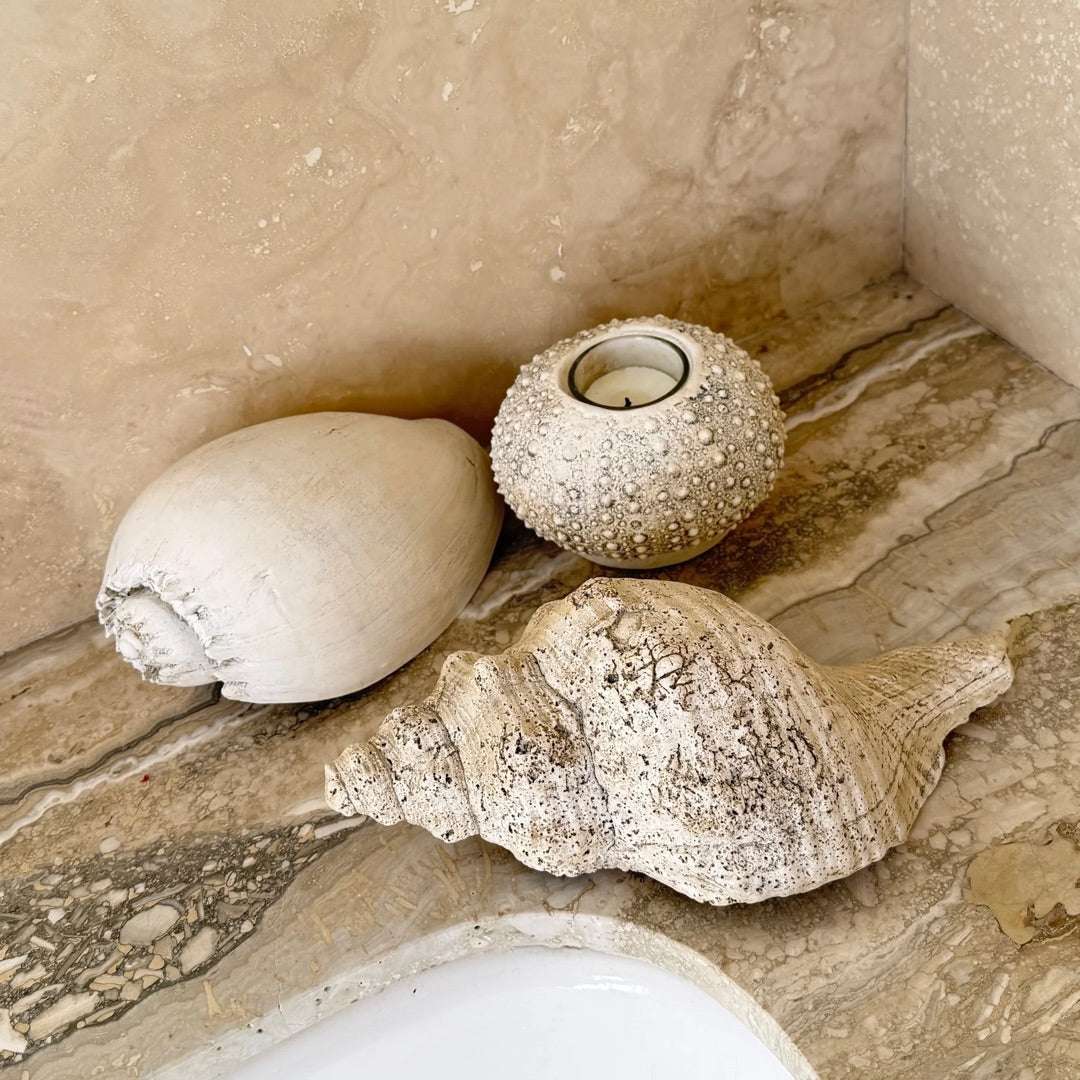
Caribbean Conch Shell Replica, Hand Cast Plaster Seashell
Caribbean Conch Shell Replica, Hand Cast Plaster Seashell
SKU:HP40520FOS
In stock
Couldn't load pickup availability
A Caribbean Conch Shell Worn by the Ocean
The surface of this Caribbean conch shell looks aged, as if the ocean had worn it down. It is hand cast in plaster in a Fossil finish. It measures 10.5 in W x 6 in D x 10.5 in H. The Fossil finish is a weathered stone tone.
Product Details
- Material: Hand cast plaster
- Finish: Fossil
- Dimensions: 10.5 in W x 6 in D x 10.5 in H
- Weight: 1 lb
- Package dimensions: 14 in x 8 in x 6 in
- Production: Made to order in the USA, ready to ship in 2 to 3 weeks
- Note: Hand cast, so appearance may vary from piece to piece
- Product number: HP40520FOS (Fossil)
About the Aged Surface
The maker calls the texture imperfect, a record of the wear of the ocean. The piece stands alone in a minimal setting.
Conch are critically depleted in the oceans where they once thrived. A cast lets the form stay in the room while the animal stays in the sea.
As a conch shell replica, it suits a minimal room with few objects. It works as aged shell decor on a console or a pedestal. A plaster conch like this one keeps the quiet profile of a shell found on a beach. The Caribbean conch shell does best in a room with few objects.
Bringing Nature Indoors
Long before photography, botanists and naturalists collected samples from around the world to catalog nature. They kept the best examples at home. A Caribbean conch shell on your shelf echoes that custom. Browse more casts in our Ocean Seashells Beach Nautical collection.
Made to Order
Each piece is cast to order in the USA. Production takes 2 to 3 weeks before it ships. Hand casting means color and surface vary slightly from piece to piece. This cast is offered in Fossil only.
Placement and Care
Set it on a shelf, console or mantel, on a flat dry surface. Plaster is heavy for its size. Dust it with a soft dry brush and keep it indoors.
About Albertus Seba
Albertus Seba was an Amsterdam apothecary in the 18th century. He collected natural specimens well beyond what his trade required. After his death, his heirs auctioned the collection to finish publishing his four-volume catalogue. Much of it now sits in natural history museums.
His four volumes recorded the animals and shells he had gathered, drawn and described one by one.
For More Reading from the Web
- Albertus Seba, George Perry and the naturalists who catalogued shells, plants and animals from around the world: Natural Curiosities - The Metropolitan Museum of Art
- Meet the American shell collectors of the 1800s, from Thomas Say to Edgar Allan Poe's borrowed textbook: The Conchologists: Searching for Seashells in 19th Century America - Biodiversity Heritage Library