


Degas Rose Ballerina Dancer Statue from Rose et Vert Museum Replica
Degas Rose Ballerina Dancer Statue from Rose et Vert Museum Replica
SKU:309MC
In stock
Couldn't load pickup availability
Grace and Pride | Degas Rose Ballerina Dancer Statue from Rose et Vert
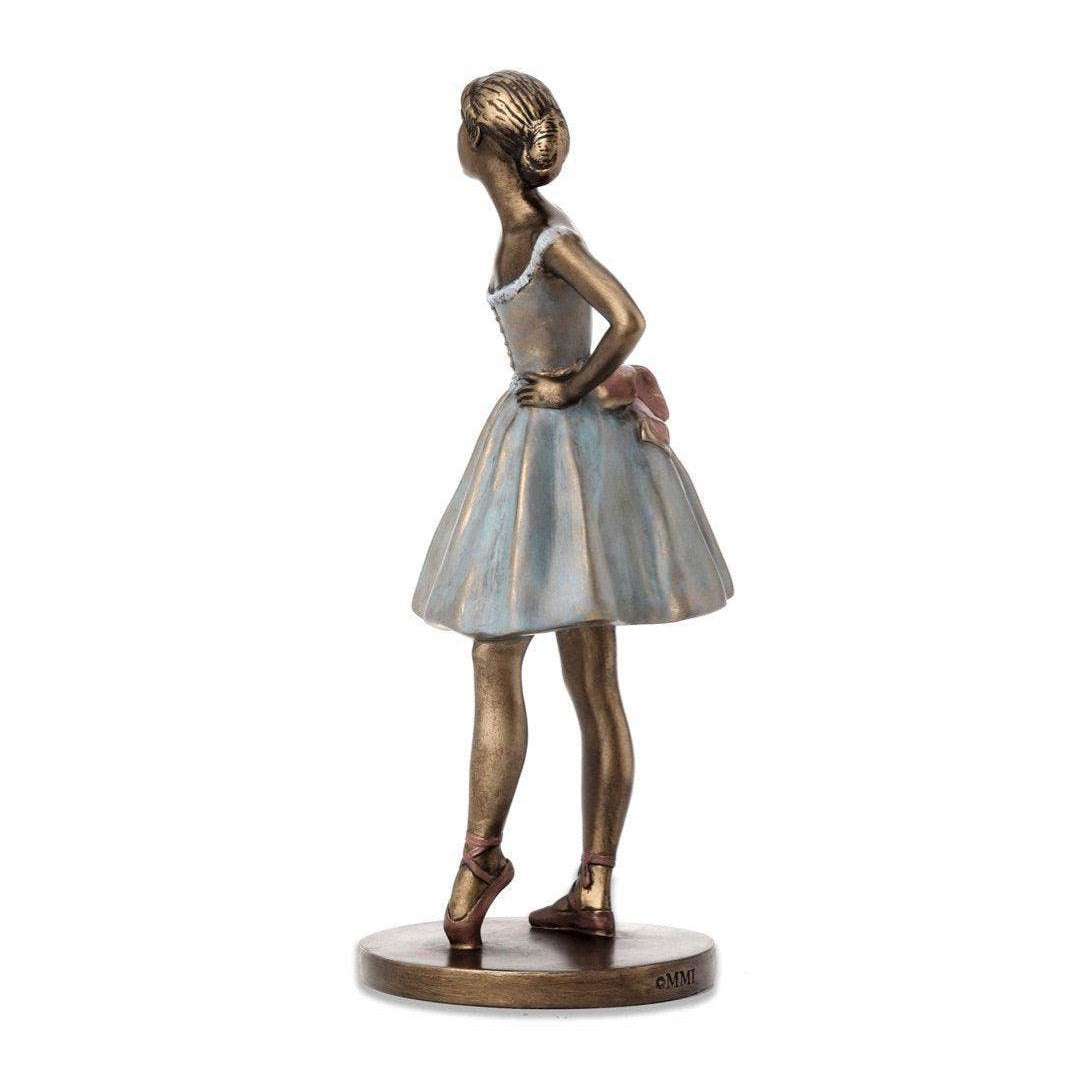
Degas rose ballerina dancer statue captures a moment of confident poise. Unlike weary chorus dancers caught off-guard, Rose stands in full performance dress—a flowing tutu with an elegant bow at the back. Her posture radiates pride and control. Her muscles are sharply defined beneath the delicate costume. She is not waiting. She is present, composed, ready. This is Degas's interpretation of the ballerina in her full glory.
This Degas ballet dancer figurine represents a different facet of the artist's obsession with ballet. While Degas is most famous for his sculpture "Little Dancer of Fourteen Years," Rose reveals another dimension of his vision—the mature, accomplished performer at the height of her artistry. Adapted from his 1894 painting "Danseuses: Rose et Vert," this replica honors one of Degas's most compelling explorations of the ballerina form. For collectors, it offers a companion to the Little Dancer, expanding the narrative of what Degas saw in the ballet world.
- Degas rose ballerina dancer statue hand-cast crushed stone resin with bronze and color details
- Rose, ballerina in performance dress with bow, standing in confident pose
- Adapted from Degas's 1894 painting "Danseuses: Rose et Vert"
- Measures 8 in H, weighs 1-2 lbs
- Hand-finished with fine sculptural detail and patina
- Suitable for shelf, pedestal, or prominent display
About the Artwork: Danseuses: Rose et Vert (1894)
Degas's 1894 painting "Danseuses: Rose et Vert" presents two ballerinas in rehearsal dress, moments before or after performance. The composition is intimate yet theatrical—capturing the dancers in a private moment that feels staged. The color palette (rose and green) grounds the work in Degas's fascination with how natural and artificial light transformed the human figure.
The adaptation into sculpture elevates the work. In three dimensions, the play of light across the tunic and skirt becomes more dramatic. The bow at the back adds a sculptural element that emphasizes movement and grace.
About the Artist: Edgar Degas and the Ballet Dancer
Edgar Degas is synonymous with ballet. Yet his obsession with dancers extended far beyond simple documentation. He was fascinated by the human body in motion, by the intersection of art and athleticism, by the vulnerability and strength required to perform. His ballerina sculptures and paintings number over 1,500—a lifetime devoted to understanding this single subject from every conceivable angle and emotional depth.
Degas's most famous ballet work, "Little Dancer of Fourteen Years" (1878-1881), caused a scandal at its debut. The sculpture depicted a young, seemingly ungainly adolescent in candid posture—revolutionary for its raw honesty. This Degas ballet dancer figurine, Rose, represents a different chapter in that same artistic journey. Where Little Dancer captures youth and uncertainty, Rose captures maturity and assurance. Together, they chronicle the arc of a dancer's life. He understood not just the physical demands but the psychological complexity of performance. Rose embodies that deepened vision.
The Evolution of Degas's Dancers: From Youth to Mastery
Degas's ballet series spans the full arc of a dancer's journey. This progression reveals Degas's philosophical understanding of ballet. The dance is not a single moment of performance. It is a process of becoming.
For More Reading


FAQs
Got a question? We are here to answer