


Dire Wolf Jaw Fragment - Authentic Pleistocene Fossil Specimen
Dire Wolf Jaw Fragment - Authentic Pleistocene Fossil Specimen
SKU:80-112-0119-201-36
In stock
Couldn't load pickup availability
A Dire Wolf Jaw Fossil From Pleistocene Florida
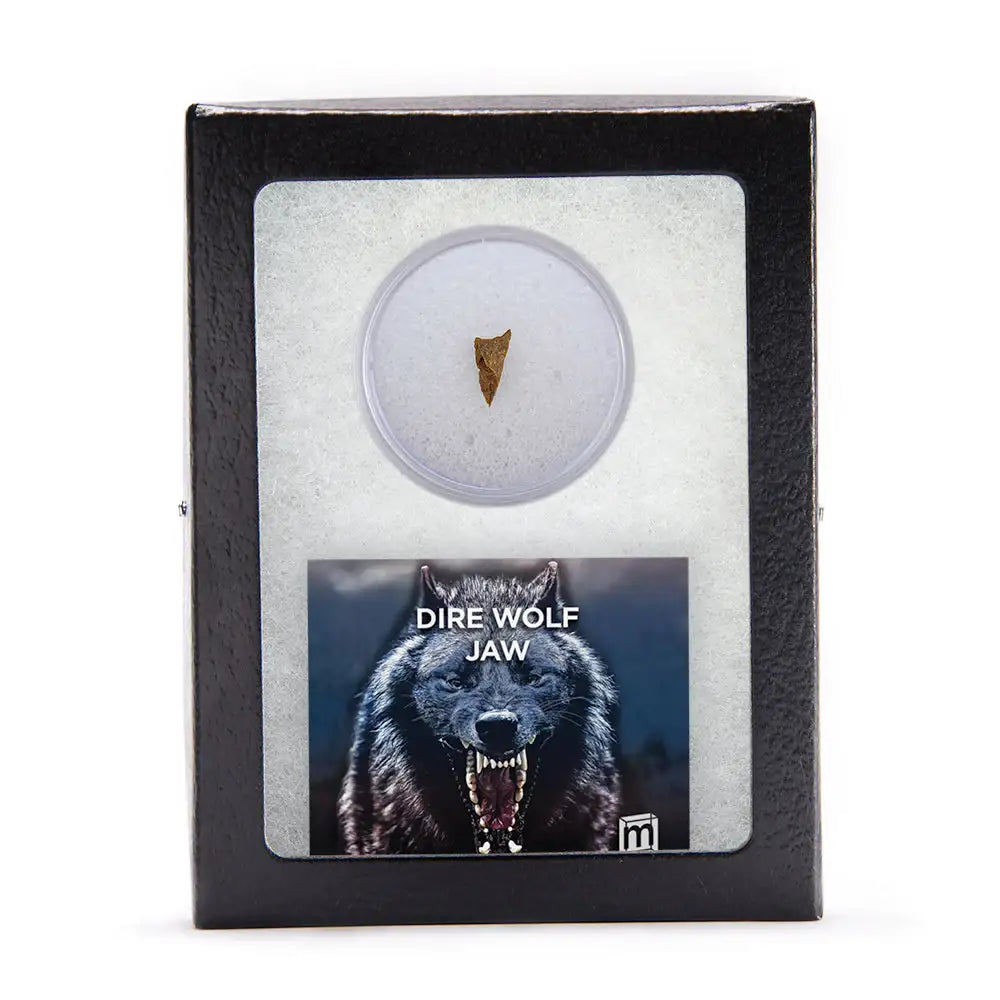
This Dire Wolf jaw fossil is a real fragment of Aenocyon dirus, an Ice Age predator formerly Canis dirus. It was found on private land in Florida and measures about 5 mm. It sits in an acrylic jar inside a glass-topped riker case.
Product Details
- SKU: 80-112-0119-201-36
- Element: Dire Wolf jaw fossil, a jaw fragment
- Origin: Florida, private land
- Specimen size: About 5 mm
- Type: Ice Age wolf fossil from the late Pleistocene
- Display: Acrylic jar in glass-topped riker case, 4 in x 3 in x 1 in
- Includes: Information card that serves as the certificate of authenticity
Not Quite a Giant Wolf
Joseph Leidy described the species in 1854 from remains found beside the Ohio River near Evansville, Indiana. He named it Canis dirus. A 2021 genome study moved it into its own genus, Aenocyon.
Its closest living relatives are African jackals, not the gray wolf. Its range stretched from Alaska to Bolivia. Any Aenocyon dirus fossil comes from a lineage that is now extinct.
Hunters of the Pleistocene
Dire wolves hunted large Ice Age mammals in packs. At the La Brea Tar Pits they are the most common mammal, with more than 4,000 specimens. They lived in Los Angeles between 50,000 and 13,000 years ago.
This Dire Wolf jaw fossil comes from a Florida savannah rich in large mammals. The species disappeared at the end of the Pleistocene. Rapid climate change was a major factor, and human arrival may have added pressure on shared prey.
Browse more Pleistocene predator fossil pieces in our Prehistoric Collection and our Natural History Collection.
Display and Care
Keep the Dire Wolf jaw fossil case away from direct sun. Treat this Ice Age wolf fossil gently, and open the jar only over a soft surface. The card names the Aenocyon dirus fossil and acts as your certificate.
About the Ice Age
The Pleistocene epoch ended about 11,700 years ago. Its cold cycles shaped the animals we now know only from fossils. Dire wolves, mammoths, and saber-toothed cats all vanished as those cycles ended. A Pleistocene predator fossil like this is a small reminder of that world.
For More Reading from the Web
- Explore the dire wolf story from the Tar Pits. The Dire Wolf: An Ice Age Angeleno - Natural History Museum of Los Angeles County


FAQs
Got a question? We are here to answer