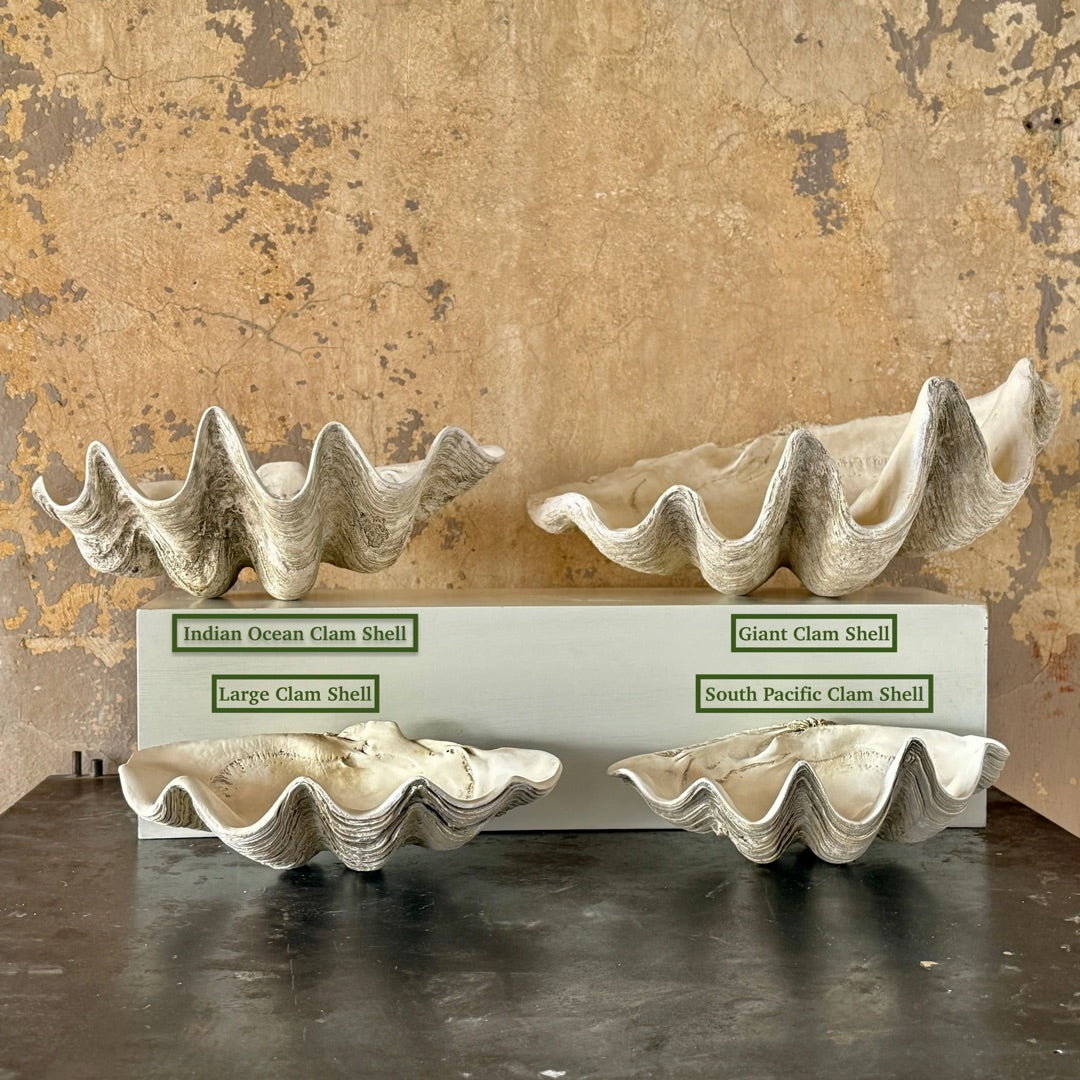
Double Clam Shell Replica, Hand Cast Plaster Seashell
Double Clam Shell Replica, Hand Cast Plaster Seashell
SKU:HP44860SW
In stock
Couldn't load pickup availability
A Double Clam Shell With Both Valves Joined
A clam is built from two matching halves, called valves, and this double clam shell keeps them together. It is hand cast in plaster. It measures 12 in L x 7 in W x 9 in H. Studio White is a clean plaster white, and Fossil is a weathered stone tone.
Product Details
- Material: Hand cast plaster
- Finish: Studio White or Fossil
- Dimensions: 12 in L x 7 in W x 9 in H
- Weight: 4 lb
- Package dimensions: 15 in x 15 in x 12 in
- Production: Made to order in the USA, ready to ship in 2 to 3 weeks
- Note: Hand cast, so appearance may vary from piece to piece
- Product number: HP44860SW (Studio White), HP44860FOS (Fossil)
About the Two Valves
The maker echoes the old saying, happy as a clam in high water. Each piece has natural variance from cast to cast.
Because the valves are joined, the shell reads as a single sculpted form. The seam and the growth lines are the details to study up close.
A plaster clam shell with both valves joined reads as a single sculpted form. Used as coastal clam decor, it sits on a shelf or a table. As a clam shell replica, the double clam shell keeps its seam in clear view.
Bringing Nature Indoors
Bringing the natural world into your home goes back to early botanists and naturalists. They collected samples from around the world to catalog it. A double clam shell carries a little of that habit into a modern room. Browse more casts in our Ocean Seashells Beach Nautical collection.
Made to Order
Each piece is cast to order in the USA. Production takes 2 to 3 weeks before it ships. Hand casting means color and surface vary slightly from piece to piece. Choose Studio White or Fossil at checkout.
Placement and Care
Set it on a shelf, console or mantel, on a flat dry surface. Plaster is heavy for its size. Dust it with a soft dry brush and keep it indoors.
About The Conchologist's First Book
In 1839 a textbook titled The Conchologist's First Book appeared under the name of Edgar Allan Poe. He mostly repackaged an existing book, adding a new introduction and rearranging the plates.
The book shows how popular shell collecting had become in the 1800s.
For More Reading from the Web
- Meet the American shell collectors of the 1800s, from Thomas Say to Edgar Allan Poe's borrowed textbook: The Conchologists: Searching for Seashells in 19th Century America - Biodiversity Heritage Library
- Albertus Seba, George Perry and the naturalists who catalogued shells, plants and animals from around the world: Natural Curiosities - The Metropolitan Museum of Art