

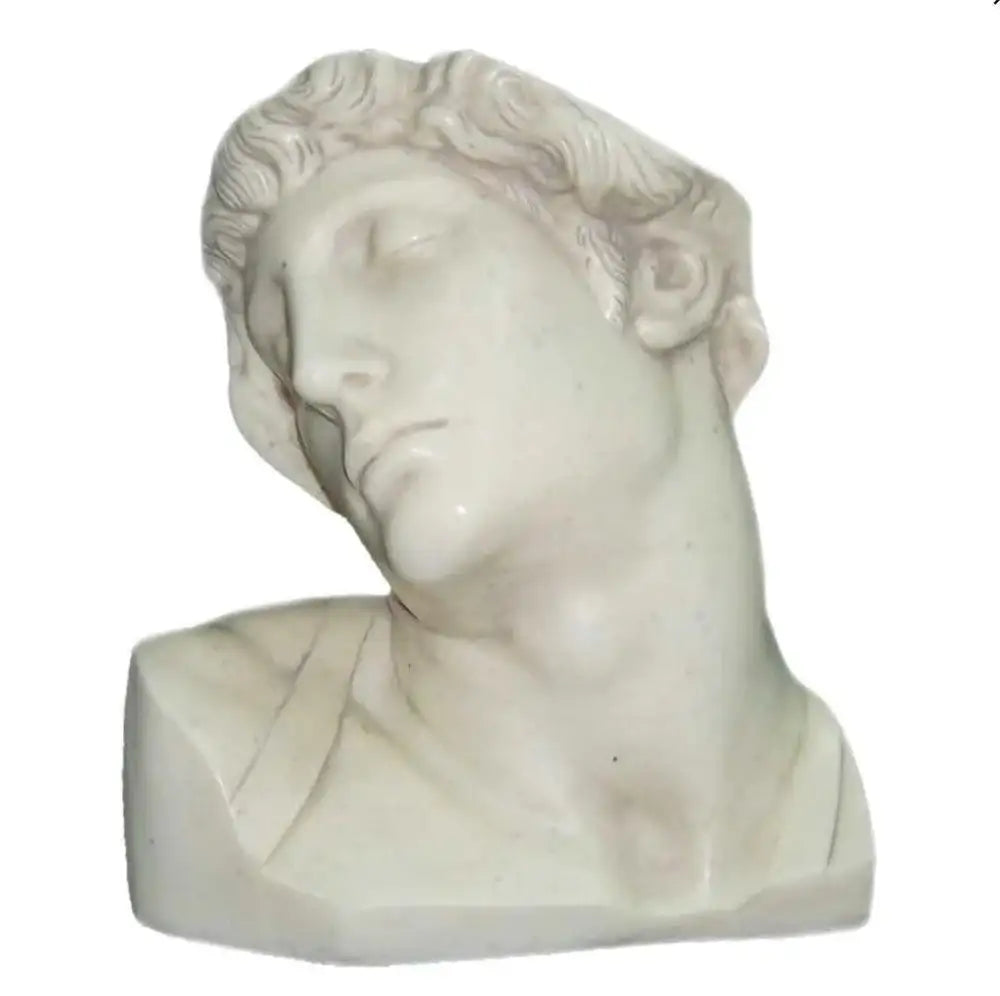
Michelangelo Dying Slave Bust Statue 16H x 13W
Michelangelo Dying Slave Bust Statue 16H x 13W
SKU:6195
In stock
Couldn't load pickup availability
A Dying Slave Bust From Michelangelo's Marble
This dying slave bust is taken from a full figure by Michelangelo Buonarroti. The marble original is now in the Louvre. The bust is plaster in an off-white finish, a soft ivory tone. It stands 16 in tall.
Product Details
- Material: Plaster
- Finish: Off-white
- Size: 16 in H x 13 in W x 8.5 in D
- Weight: About 15 to 17 lbs
Michelangelo and the Tomb of Julius II
Pope Julius II ordered a grand tomb. The first plan held more than 40 figures. Michelangelo was pulled away to paint the Sistine Chapel ceiling. The tomb shrank, and the slaves were dropped. Only two were completed. Michelangelo carved the dying slave bust's marble original between 1513 and 1516. Today the michelangelo dying slave stands in the Louvre.
A Figure That Seems Asleep
The nude figure looks healthy, though the title says dying. His eyes are closed, as if in a trance. Vasari saw captives of lands won by Julius II. Condivi saw the liberal arts enslaved after the pope's death. Later scholars read a soul trapped in the body. The front is highly polished. The back and hair show chisel marks. Viewers still debate what the michelangelo dying slave means.
A Renaissance Slave Sculpture at Home
Around 1546, Michelangelo gave the marble to Ruberto Strozzi. It later passed to the French crown and then to the Louvre. This renaissance slave sculpture brings that story to a shelf. Browse more pieces in our Renaissance collection. Place the dying slave bust at eye level.
About Michelangelo
Michelangelo was a sculptor, painter, and architect of the Italian Renaissance. He left some stone rough, so figures seem to rise from the block. A dying slave bust shows his craft in a smaller form. He returned to the tomb of Julius II several times.
For More Reading from the Web
- Want the full history of the marble? This page covers its dates, its owners, and its meaning. Dying Slave - Wikipedia
- Curious why the tomb was never finished? This essay explains the Slaves and the tomb plan. Michelangelo, Slaves - Smarthistory
FAQs
Got a question? We are here to answer