


Greek Pomegranate Dangle Drop Earrings with Carnelian 1.25L
Greek Pomegranate Dangle Drop Earrings with Carnelian 1.25L
SKU:7261
In stock
Couldn't load pickup availability
Fruit of Fertility: Greek Pomegranate Earrings
A tiny gold pomegranate hangs from each ear, topped by a warm red carnelian bead. These Greek pomegranate earrings are 1.25 in long and 0.4 in wide.
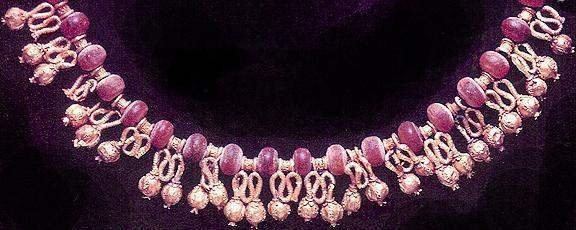
The carnelian dangle earrings are inspired by a Greek necklace from the 6th century BC.
Product Details
- Material: 24K gold plate over pewter, with carnelian
- Ear wires: Gold filled
- Dimensions: 0.4 in W x 1.25 in L
- Style: Pomegranate drop earrings, Greek fertility earrings
- Origin: Made in USA
A Fruit Full of Seeds
The pomegranate is packed with seeds. Greeks read it as a sign of fertility and abundance. It also belonged to the myth of Persephone.
Greek fertility earrings carry that old association in a small shape. The carnelian bead adds a drop of red. Against gold it recalls the seeds inside the fruit.
The Original
The original comes from the Greek coast of Asia Minor or from Lydia, in the 6th century BC. It is said to be in the Art Institute of Chicago.
At Sardis in Lydia, archaeologists found gold pins with pomegranate heads, divided into six segments. Pomegranate drop earrings follow a local fashion.
Wearing and Display
The gold-filled ear wires suit sensitive ears. Keep the Greek pomegranate earrings dry and wipe with a soft cloth.
Carnelian dangle earrings brighten dark hair. See more in our Museum Jewelry Earrings. Greek pomegranate earrings are light enough for daily wear.
About Greek Jewelry
Archaic Greek jewelers worked with gold, stone and tiny repeated shapes. Fruit forms like the pomegranate were popular. They keep that taste. Pomegranate drop earrings and carnelian dangle earrings make a modest, graceful echo.
For More Reading from the Web
- See gold pomegranate-headed pins from Lydia, made in the 6th and 5th centuries BC. Greek fertility earrings share their favorite fruit. Artifacts - Sardis Expedition

FAQs
Got a question? We are here to answer