


Greek Tombstone Stele of Glykylla Wall Hanging Relief 15.25L
Greek Tombstone Stele of Glykylla Wall Hanging Relief 15.25L
SKU:T88130
In stock
Couldn't load pickup availability
A Mistress and Her Maid, Remembered in Stone: A Greek Stele Wall Hanging
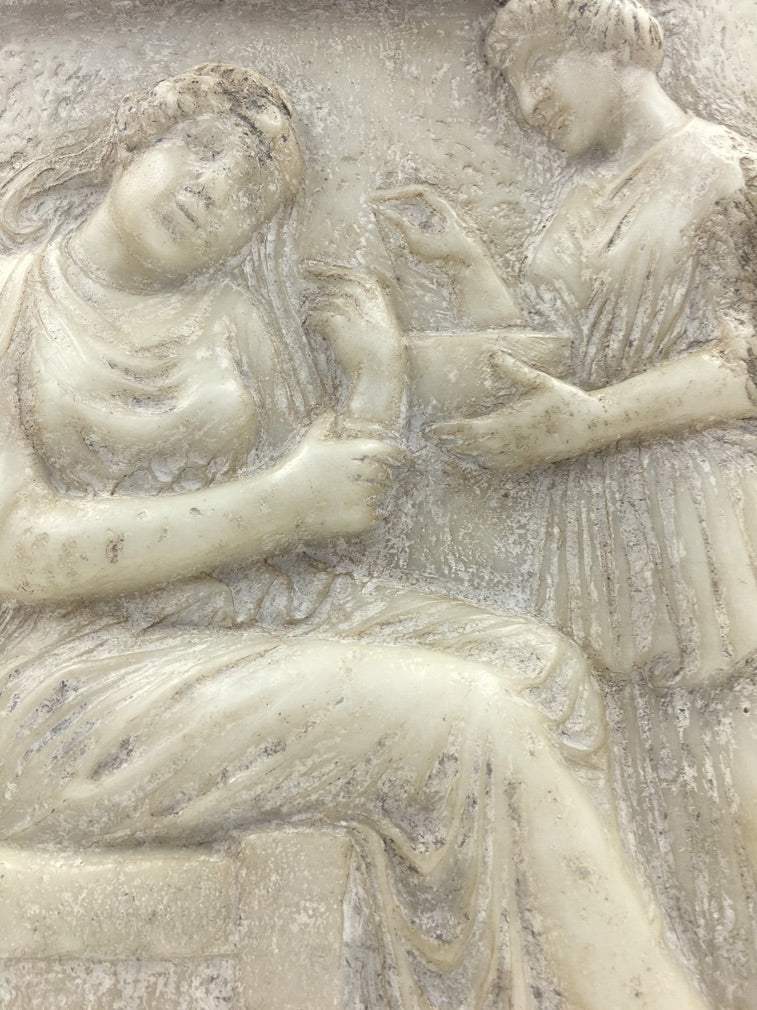
Glykylla sits with her feet on a footstool while her maidservant stands before her. This Greek stele wall hanging reproduces an Athenian tombstone from Classical Greece, about 430 to 400 BC. It was made to celebrate her life.
The upper class woman wears traditional Greek attire. Her calm pose and quiet gaze reflect the restraint of Classical funerary art. The original stone is in the British Museum and was excavated at Thebes. This Greek stele wall hanging keeps that calm.
Athenian families often marked graves with carved reliefs. They showed the dead in ordinary moments, seated, clasping hands, or attended. This Stele of Glykylla keeps that human tone. A Greek funerary relief of this kind turns loss into portrait.
Grief Carved With Restraint
Classical sculptors avoided loud mourning. They gave the dead dignity and a sense of presence. This Greek funerary relief speaks softly. A Classical Greek tombstone replica should be read slowly.
The grey finish recalls weathered marble. Discover more in our Greek and Roman collection. A Greek stele wall hanging like this one suits a study or reading room. The Stele of Glykylla suits a quiet wall.
Product Details
- Design source: Tombstone of Glykylla, Athens, circa 430-400 BC
- Original: British Museum, excavated at Thebes
- Material: Resin with aged grey finish
- Size: 15.25 in L x 9.25 in H x 1.5 in D
- Weight: 6.7 lbs
- Mounting: Wire mount screwed to the back
- SKU / PN: T88130
Display Notes
The wire mount is screwed securely to the back, so the relief hangs flat. A Classical Greek tombstone replica suits a quiet wall with soft light. A Greek stele wall hanging makes a thoughtful conversation piece.
Greek Funerary Stelae
In Classical Athens, carved stelae marked family graves. Scenes of daily life replaced earlier images of warriors and athletes. Women often appear seated, attended, and calm. Many stelae survive, and museums in Athens and London hold fine examples. Their quiet style still moves visitors today.
For More Reading


FAQs
Got a question? We are here to answer