


Hermes Mercury Statue, Winged God in Flight
Hermes Mercury Statue, Winged God in Flight
SKU:8191
In stock
Couldn't load pickup availability
Hermes Mercury Statue: The Messenger God in Flight
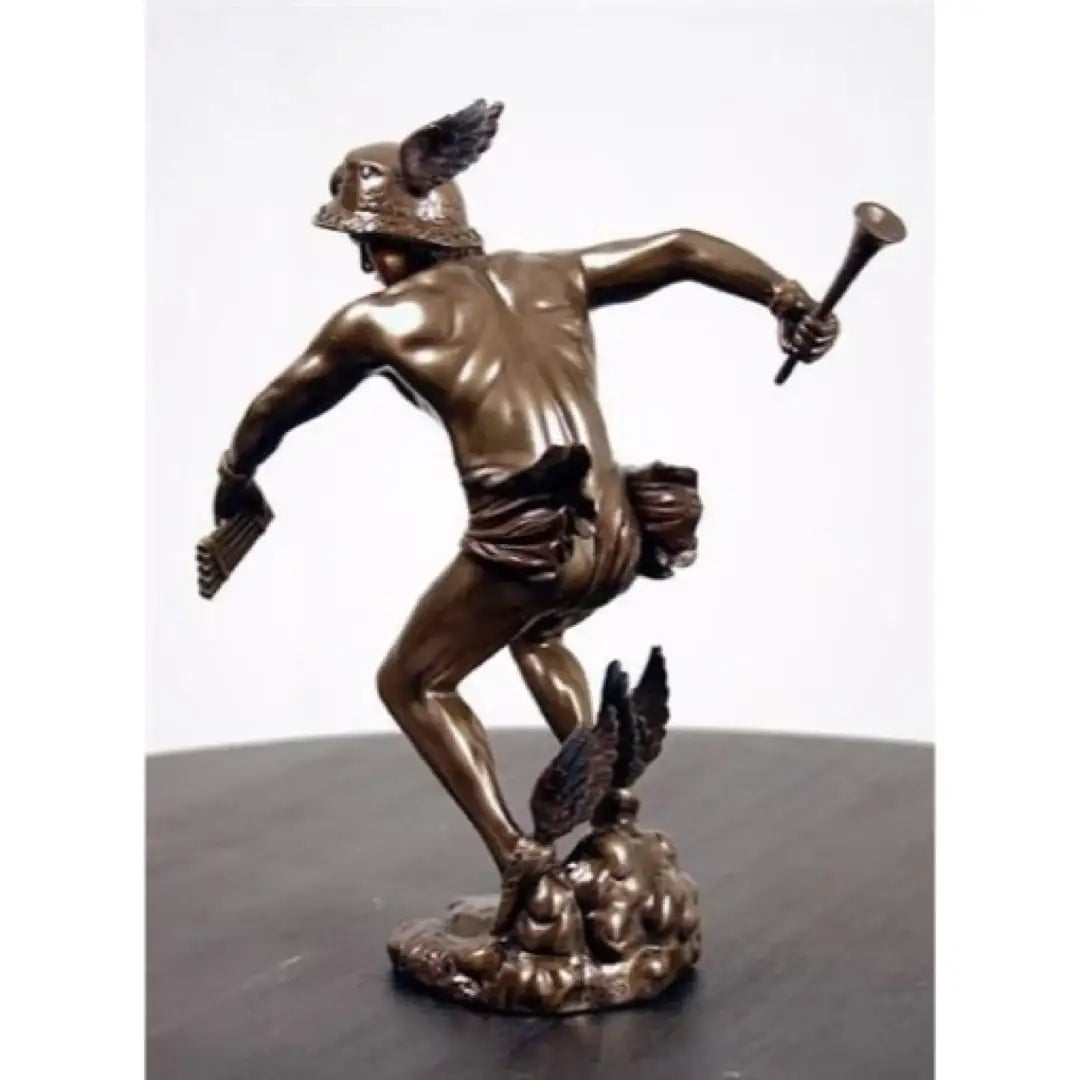
This Hermes Mercury statue shows the messenger god caught mid flight. He wears winged sandals and an eagle crested helmet, carries Pan's pipes in one hand and a trumpet in the other, and rests his feet on clouds as his cloak lifts in the wind.
- Measures 9 in H x 7.5 in D x 3 in W. Weighs 2 lbs.
- Material: Resin with a bronze finish.
- Product Number: 8191.
Hermes and Mercury: One God, Two Names
Hermes was the Greek god of travel, trade, and communication, and the messenger of the Olympian gods. The Romans adopted him as Mercury and kept the same attributes: winged sandals, a winged helmet or petasos, and speed. Statues of this god go back to Archaic Greece, around the 6th century BCE, and continued through the Roman period.
A Long Sculptural Tradition of the Flying Messenger
This design belongs to a tradition of showing Mercury airborne, balanced on one foot as if just launched into the sky. The best known example is Giambologna's bronze Flying Mercury, cast around 1580 and held today at the Bargello Museum in Florence. Our supplier does not identify this desk statue as a reproduction of that specific work, so we present Giambologna's bronze here as context for the pose and attributes, not as a claim that this piece copies it.
Reading the Attributes
Each object Hermes carries has a meaning. The winged sandals, called talaria, gave him speed across land, sea, and the underworld. Pan's pipes connect him to the god Pan and to pastoral music. The trumpet signals his role as herald. Together they mark him as the god who moves fastest between worlds.
See more from our Greek and Roman Collection
Pair with the Winged Nike of Samothrace statue
Who This Hermes Mercury Statue Suits
This winged Mercury desk statue suits anyone who likes Greek and Roman mythology, classical sculpture, or dynamic figures in motion. It displays well on a desk, office shelf, or study, and works as a thoughtful gift for a classics student, a traveler, or a collector of Greek and Roman replicas.
For More Reading from the Web, We Suggest


FAQs
Got a question? We are here to answer