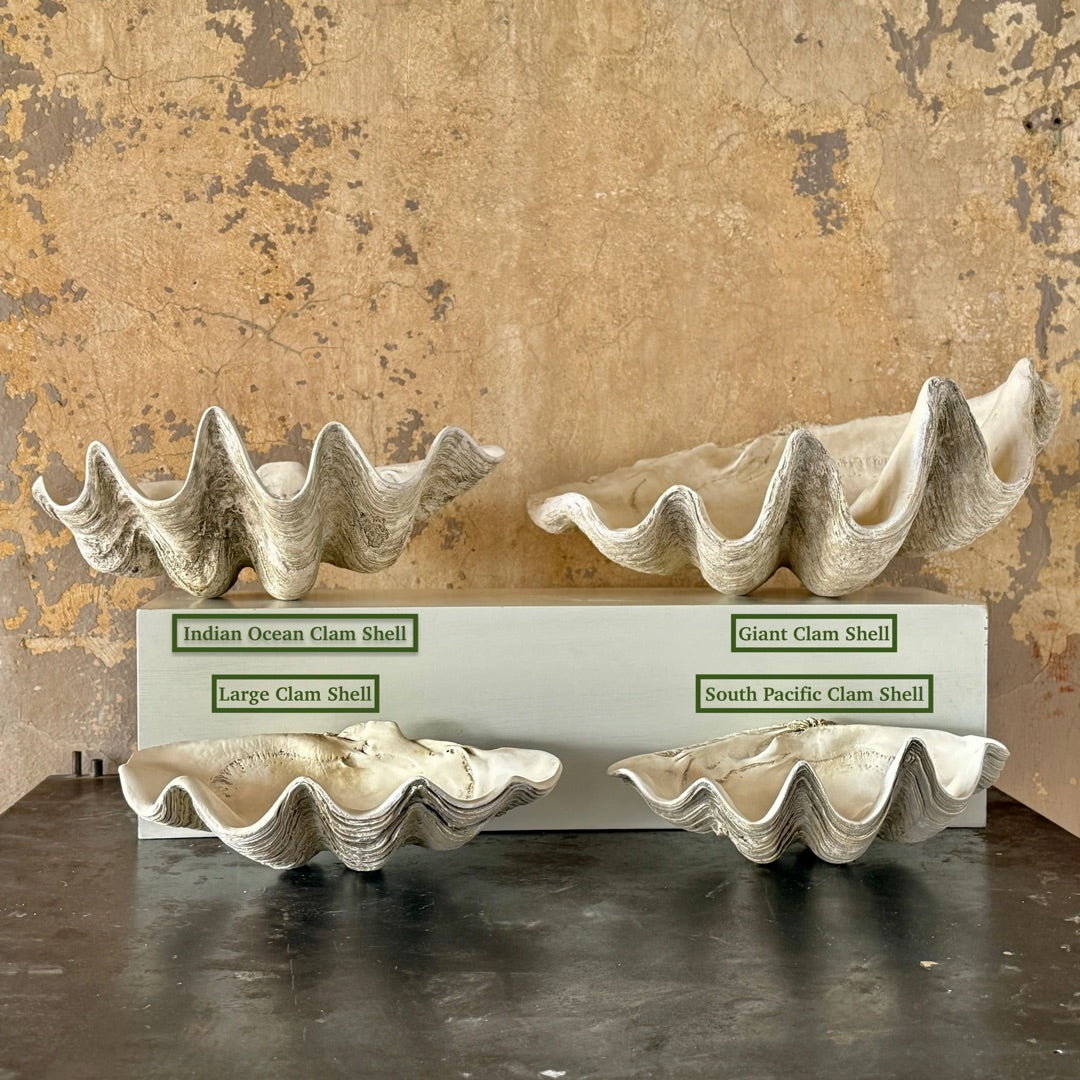
Indian Ocean Clam Shell Replica, Hand Cast Plaster Seashell
Indian Ocean Clam Shell Replica, Hand Cast Plaster Seashell
SKU:HP44930SW
In stock
Couldn't load pickup availability
An Indian Ocean Clam Shell, The Largest of the Casts
The Indian Ocean clam shell opens in a broad fan, with thick ribs that fold along the rim. It is the largest clam shell the maker offers. It is cast in plaster from a shell sourced from the Indian Ocean. It measures 27 in L x 15 in W x 15 in H, in Studio White or Fossil.
Product Details
- Material: Hand cast plaster
- Finish: Studio White or Fossil
- Dimensions: 27 in L x 15 in W x 15 in H
- Weight: 22 lb
- Package dimensions: 32 in x 20 in x 20 in
- Production: Made to order in the USA, ready to ship in 2 to 3 weeks
- Note: Hand cast, so appearance may vary from piece to piece
- Product number: HP44930SW (Studio White), HP44930FOS (Fossil)
About the Indian Ocean Giant Clam
A giant clam can weigh over 400 lb in the wild and live over 100 years. The plaster cast is far lighter at 22 lb.
The mold came from a real shell, so the rim, the ribs and the hinge follow the original.
As a clam shell centerpiece, it anchors a long table or a wide console. This giant clam replica is a plaster clam shell, so it weighs a fraction of the original. The Indian Ocean clam shell is the largest the maker casts.
Bringing Nature Indoors
Bringing the natural world into your home goes back to early botanists and naturalists. They collected samples from around the world to catalog it. A Indian Ocean clam shell carries a little of that habit into a modern room. Browse more casts in our Ocean Seashells Beach Nautical collection.
Made to Order
Each piece is cast to order in the USA. Production takes 2 to 3 weeks before it ships. Hand casting means color and surface vary slightly from piece to piece. Choose Studio White or Fossil at checkout.
Placement and Care
Set it on a console, a deep shelf or the floor. Keep it indoors on a flat dry surface and dust it with a soft dry brush.
About Augustus Addison Gould
Augustus Addison Gould was a Boston physician who described nearly 1,100 species of mollusks. He also helped identify shells brought home by the Wilkes Expedition, which sailed from 1838 to 1842.
Gould was a physician by training. Shells from far-off voyages came to his desk to be identified.
For More Reading from the Web
- Meet the American shell collectors of the 1800s, from Thomas Say to Edgar Allan Poe's borrowed textbook: The Conchologists: Searching for Seashells in 19th Century America - Biodiversity Heritage Library
- Albertus Seba, George Perry and the naturalists who catalogued shells, plants and animals from around the world: Natural Curiosities - The Metropolitan Museum of Art