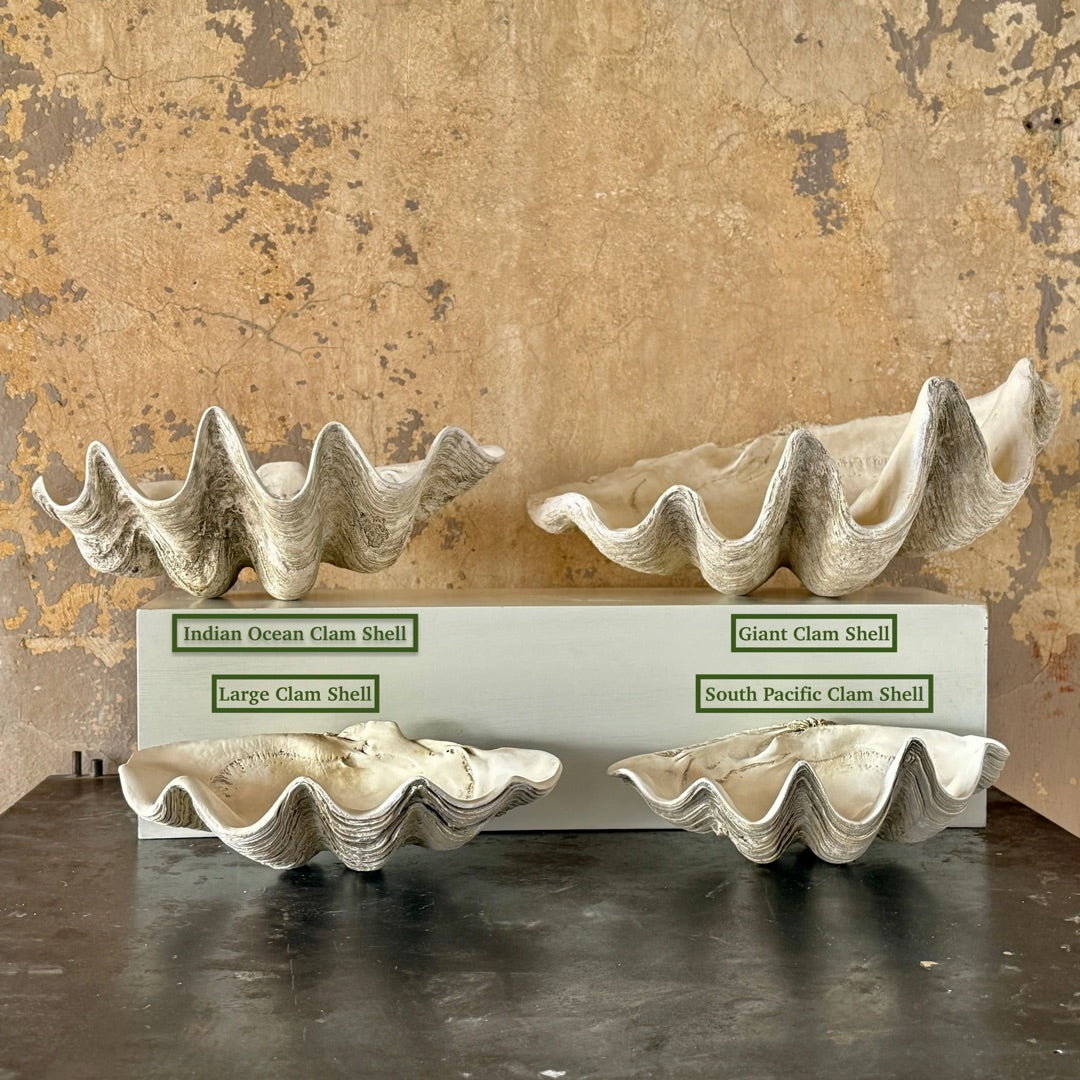
Large Clam Shell Replica, Hand Cast Plaster Seashell
Large Clam Shell Replica, Hand Cast Plaster Seashell
SKU:HP43310SW
In stock
Couldn't load pickup availability
A Large Clam Shell Fit for a Centerpiece
This large clam shell has a wide, shallow bowl and a ribbed rim that rises toward the hinge. It is hand cast in plaster. It measures 22.5 in W x 13 in D x 7 in H. Studio White is a clean plaster white, and Fossil is a weathered stone tone.
Product Details
- Material: Hand cast plaster
- Finish: Studio White or Fossil
- Dimensions: 22.5 in W x 13 in D x 7 in H
- Weight: 12 lb
- Package dimensions: 26 in x 16 in x 10 in
- Production: Made to order in the USA, ready to ship in 2 to 3 weeks
- Note: Hand cast, so appearance may vary from piece to piece
- Product number: HP43310SW (Studio White), HP43310FOS (Fossil)
About the Giant Clam Form
A giant clam weighs more than 400 lb in the wild and lives over 100 years. This cast is a smaller study of the same form.
The ribbed edge catches side light.
Used as a clam shell centerpiece, the bowl can hold smaller shells or sit empty. As a giant clam replica in a smaller scale, it also works as a plaster shelf accent. The large clam shell fits a deep shelf or a wide sill.
Bringing Nature Indoors
The urge to keep a piece of nature close is an old one. Early botanists and naturalists gathered samples from around the world so that the natural world could be catalogued. Your large clam shell continues that tradition. Browse more casts in our Ocean Seashells Beach Nautical collection.
Made to Order
Each piece is cast to order in the USA. Production takes 2 to 3 weeks before it ships. Hand casting means color and surface vary slightly from piece to piece. Choose Studio White or Fossil at checkout.
Placement and Care
Set it on a shelf, console or mantel, on a flat dry surface. Plaster is heavy for its size. Dust it with a soft dry brush and keep it indoors.
About George Perry
George Perry published his book Conchology in London in 1811. It carried sixty-five colored aquatint plates of shells. Perry wrote that he hoped to advance the science of shells and improve the fine arts. Some of his new classifications drew criticism at the time and were later accepted.
His plates are one example of how shells were drawn in careful detail so that collectors could compare them.
For More Reading from the Web
- Albertus Seba, George Perry and the naturalists who catalogued shells, plants and animals from around the world: Natural Curiosities - The Metropolitan Museum of Art
- Meet the American shell collectors of the 1800s, from Thomas Say to Edgar Allan Poe's borrowed textbook: The Conchologists: Searching for Seashells in 19th Century America - Biodiversity Heritage Library