


Modigliani Caryatid Vase – Female Nude Drawing Modern Art Ceramic Flower Vase (SDA09)
Modigliani Caryatid Vase – Female Nude Drawing Modern Art Ceramic Flower Vase (SDA09)
SKU:SDA09
Out of stock
Couldn't load pickup availability
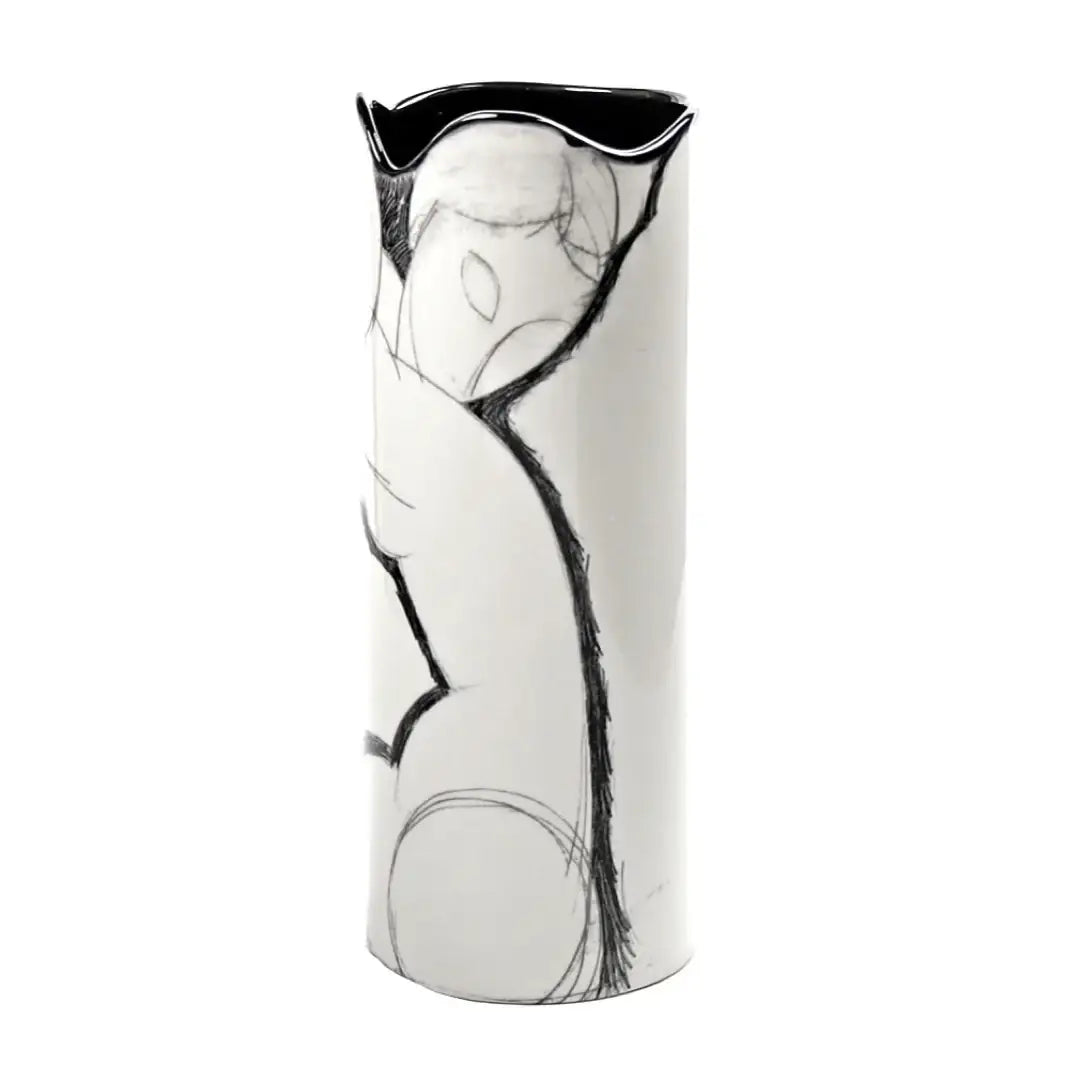
This Modigliani caryatid vase is one of the boldest pieces in the Silhouette d'Art Collection. Amedeo Modigliani drew his caryatid series between 1912 and 1914. He worked in stark black and white. His lines are fluid, confident, and architectural. Parastone has wrapped that drawing around a kiln-fired ceramic vase. The shaped rim follows the curve of the woman's head and raised elbow. The result is a vase that is also a sculpture — functional, collectible, and unmistakably Modigliani.
The figure turns to look back at us over her shoulder. Her long torso and voluptuous form are rendered without color — only line. That restraint is exactly the point. This Modigliani caryatid vase captures the raw power of his draftsmanship at its purest. It is bold, direct, and impossible to ignore.
- Medium: Kiln-fired ceramic with gloss finish and full-wrap artwork.
- Collection: Silhouette d'Art by Parastone & John Beswick, PN SDA09.
- Dimensions: 7.5 in H × 3 in W × 3 in D. Weight: 1 lb.
- Design Detail: Uneven cut rim shaped to follow the curve of the figure's head and elbow.
- Finish: Glossy glaze with high-contrast black and white drawing on all sides.
- Function: Suitable as a display vase or for a small bouquet. Flowers not included.
- Explore more Modigliani works: View the Modigliani Collection.
What Is a Caryatid — and Why Did Modigliani Obsess Over Them?
A caryatid is a female figure used as an architectural column. A woman whose body becomes the structure itself. The most famous examples stand on the Porch of the Maidens at the Athenian Acropolis, carved around 421 BCE. For centuries, artists and architects returned to this idea. The human form as both art and support.
Modigliani encountered the caryatid and was electrified. He launched an ambitious project around 1909. He called it his Temple of Humanity — an imaginary monument to beauty and the human form. He described the figures as his colonnes de tendresse. His columns of tenderness. He produced roughly fifty preparatory drawings between 1909 and 1915. Sadly, only one caryatid sculpture was ever completed. It now lives at MoMA in New York. This Modigliani caryatid vase preserves the spirit of that unrealized dream.
The Caryatid Drawing on This Modigliani Caryatid Vase
Most people know Modigliani through his warm-toned oil portraits. The caryatid drawings are something else. He worked in graphite, ink, and gouache. He stripped away color to focus entirely on form and line. The effect is monumental. Architectural. Which makes sense — these were originally studies for sculpture.
The figure on this caryatid ceramic vase turns her back to us. Her head rotates over her shoulder with quiet power. Her elongated torso becomes almost column-like in its verticality. Art historians note that his caryatid style drew from African carvings and Indian sculpture. It also drew from the linear work of Sandro Botticelli. All of that distilled into a single drawn line. Turn this vase slowly in your hands. You will see exactly what they mean.
When Sculpture Became Impossible — The Story Behind This Modigliani Caryatid Vase
Modigliani wanted to be a sculptor above all else. He carved directly in stone. No assistants. No pointing machines. But the dust was destroying his lungs. He already carried tuberculosis. By 1915, ill health and financial ruin forced him to put down the chisel for good. He returned to painting. He never stopped grieving the sculpture he could not make.
The caryatid drawings sit exactly at that pivot point. They are the last great expression of his sculptural ambition. Art historians note that the series heavily influenced his painted portraits from 1915 to 1920 — the very works for which he is most celebrated. This Modigliani art vase Parastone carries that history. It is a drawing made at the moment when one chapter of a great life was closing and another was just beginning.
Collector Pairing Suggestions for the Modigliani Caryatid Vase
This Modigliani caryatid vase pairs beautifully with the Jeanne Hébuterne Ceramic Vase (SDA18). Together they show two completely different sides of Modigliani. Warm color and intimate portraiture versus bold line and monumental form. Display them side by side. The conversation they start is irresistible. Collectors drawn to the female figure in art history will find strong companions in the Nudes and Human Form collection. For the broader modern art movement, browse the Modern Art Collection at Museumize.
Styling & Display of the Modigliani Caryatid Ceramic Flower Vase
At 7.5 inches tall and 3 inches wide, this is a slender, architectural vase. The high-contrast black and white artwork stands out sharply against warm wood, white shelving, or a dark wall. It works beautifully on a writing desk, a bedside table, or grouped with art books. A single white ranunculus or a stem of dried thistle suits its drama without competing. The shaped rim always makes guests pick it up for a closer look.
Care Notes
Wipe the exterior with a soft, damp cloth. Avoid abrasive cleaners, which can dull the glaze over time. If used for flowers, rinse the interior gently after each use. Allow to dry thoroughly. Not dishwasher safe.
For More Reading from the Web
- See a caryatid drawing from this exact series in the Philadelphia Museum of Art's permanent collection: Modigliani Caryatid, c. 1912–1914 – Philadelphia Museum of Art
- Read the National Gallery of Victoria's essay on Modigliani's caryatid series and its global influences: Caryatid Essay – National Gallery of Victoria
- View the only completed caryatid sculpture Modigliani ever carved, now in MoMA's permanent collection: Modigliani Caryatid Sculpture – Museum of Modern Art, New York


FAQs
Got a question? We are here to answer