


Modigliani Head Statue - Female Tete with Decorative Base | Parastone Mouseion
Modigliani Head Statue - Female Tete with Decorative Base | Parastone Mouseion
SKU:MO08
In stock
Couldn't load pickup availability
The Stone Heads That Made Modigliani a Sculptor
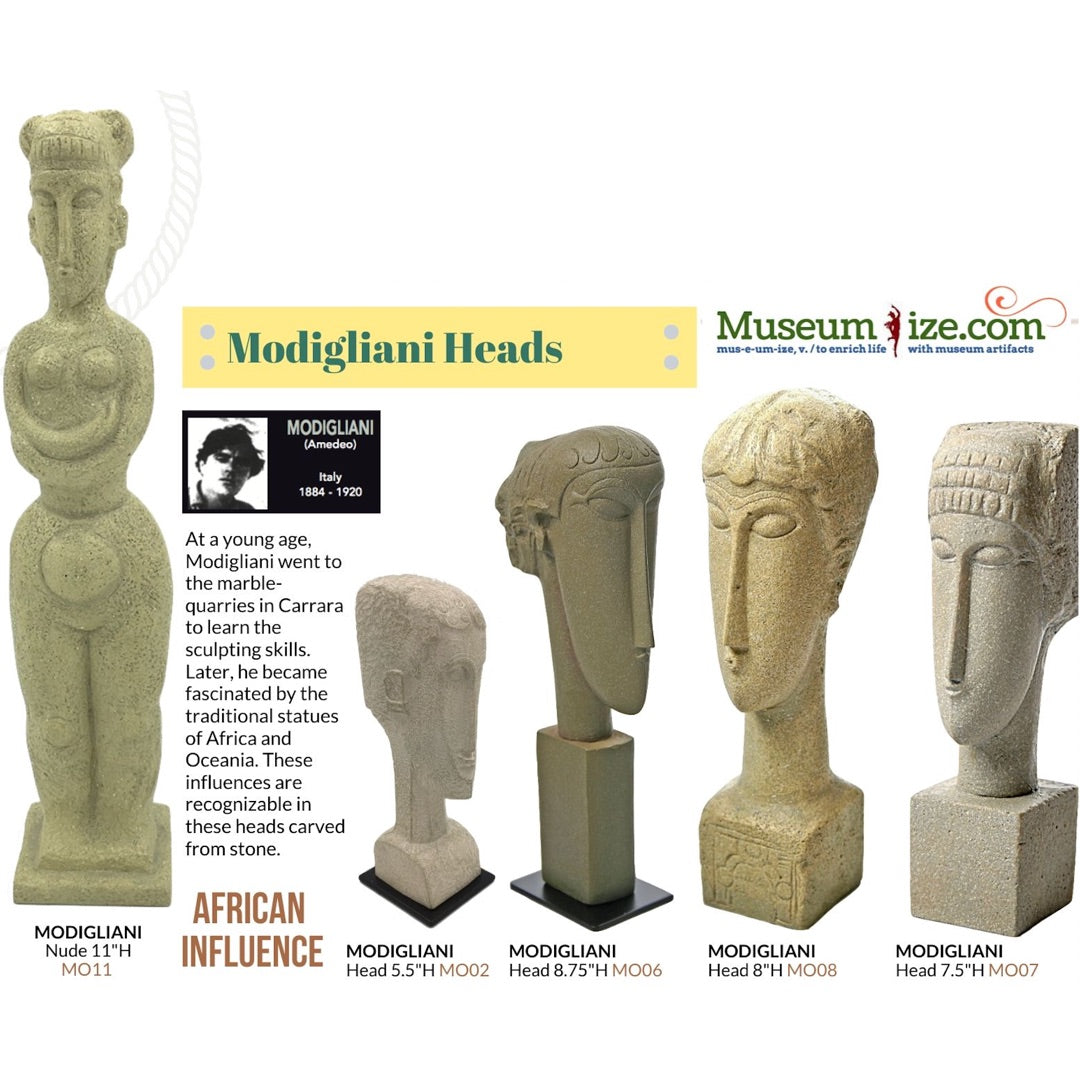
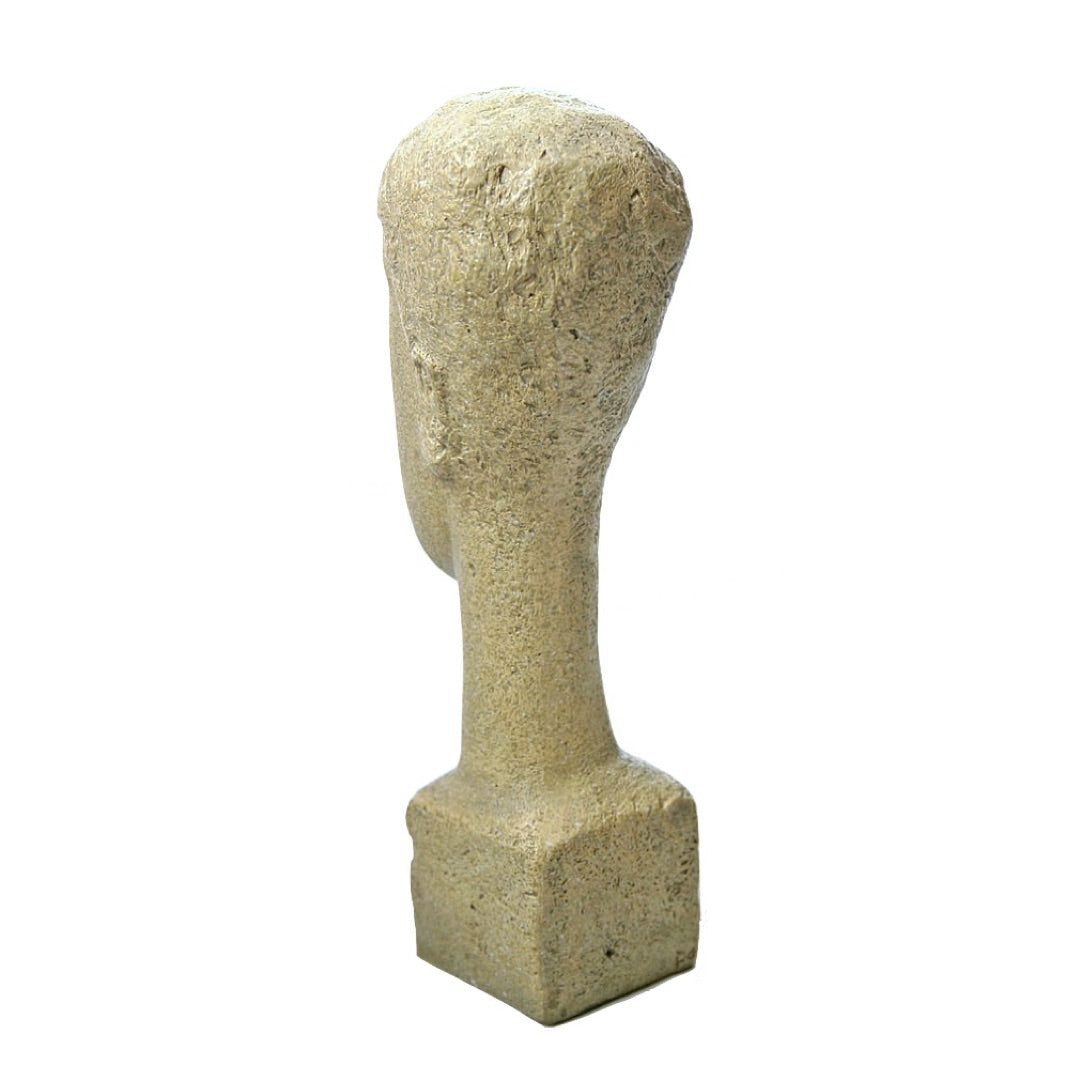
This Modigliani Head Statue reproduces one of the carved stone female heads Amedeo Modigliani created in Paris between 1910 and 1912. The elongated oval skull, closed almond-shaped eyes, and long straight nose are the defining features of his sculptural series. The square base is engraved with geometric and figurative motifs - integral to the original composition, not a separate addition.
Modigliani produced roughly 25 stone heads during this concentrated period before poor health and the physical demands of stone carving forced him back to painting. This Modigliani head statue preserves the full vertical silhouette of the original: the domed skull, the long neck, and the grounded plinth - three forms that function as a single ascending line.
- Material: Speckletone resin, stone finish
- Dimensions: 8 in. H x 3 in. W x 1.75 in. D
- Weight: 2 lbs.
- Product Number: MO08
- Collection: Parastone Mouseion 3D Collection
- Included: Description card in four languages
- View the full Modigliani Sculpture Collection
- Modern Art Sculpture Collection
African, Etruscan, and Cycladic Influences on the Modigliani Head Statue
When Modigliani arrived in Paris in 1906, he encountered African masks at the Musee d'Ethnographie du Trocadero and ancient Cycladic figurines through his friendship with Constantin Brancusi. He also studied Etruscan funerary sculpture from his native Livorno region. The geometric simplification of African masks, the archaic stillness of Cycladic marble, and the frontal symmetry of Etruscan carving all converge in this face. None of these sources dominates - Modigliani absorbed them and produced something that could not be mistaken for any of them.
Amedeo Modigliani: Sculptor and Painter
Amedeo Modigliani (1884-1920) was born in Livorno, Italy, and trained under painters in Florence and Venice before settling in Paris. He considered sculpture his true calling, not painting. His stone heads of 1910 to 1912 represent his most sustained sculptural effort. Tuberculosis and the dust of stone carving made continued work impossible, and he returned to painting after 1914 - carrying the elongated faces and tilted heads of his sculpture directly into his portraits and nudes.
Caryatids, Gothic Verticals, and the Inscribed Base
Modigliani drew directly from classical caryatids - the draped female figures used as load-bearing columns in Greek temples - for the upright posture and balanced symmetry of his female heads. He also referenced early Italian Gothic, particularly the elongated figures of Sienese painting, in the quiet upward energy of the form. The engraved motifs on the base of this Modigliani female head sculpture are not decorative afterthoughts. They anchor the figure to its plinth as a single sculptural object.
Display
The square base of the Amedeo Modigliani sculpture is self-supporting on any flat surface. The 8 in. height reads well on a bookshelf, desk, or side table where the silhouette is visible from multiple angles. Speckletone resin requires no sealing or special maintenance - dust occasionally with a dry cloth.
For More Reading


FAQs
Got a question? We are here to answer