


Permian Bone Jaw Fossil - Authentic Captorhinus Richards Spur Specimen
Permian Bone Jaw Fossil - Authentic Captorhinus Richards Spur Specimen
SKU:80-112-0379-201-40
In stock
Couldn't load pickup availability
A Permian Jaw Fossil From a Cave in Oklahoma
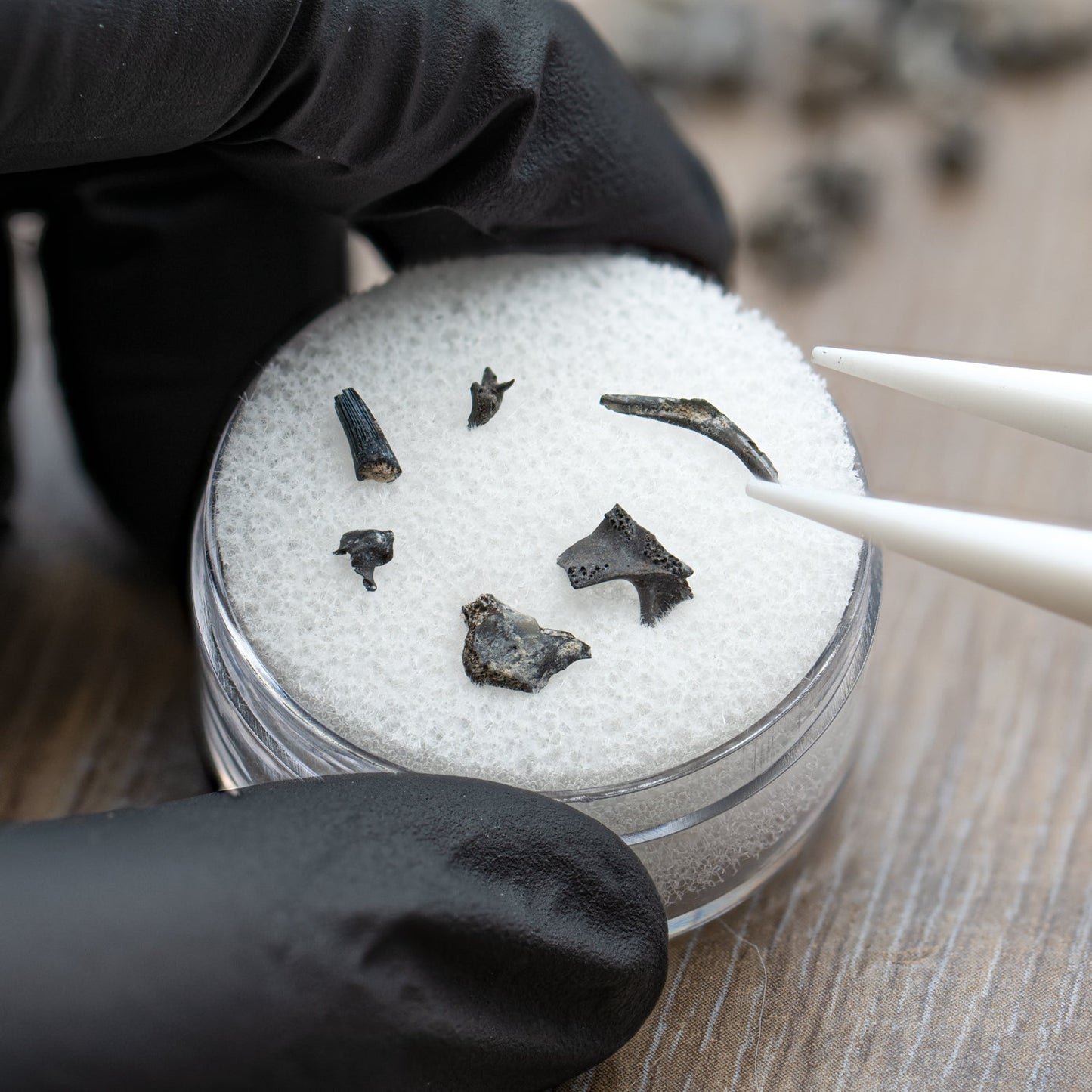
This Permian jaw fossil set holds six real jaw and tooth fragments from a small tetrapod. Most come from Captorhinus, an early reptile. They were collected at Richards Spur Quarry near Lawton, Oklahoma.
Product Details
- Specimen: Six jaw and tooth fossils from a small tetrapod
- Age: Early Permian, an estimated 286 million years old
- Location: Richards Spur Quarry near Lawton, Oklahoma
- Main animal: Captorhinus, an early sauropsid reptile
- Note: Pieces vary in size and shape. Each set is unique.
Meet Captorhinus
Captorhinus was about 30 cm (12 in) long. It had a hooked snout and extended front teeth. It likely ate tiny amniotes, which made it one of the smallest carnivores of its day.
Every Captorhinus fossil comes from one of the first reptile groups to spread widely across environments.
The Richards Spur Cave System
Richards Spur is an early Permian cave system in a limestone quarry in Comanche County. A 2019 paper calls it the most fossiliferous Permian site for captorhinids. The same paper dates the deposit near 289 million years.
Monsoon floods struck the cave again and again for about 4 to 5 million years. This Richards Spur fossil set comes from that cave fill. Browse more in our Authentic Fossil Specimens and our Natural History Collection.
The World of the Permian
The Permian began about 298 million years ago. Pangea formed one supercontinent, with desert interiors and seasonal monsoons on the coasts. Any Oklahoma Permian fossil belongs to that lost world.
Display and Care
Bone this old is brittle. Handle each Richards Spur fossil gently and keep it away from damp and direct sun.
About Early Amniotes
Amniotes split into synapsids, the ancestors of mammals such as Dimetrodon, and sauropsids, the ancestors of dinosaurs. Your Captorhinus fossil belongs on the sauropsid side. The period ended in the Great Dying, which killed over 95 percent of life. Your Permian jaw fossil, like any Oklahoma Permian fossil, comes from before that crisis.
For More Reading from the Web
- Read the research on this Oklahoma cave site. A New Captorhinid From the Permian Cave System Near Richards Spur, Oklahoma - Frontiers in Earth Science


FAQs
Got a question? We are here to answer