


Plesiosaur Tooth - Authentic Cretaceous Marine Reptile Fossil Specimen - Extra Large
Plesiosaur Tooth - Authentic Cretaceous Marine Reptile Fossil Specimen - Extra Large
SKU:80-112-0124-201-36
Out of stock
Couldn't load pickup availability
An Extra Large Plesiosaur Tooth Fossil From Cretaceous Morocco
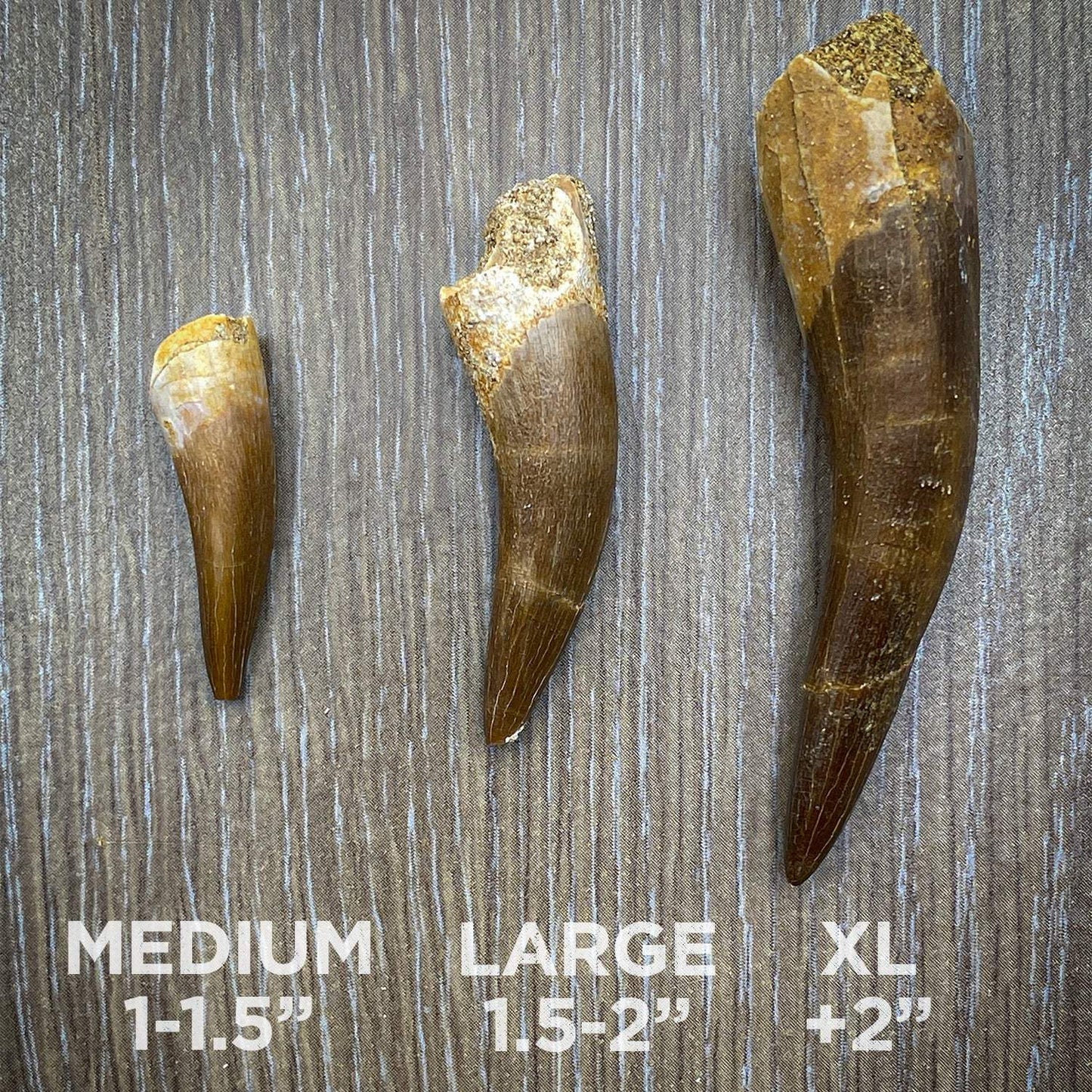
This plesiosaur tooth fossil is the extra large size, measuring 2 in (5 cm) and above. It is a genuine tooth from a long-necked marine reptile, not a cast. It sits in a larger case than our standard riker box.
Product Details
- SKU: 80-112-0125-201-36
- Specimen: Extra large plesiosaur tooth, 2 in and above (5 cm+)
- Origin: Late Cretaceous deposits, Morocco
- Display: Glass-topped case, 5 in x 6 in
- Includes: Information card that serves as the certificate of authenticity
- Note: All teeth show repair and some may be reassembled. Each plesiosaur tooth fossil is unique.
A Tooth Built for Seizing Fish
Plesiosaurs were marine reptiles, not dinosaurs. They swam the oceans of the Mesozoic. Their teeth were slender and curved, suited to catching slippery prey.
At this size you can see the full crown and root. An extra large plesiosaur tooth is rarer than the small ones, so each piece is a showcase.
The Phosphate Beds of Morocco
Morocco's phosphate deposits preserve a Late Cretaceous sea, about 66 million years old. They have yielded fish, sharks, turtles and many marine reptiles. This Morocco marine reptile fossil comes from that world.
Repair is normal for a Cretaceous plesiosaur tooth this large. Fragile specimens are often reassembled by preparators before they reach collectors. Browse related pieces in our Prehistoric Collection and Authentic Fossil Specimens.
Display and Care
Keep the Morocco marine reptile fossil case away from direct sun and damp. Handle the plesiosaur tooth fossil only when needed, and support it fully.
About the Plesiosaur
Plesiosaurs paddled with four flippers and are known from skeletons across the Jurassic and Cretaceous. A Cretaceous plesiosaur tooth like this one is a small, direct link to that vanished sea.
For More Reading from the Web
- Read about the Moroccan phosphate basin that preserves these Cretaceous marine reptiles. Cadi Ayyad University Leads Breakthrough in Prehistoric Marine Reptile Research
- Learn more about our supplier's plesiosaur tooth specimens. Plesiosaur and Mosasaur Teeth - Mini Museum


FAQs
Got a question? We are here to answer