


Primaticcio Double Head Sculpture Reproduction
Primaticcio Double Head Sculpture Reproduction
SKU:ST923OTANT
Couldn't load pickup availability
Primaticcio Double Head: A Renaissance Bronze After an Ancient Goddess
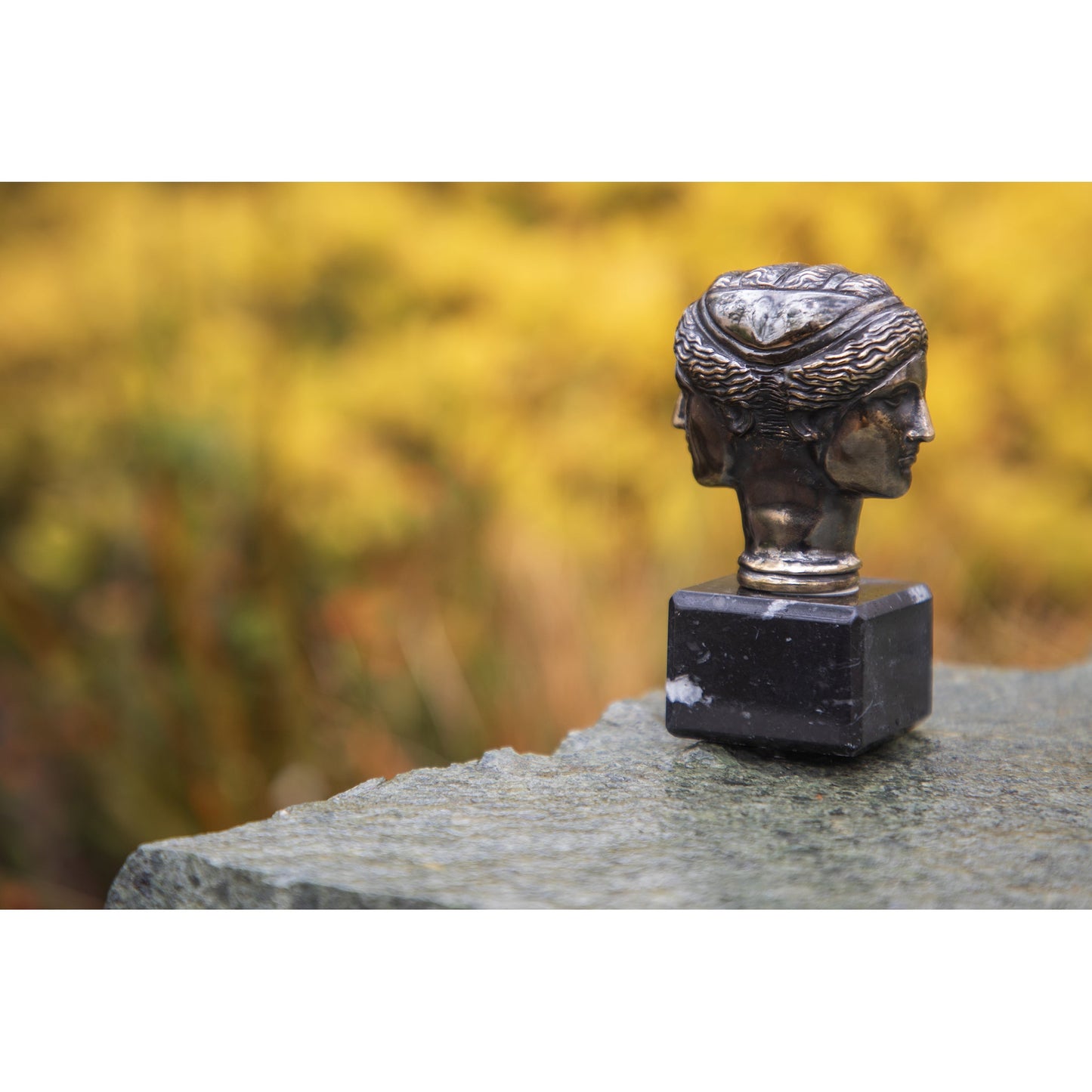
This Primaticcio Double Head reproduction stands on a black marble base. The brass figure has a bronze-colored finish with hand-painted gold accents. It is a Renaissance bronze reproduction sized for a desk or shelf.
The original is attributed to Francesco Primaticcio and dates to about 1543. It belongs to the J. Paul Getty Museum, object number 2011.45. This Getty sculpture reproduction was made in Italy and arrives in a gift box.
Product Details
- Material: Brass with bronze color finish, hand-painted gold accents, black marble base
- Size: 3.7 in H x 1.5 in L x 1.5 in D
- Made in Italy
- Gift box included
- Item number: ST923OTANT
From Ancient Rome to Fontainebleau
The sculpture was cast from the female head of the ancient marble statue called Cesi Juno. It stands in the Capitoline Museum in Rome. Michelangelo described it as the most beautiful object in Rome. This Cesi Juno head became a model for French artists.
The Getty says King Francis I of France commissioned the original for his palace at Fontainebleau. It was probably meant to sit on a column. A print of about 1650 shows it above the entrance to a garden at Fontainebleau. From that spot it could be seen from either side.
Every Primaticcio Double Head deserves a good look under bright, even light. Guests tend to ask about the Primaticcio Double Head first. Handle the Primaticcio Double Head gently and it will last for years. Take time to study the Primaticcio Double Head from every angle.
A Famous Line of Owners
The bronze later passed to famous collectors. They included the 18th-century connoisseur Pierre Crozat. They also included the 20th-century designer Yves Saint Laurent. The Getty acquired it in 2011.
Primaticcio's duties at Fontainebleau included casting the best Roman sculptures from the papal collections. Some were cast in bronze to decorate the palace gardens. The Primaticcio Double Head belongs to that effort.
Source Object
Title: Double Head, about 1543. Attributed to Francesco Primaticcio (Italian, 1504-1570). Medium: Bronze. The J. Paul Getty Museum, object number 2011.45.
Displaying the Bronze
Set the Renaissance bronze reproduction on a desk or bookshelf. Turn it so the profile faces the room. The black marble base keeps it steady. Dust the figure with a soft, dry cloth and avoid polish on the gold accents.
For anyone drawn to Renaissance bronze reproduction, this piece offers a closer look. This piece belongs with Renaissance bronze reproduction that you may already own or admire. This piece belongs with Cesi Juno head that you may already own or admire. Curators often say that Cesi Juno head rewards slow looking. Here, Cesi Juno head becomes something you can hold or display.
Curators often say that Getty sculpture reproduction rewards slow looking. Here, Getty sculpture reproduction becomes something you can hold or display. Readers interested in Getty sculpture reproduction will find the notes here a helpful guide. Think of it as Getty sculpture reproduction meant for daily enjoyment.
More Italian masters are in our Renaissance collection. Classical models appear in our Greek and Roman collection.
Primaticcio and the School of Fontainebleau
Francesco Primaticcio came from Bologna and reached the French court in the early 1530s. After Rosso Fiorentino died in 1540, he led the artistic program at Fontainebleau. The Metropolitan Museum notes a sensuous treatment of the nude there. His style spread through prints and shaped French art for decades.
For More Reading from the Web
- Place Primaticcio within the court of Francis I. Fontainebleau - Heilbrunn Timeline, Metropolitan Museum of Art
- Follow Primaticcio's career from Bologna to the French court. Francesco Primaticcio - Wikipedia


FAQs
Got a question? We are here to answer