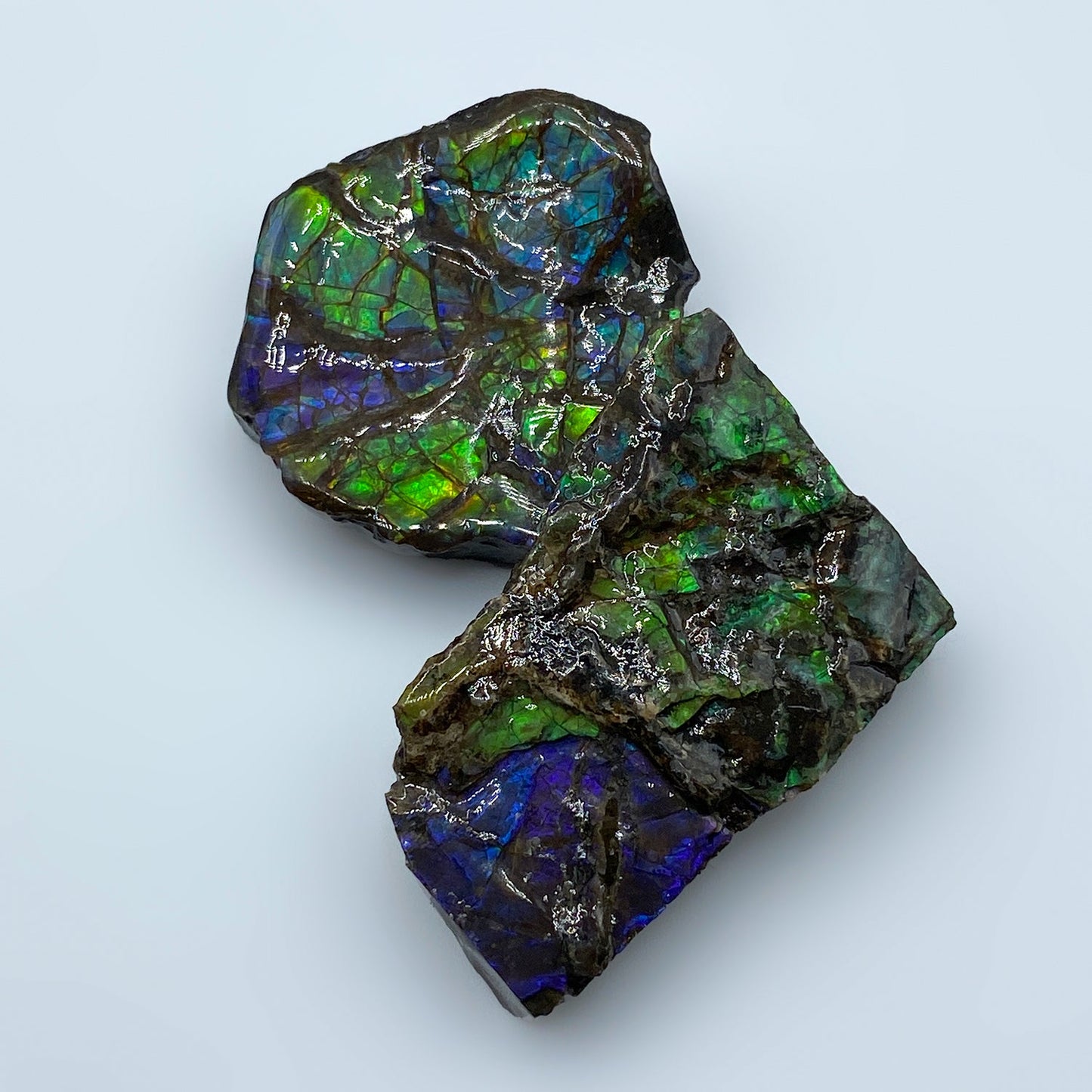
Rainbow Fossil Ammolite, an Ammonite Turned to Gemstone
Rainbow fossil ammolite is an iridescent gemstone cut from fossilized ammonite shell. This fragment is the multicolor variant, from the Bearpaw Formation of southern Alberta, Canada.
Product Details
SKU: 80-112-0074-201-36
Color: Multicolor, with several colors at different angles
Includes: Information card that serves as the certificate of authenticity
Note: Size, shape and thickness vary. All ammolite shows several colors.
Color Without Pigment
Ammolite is a variety of aragonite, formed from fossilized ammonite shells. Its color comes from an interference effect, not pigment. An ammolite gemstone shifts as you move it.
The names reflect only the dominant color. Every iridescent ammonite fossil here shows several hues, depending on the angle of the light.
A Late Cretaceous Sea
The Bearpaw Formation is a marine shale deposit from the Late Cretaceous. A Bearpaw Formation ammonite was buried in fine sediment about 70 to 75 million years ago.
Keep the rainbow fossil ammolite in its case, away from knocks. The iridescent layer is thin.
About Ammolite
Alberta is the home of the ammolite gemstone. The layer is thin and fragile, so most gems are cut into assembled stones. This iridescent ammonite fossil is a whole fragment you can turn in your hand.