Norse Pewter Pendant Necklace - Runic Circle
Norse Pewter Pendant Necklace - Runic Circle
SKU:ODN-158
In stock
Couldn't load pickup availability
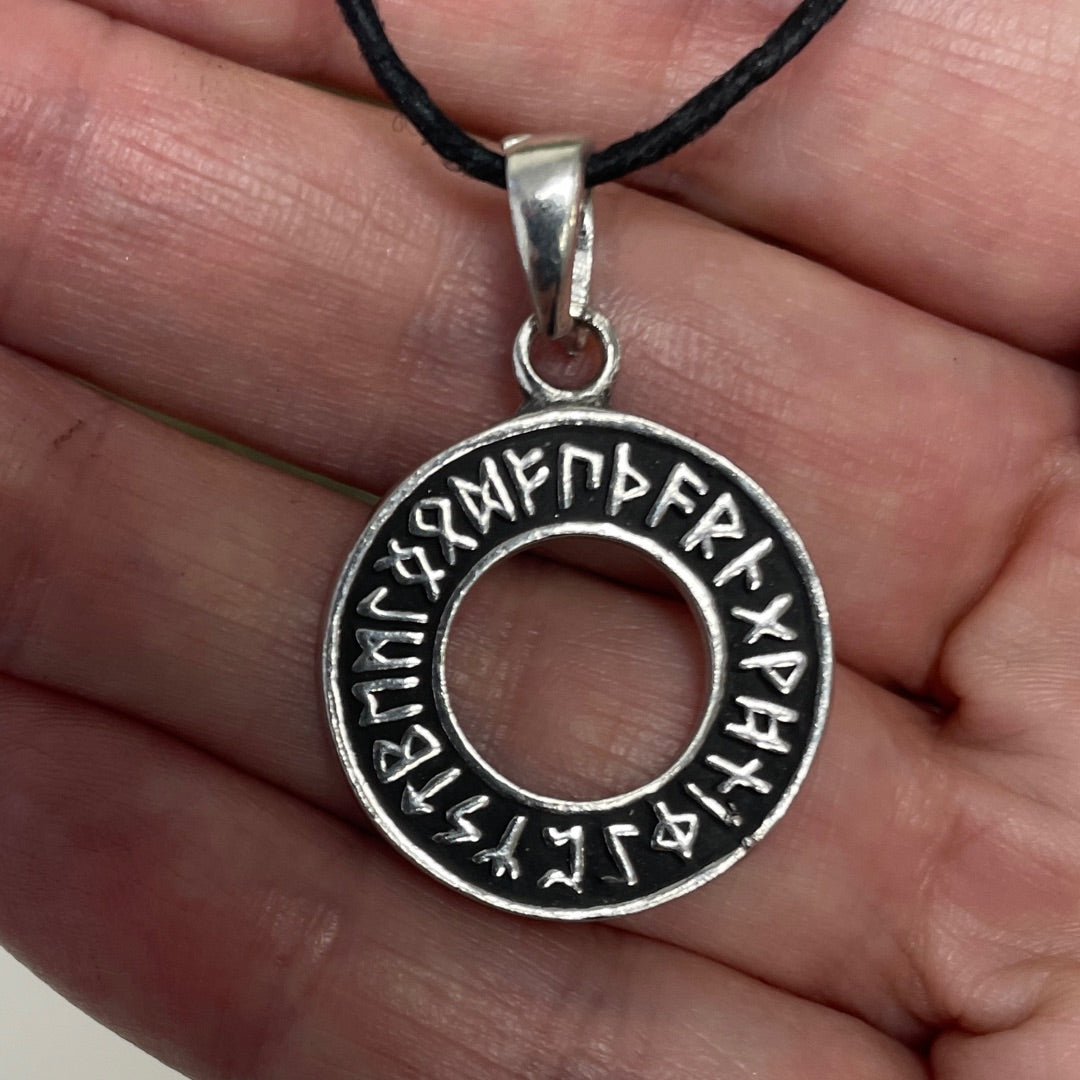
This runic circle necklace arranges Norse runic characters around the rim of a small pewter disc. The letters run edge to edge in an unbroken ring. The layout echoes the way runes once appeared on memorial stones and calendar staves.
Wearing this pendant puts an ancient writing system on view. Runes were carved into wood, bone, and stone across Northern Europe for over a thousand years. People used them for names and short messages. They also served as protective charms as much as for record-keeping
- Material: fine lead-free pewter
- Dimensions: 7/8 in L x 7/8 in W x 1/8 in D, 1 oz
- Cord: 33 in black cord, knot the ends to adjust length
- Includes: legend description card
- Fit: unisex
- SKU: ODN-158
- Collection: Vikings and Norsemen
What Runes Were Used For
The runic alphabets, called futharks, changed over centuries and regions, but their core use stayed consistent. Norse and other Germanic peoples carved runes on memorial stones and household tools. They also used calendar sticks marked with runes, and turned to the letters for divination and charms.
The Circle as a Symbol of Wholeness
Arranging runes in a closed ring turns individual letters into a single unified sign. A circle of runes suggests protection surrounding the wearer. Each character reinforces the ones beside it rather than standing alone, building a sense of completeness.
Pairing With Other Norse Pieces
This pendant pairs well with a Mjolnir or Helm of Awe piece from the same pewter line. Norse wearers commonly combined several small charms on one cord, a habit this collection makes easy to recreate.
Styling and Wearing
Under an inch across, this pewter pendant hangs close to the collarbone on its 33 in cord. It is an easy addition to any Norse or rune-themed collection.
Care Notes
Wipe the pendant with a dry cloth after wear. Store it away from moisture to keep the pewter from dulling.
For More Reading