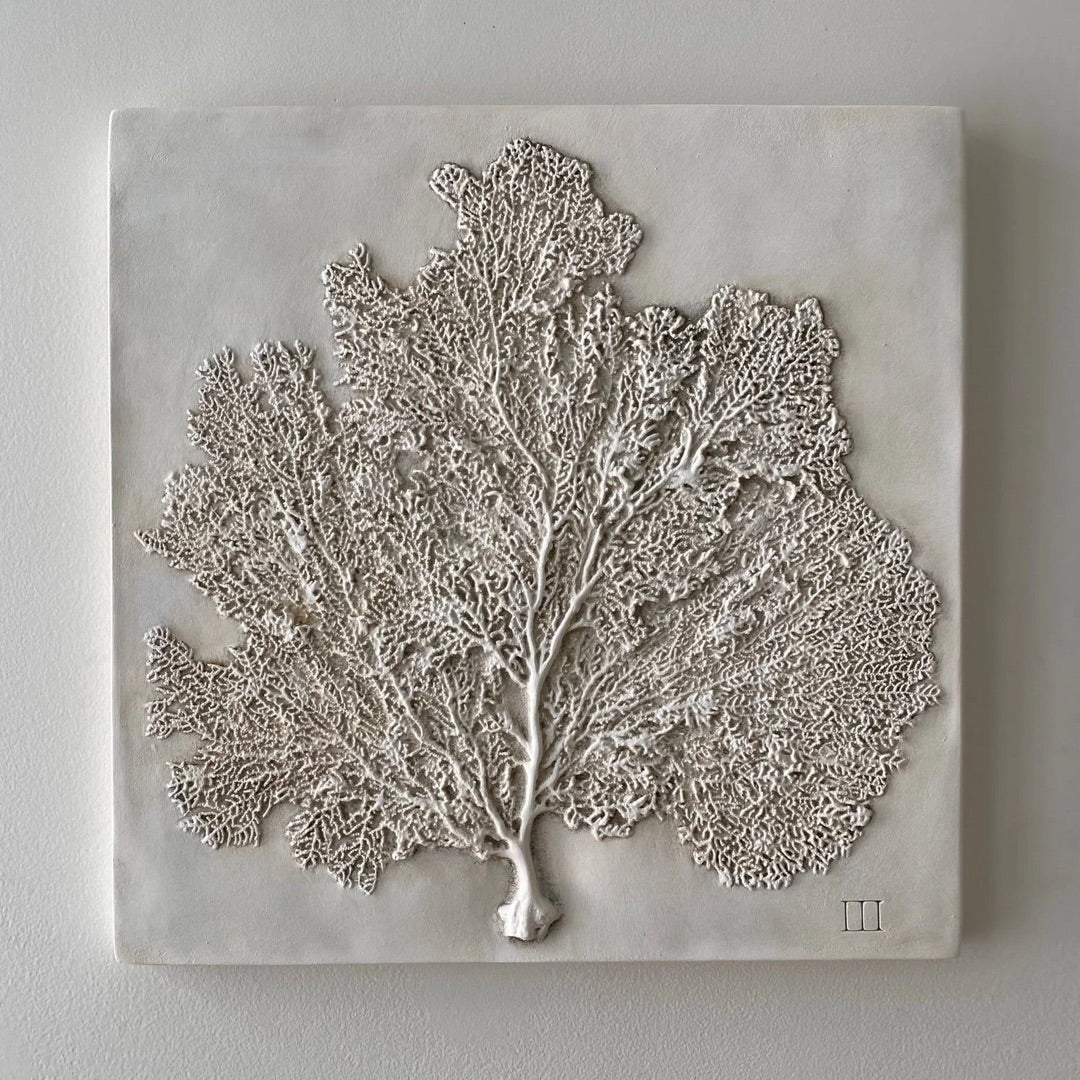
Sea Fan III Wall Plaque, Hand Cast Plaster Coral Replica
Sea Fan III Wall Plaque, Hand Cast Plaster Coral Replica
SKU:HP26120SW
In stock
Couldn't load pickup availability
Sea Fan Wall Decor Without Taking From the Reef
This sea fan wall decor is a flat, lace-like branching fan cast from an antique Gorgonia flabellum specimen. It hangs from hooks on the back. It measures 15.75 in L x 15.75 in W x 0.75 in D. Studio White is a clean plaster white, and Fossil is a weathered stone tone.
Product Details
- Material: Hand cast plaster
- Finish: Studio White or Fossil
- Dimensions: 15.75 in L x 15.75 in W x 0.75 in D
- Weight: 5 lb
- Package dimensions: 20 in x 20 in x 3 in
- Production: Made to order in the USA, ready to ship in 2 to 3 weeks
- Note: Hand cast, so appearance may vary from piece to piece
- Product number: HP26120SW (Studio White), HP26120FOS (Fossil)
About Gorgonia flabellum
The maker casts each plaque from antique Gorgonia flabellum specimens. It brings marine beauty home without depleting coral reefs.
A sea fan is a colony of tiny animals that grow a flexible, branching skeleton. The cast keeps the mesh of fine branches that gives the fan its lace-like look.
Used as sea fan wall decor, it can hang alone or beside others in the group. A sea fan plaque of this size fills a wall without crowding it. The coastal wall hanging has a flat profile of 0.75 in.
Bringing Nature Indoors
Bringing nature indoors is not new. Early botanists and naturalists collected samples from around the world and set out to catalog the natural world. A sea fan wall decor follows in that line. Browse more casts in our Wall Hangings collection.
Made to Order
Each piece is cast to order in the USA. Production takes 2 to 3 weeks before it ships. Hand casting means color and surface vary slightly from piece to piece. Choose Studio White or Fossil at checkout.
Placement and Care
Hooks on the back let it hang from a wall screw. Use an anchor rated for the weight of the piece. Dust it with a soft dry brush and keep it indoors.
About Spix and Martius
In 1817 Carl Friedrich Philipp von Martius joined a team of naturalists sent to Brazil. He and Johann Baptist Spix later split off and covered about 10,000 kilometers. They returned with more than ten thousand plant and animal samples.
Martius went on to write a monograph on palms, published in parts from 1823 to 1857.
For More Reading from the Web
- Albertus Seba, George Perry and the naturalists who catalogued shells, plants and animals from around the world: Natural Curiosities - The Metropolitan Museum of Art
- Meet the American shell collectors of the 1800s, from Thomas Say to Edgar Allan Poe's borrowed textbook: The Conchologists: Searching for Seashells in 19th Century America - Biodiversity Heritage Library