


Sekhmet Egyptian Lioness Goddess Pendant Beads or Chain, Assorted Colors
Sekhmet Egyptian Lioness Goddess Pendant Beads or Chain, Assorted Colors
SKU:7253-blue
In stock
Couldn't load pickup availability
Lioness of Healing: The Sekhmet Pendant
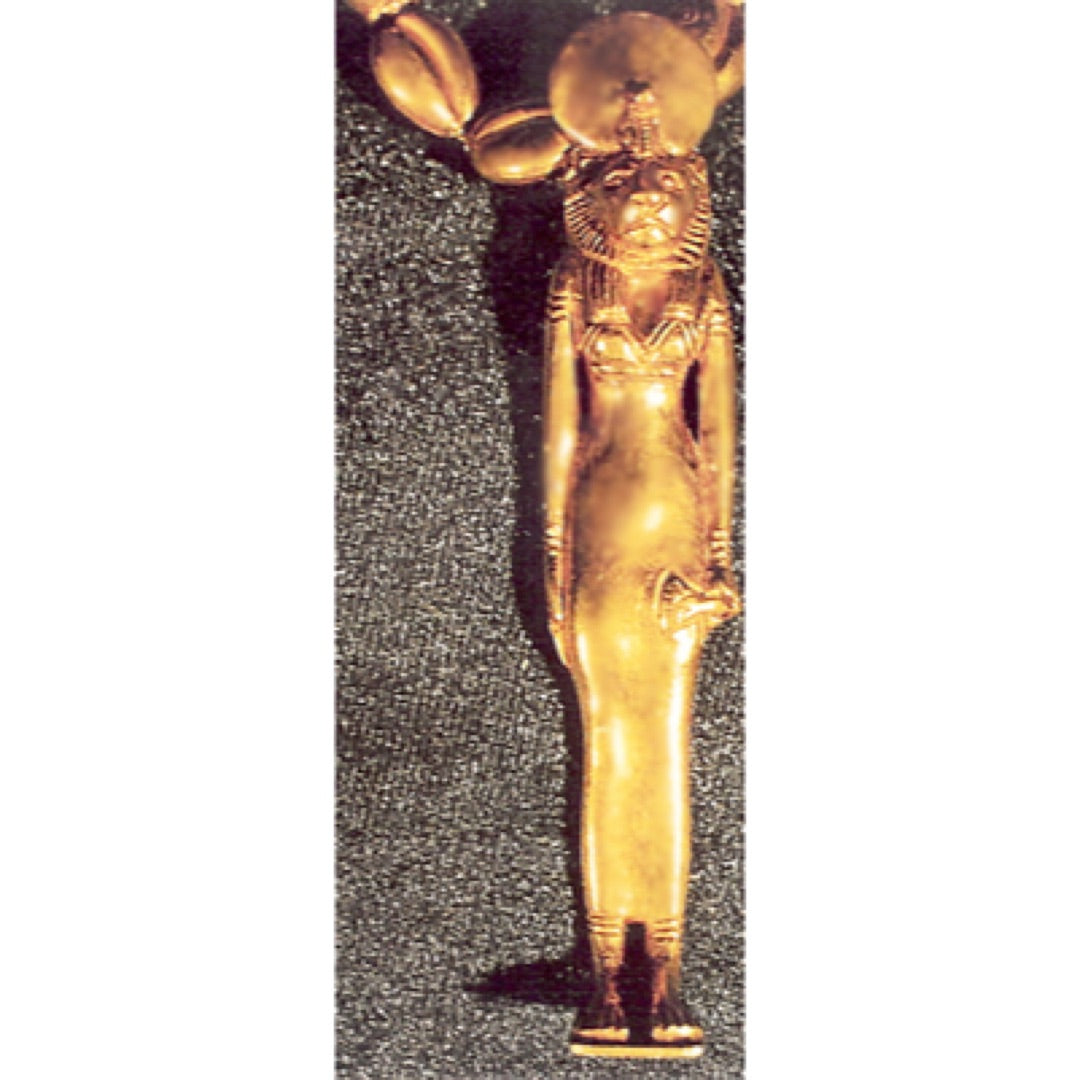
A lioness-headed goddess stands in antique gold plate, her arms at her sides. This Sekhmet pendant is 2.25 in long and 0.5 in wide, and it comes on an 18 in chain.
The Sekhmet amulet necklace is adapted from a solid gold pendant found at Memphis.
Product Details
- Material: 24K antique gold plate over pewter
- Pendant: 0.5 in W x 2.25 in L
- Chain: 18 in gold plate
- Product number: 7253
- Bead options: Lapis, PN 7253-blue, or carnelian, PN 7253-red, about 24 in
- Origin: Made in USA
The Original from Memphis
The Penn Museum found the gold original during its excavation at Memphis, the ancient capital. It dates to the 26th Dynasty, about 570 to 526 BC, in the reign of Amasis.
Amulets like it were often worn by the dead. The living could wear them too, to gain the goddess's protection.
Goddess of Medicine
Sekhmet, also written Sakhmet, was a lioness goddess of war and healing. Her priests often worked as healers. An Egyptian lioness goddess necklace keeps both sides of her nature.
Beads in Blue or Red
The Sekhmet beaded necklace comes in lapis or carnelian. Lapis lazuli was a prized blue stone in Egypt. Carnelian gave a warm red. Either pairs well with antique gold.
Wearing and Display
Wear the Sekhmet pendant at the collarbone on its chain. Keep it dry and wipe with a soft cloth. See more in our Egyptian Museum Replicas and Museum Jewelry Necklaces.
The Sekhmet beaded necklace sits longer on the chest. Both styles suit plain tops.
About Sekhmet
Sekhmet was a daughter of the sun god Ra. Her name means the powerful one. This piece is a small portrait of that power. Wear the Egyptian lioness goddess necklace as a quiet charm.
For More Reading from the Web
- See the real gold Sekhmet necklace from Memphis at the Penn Museum. A Sekhmet amulet necklace begins with it. Necklace with Sekhmet Pendant - Penn Museum


FAQs
Got a question? We are here to answer