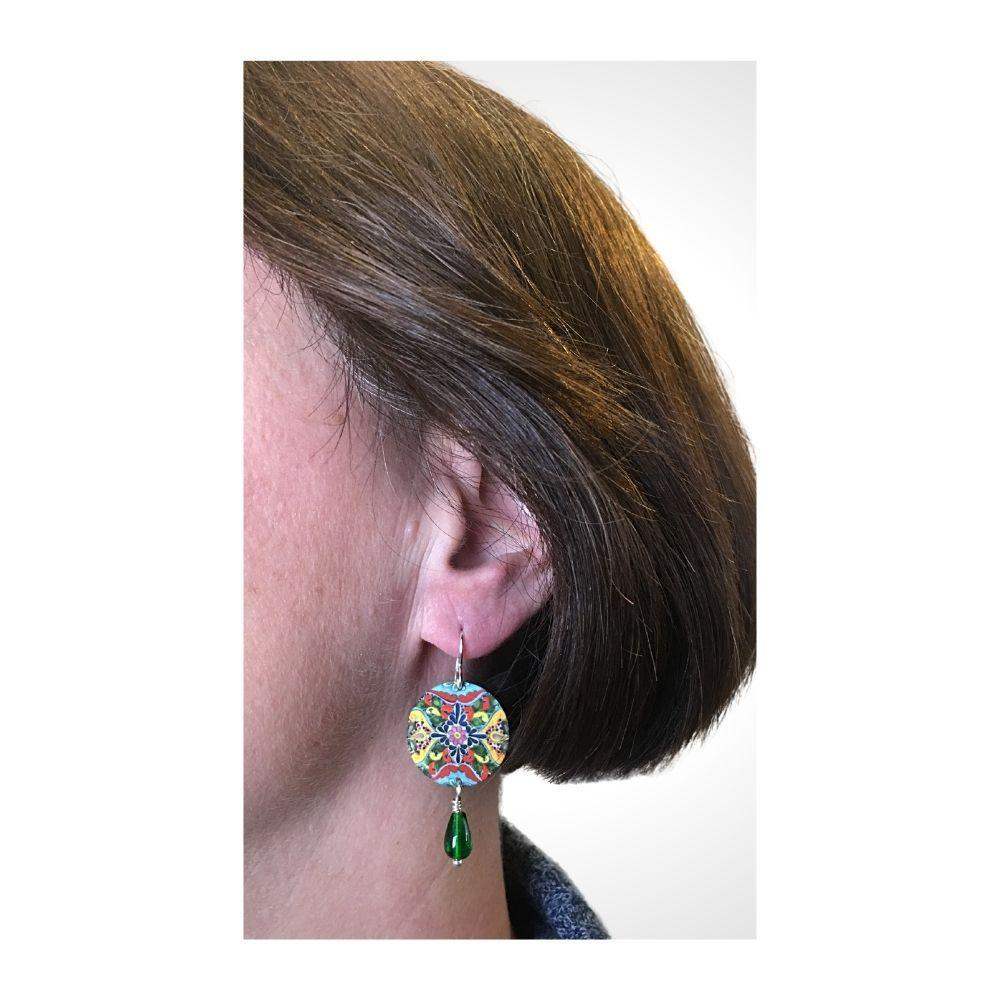
Drop Earrings with Mexican Tile Design Round Metal Handmade Artisan Earrings by Artista 1.9L
Drop Earrings with Mexican Tile Design Round Metal Handmade Artisan Earrings by Artista 1.9L
SKU:EC114
In stock
Couldn't load pickup availability
Timeless Mexican Tile Earrings in Bright Color
These Mexican tile earrings carry a pattern inspired by Mexican and Spanish tile. The round dangles glow in yellow, red, blue, green, and black. A green bead dangle adds movement.
Product Details
- Material: Color-infused aluminum
- Ear wires: Sterling silver filled
- Accent: Green bead dangle
- Finish: Scratch resistant and waterproof
- Dimensions: 1 3/4 in L x 7/8 in W
- Weight: 1 oz
- Made in the USA by Artista
- Product number: ER130
Talavera and the Tile Tradition
Talavera is a tin-glazed pottery tradition that Spanish potters brought to Puebla in colonial Mexico. It takes its name from Talavera de la Reina in Spain.
In 2019, UNESCO inscribed the making of artisanal Talavera on its list of intangible cultural heritage. The listing covers Puebla and Tlaxcala in Mexico and two towns in Spain.
Why These Round Dangle Earrings Work
Tile patterns repeat bold shapes and strong color, which suits a small disc. Blue and yellow, red and green, and black outlines make each round dangle earring easy to match. Mexican tile earrings like these never feel dull.
Wear them with a casual sweatshirt or a business suit. Explore more Talavera tile earrings in our Museum Jewelry collection.
Green Bead and Warm Color
The green bead dangle adds a cool note against the warm tile colors. It sways as you move.
Talavera tile earrings like these suit casual days and dressed-up evenings. Spanish tile jewelry has a long history of bright color and bold borders.
Wearing and Caring for Your Earrings
At 1 oz, these Mexican tile earrings feel light. Wear this Spanish tile jewelry with solids so the pattern stands out. Hang these round dangle earrings or lay them flat to keep the wires straight. Wipe with a soft dry cloth.
Spanish tile traditions blended with Mexican craft. The result is a design language still seen on kitchens, courtyards, and church domes.
For More Reading from the Web
- Read how UNESCO recognized Talavera making in Mexico and Spain. Decision 14.COM 10.b.23, Talavera ceramics - UNESCO Intangible Cultural Heritage