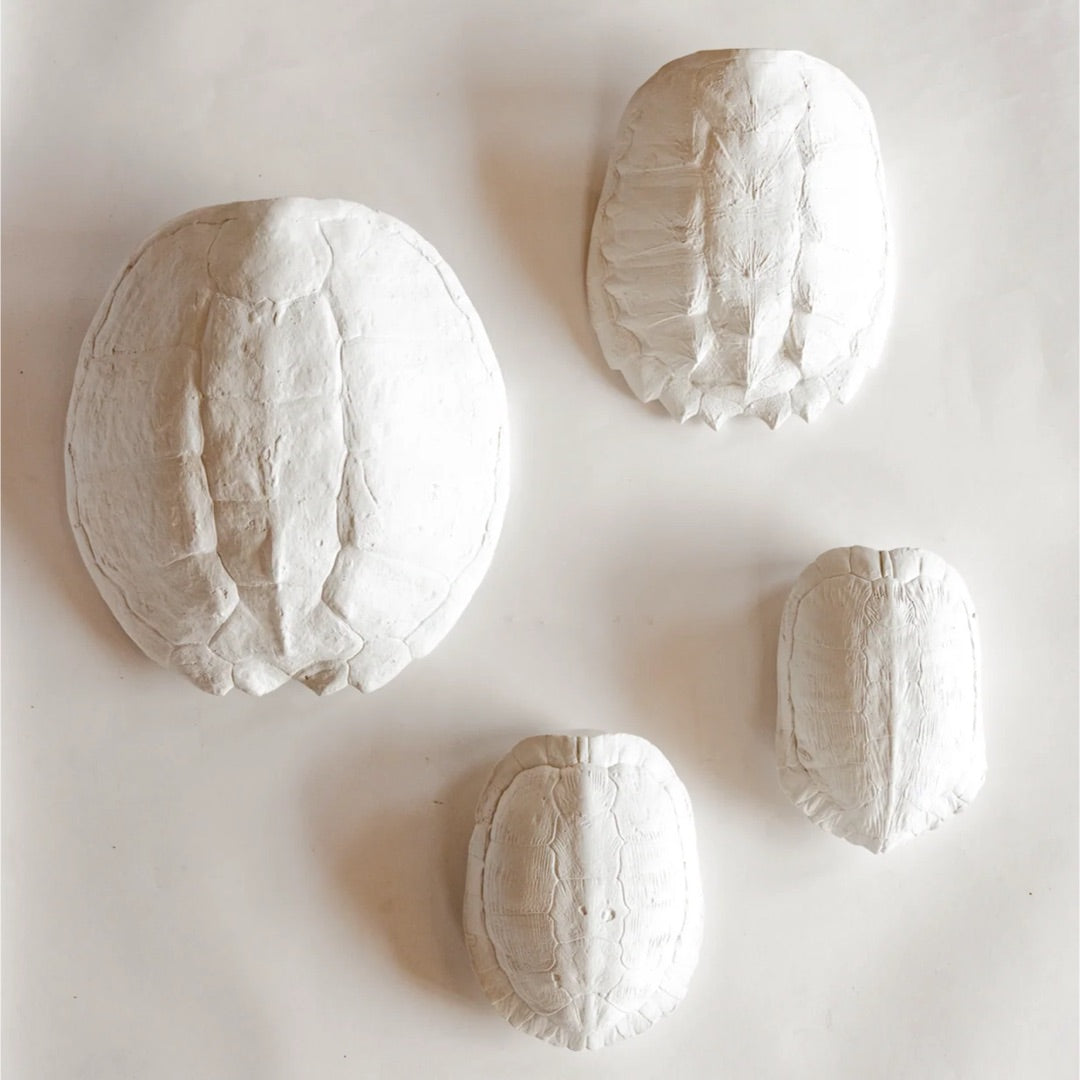
Snapping Turtle Shell Replica, Hand Cast Plaster Wall Hanging
Snapping Turtle Shell Replica, Hand Cast Plaster Wall Hanging
SKU:HP44270SW
In stock
Couldn't load pickup availability
A Snapping Turtle Shell Cast in Plaster
The snapping turtle shell is rugged and ridged, with a rough surface that reads as armor. It is hand cast in plaster. It measures 10 in L x 8 in W x 3 in H. It has hooks on the back. Studio White is a clean plaster white and Fossil is a weathered stone tone. Sepia is named for cuttlefish ink, and Obsidian is a deep dark tone.
Product Details
- Material: Hand cast plaster
- Finish: Studio White, Fossil, Sepia or Obsidian
- Dimensions: 10 in L x 8 in W x 3 in H
- Weight: 1 lb
- Package dimensions: 12 in x 12 in x 6 in
- Production: Made to order in the USA, ready to ship in 2 to 3 weeks
- Note: Hand cast, so appearance may vary from piece to piece
- Product number: HP44270SW (Studio White), HP44270FOS (Fossil), HP44270SEP (Sepia), HP44270OB (Obsidian)
A Turtle's Shell as Defense and Symbol
A turtle's shell is its greatest defense and potentially its greatest vulnerability. In many cultures it is a symbol of strength and protection.
Turtle Island appears in the creation stories of several Native nations. The turtle there carries the land itself.
A turtle shell wall hanging at 10 in works well in a cluster. This plaster turtle shell has hooks on the back, so it needs no frame. As coastal wall decor, the snapping turtle shell is the lightest in the group at 1 lb.
Bringing Nature Indoors
Bringing nature indoors is not new. Early botanists and naturalists collected samples from around the world and set out to catalog the natural world. A snapping turtle shell follows in that line. Browse more casts in our Wall Hangings collection.
Made to Order
Each piece is cast to order in the USA. Production takes 2 to 3 weeks before it ships. Hand casting means color and surface vary slightly from piece to piece. Choose Studio White, Fossil, Sepia or Obsidian at checkout.
Placement and Care
Hooks on the back let it hang from a wall screw. Use an anchor rated for the weight of the piece. Dust it with a soft dry brush and keep it indoors.
About Thomas Say
Thomas Say was a founding member of the Academy of Natural Sciences in Philadelphia. He is known mainly for his work on insects. His wife, Lucy, drew many plates for his American Conchology, published between 1830 and 1838.
Say belonged to a generation of American naturalists. They set out to describe the animals of the young United States.
For More Reading from the Web
- Meet the American shell collectors of the 1800s, from Thomas Say to Edgar Allan Poe's borrowed textbook: The Conchologists: Searching for Seashells in 19th Century America - Biodiversity Heritage Library
- Albertus Seba, George Perry and the naturalists who catalogued shells, plants and animals from around the world: Natural Curiosities - The Metropolitan Museum of Art