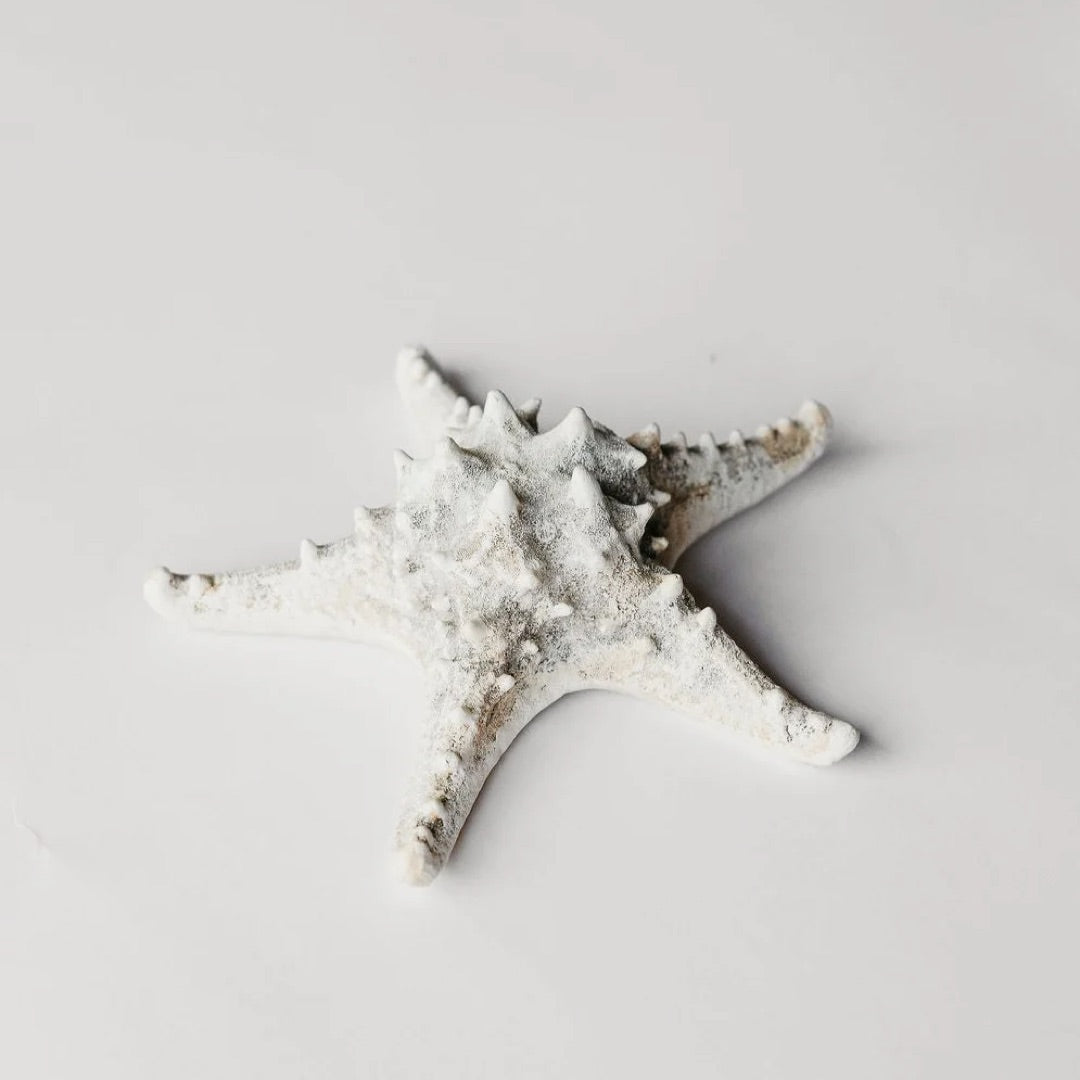
Spined Starfish Replica, Hand Cast Plaster Sea Star
Spined Starfish Replica, Hand Cast Plaster Sea Star
SKU:HP41050SW
In stock
Couldn't load pickup availability
A Spined Starfish With Its Ridges Intact
The spined starfish reaches out with five slim arms, each lined with a row of small spines. This plaster model of Marthasterias glacialis is hand cast. It measures 9.13 in L x 9.13 in W x 3 in H. Studio White is a clean plaster white, and Fossil is a weathered stone tone.
Product Details
- Material: Hand cast plaster
- Finish: Studio White or Fossil
- Dimensions: 9.13 in L x 9.13 in W x 3 in H
- Weight: 1 lb
- Package dimensions: 12 in x 12 in x 12 in
- Production: Made to order in the USA, ready to ship in 2 to 3 weeks
- Note: Hand cast, so appearance may vary from piece to piece
- Product number: HP41050SW (Studio White), HP41050FOS (Fossil)
About Marthasterias glacialis
The maker describes this as a plaster model of Marthasterias glacialis, the spined starfish. It recalls children spotting a starfish in the shallows.
The spines give the cast a ridged surface. Light and shadow pick out each ridge when the piece sits near a window.
This starfish replica works as coastal starfish decor beside a bowl of shells or a stack of books. A spined starfish reads best against a plain background, where its outline stays clear.
Bringing Nature Indoors
Naturalists once packed specimens from every coast and carried them home to be catalogued. Early botanists did the same with plants. Displaying a spined starfish is a quiet descendant of that practice. Browse more casts in our Ocean Seashells Beach Nautical collection.
Made to Order
Each piece is cast to order in the USA. Production takes 2 to 3 weeks before it ships. Hand casting means color and surface vary slightly from piece to piece. Choose Studio White or Fossil at checkout.
Placement and Care
Set it on a shelf, console or mantel, on a flat dry surface. Plaster is heavy for its size. Dust it with a soft dry brush and keep it indoors.
About Joseph Banks and Daniel Solander
Joseph Banks and Daniel Solander sailed on HMS Endeavour from 1768 to 1771. Together they collected about 30,000 specimens. Around 1,300 of those were species new to Western science. Solander, a student of Carl Linnaeus, wrote notes on slips of paper that the Natural History Museum still holds.
Solander had mastered the two-part Latin naming system that Linnaeus taught. The system lets naturalists in different countries use the same name for the same animal or plant.
For More Reading from the Web
- Follow Daniel Solander and Joseph Banks as they sorted thousands of specimens on a three-year voyage: Daniel Solander: a Linnaean disciple on HMS Endeavour - Natural History Museum
- Albertus Seba, George Perry and the naturalists who catalogued shells, plants and animals from around the world: Natural Curiosities - The Metropolitan Museum of Art