


Moon Goddess Pendant - Triple Moon, Earth Mother Collection
Moon Goddess Pendant - Triple Moon, Earth Mother Collection
SKU:ETM-109
Out of stock
Couldn't load pickup availability
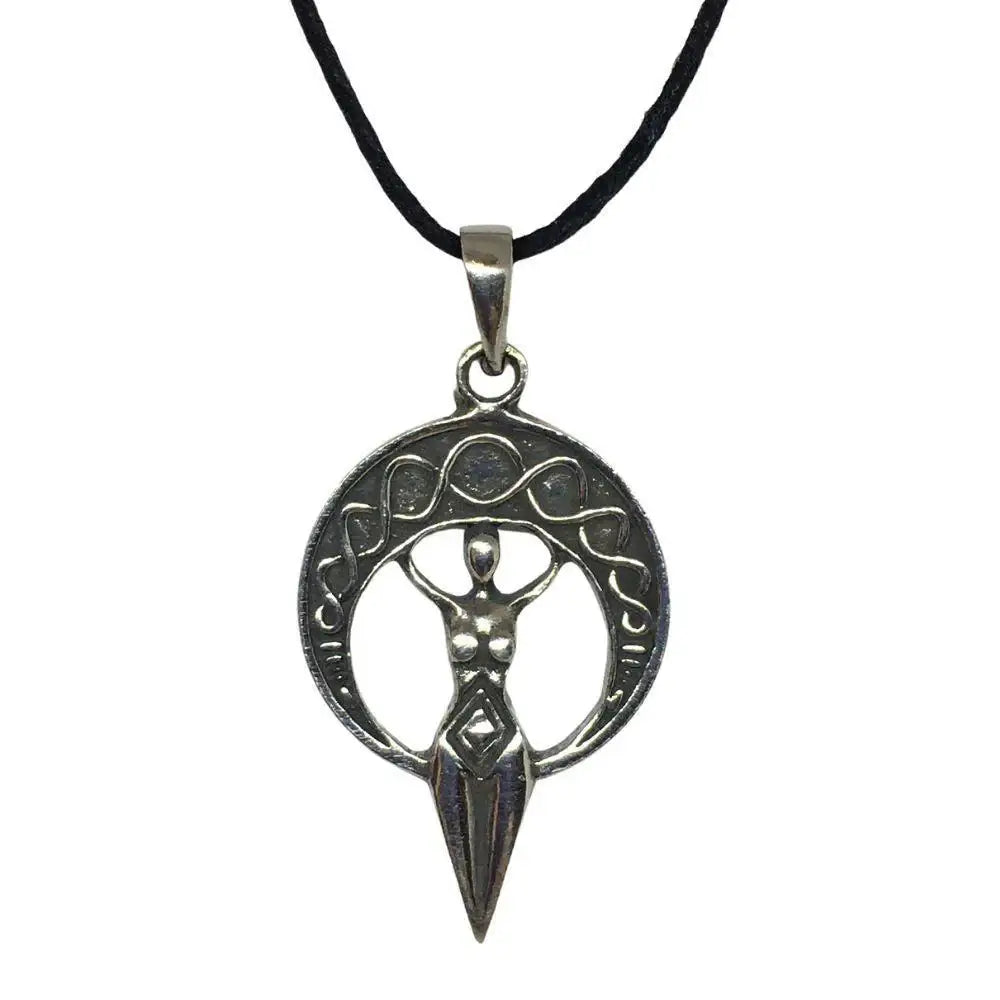
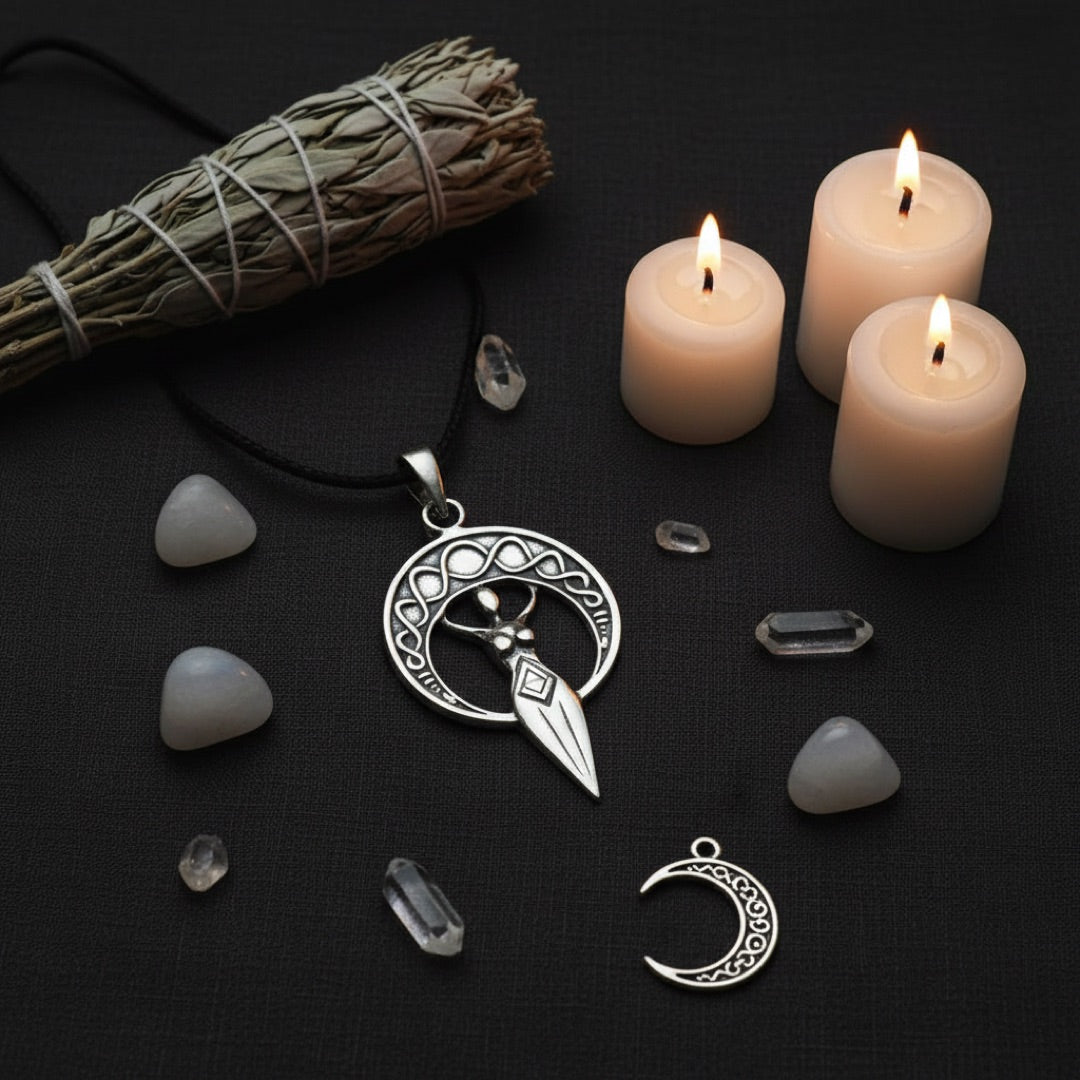
A Moon Goddess Pendant in Pewter
This moon goddess pendant depicts a female figure standing within an open crescent, her arms raised toward a triple moon symbol above. The design combines three distinct elements of goddess iconography: the crescent moon as a symbol of cyclical time; the triple moon as an emblem of the threefold goddess; and the orans posture — arms raised, palms open — one of the oldest known gestures of prayer and invocation. A diamond or lozenge form marks the figure's midsection, a shape that appears in prehistoric figurative art in connection with generative and earth-centered symbolism. The frame is bordered with Celtic interlace knotwork. See also the Hecate Triple Moon Goddess Pendant depicting similar iconography.
- Material: Fine pewter, lead-free
- Size: 1.25 in H x 7/8 in W x 1/16 in thick
- Cord: 33 in black cord
- Includes: Legend Card
- Collection: Earth Mother Pendant Collection
- Product Number: ETM-109
The Triple Moon Symbol
The three circles worked into the knotwork at the top of the pendant represent the triple moon: waxing crescent, full moon, and waning crescent. As a specific emblem, the triple moon is largely a 20th-century formulation, developed within the Neopagan and Wiccan movements that emerged in mid-century Britain. Its conceptual roots draw on older material: the three phases of the moon as a metaphor for three phases of life (Maiden, Mother, Crone), and the broader tradition of triple goddess figures in ancient religion — Hecate in Greek cosmology, the Morrigan in Irish mythology, the three Norns of Norse tradition. The emblem as it appears today — three moons in sequence — traces to the modern Goddess movement rather than to a single ancient source.
The Goddess Figure and the Orans Posture
The central figure raises both arms above her head in the orans posture — from the Latin for "praying." The gesture appears across millennia and across cultures: in ancient Egyptian ritual imagery, in early Christian catacomb paintings, in Minoan figurines, and in prehistoric clay sculpture. It is a posture of openness and orientation, reaching toward something beyond the immediate. In this pendant, the figure reaches toward the triple moon directly above her, framing her as someone in an active relationship with the cycle it represents rather than simply beneath it.
Knotwork Border | Triple Moon Necklace Pendant
The interlace pattern bordering the upper crescent draws on the Celtic knotwork tradition — a visual vocabulary developed in early medieval insular art from Ireland, Scotland, and Britain, roughly the 5th through 9th centuries CE. The unbroken, continuous lines of knotwork appeared in illuminated manuscripts, metalwork, and carved stone. In contemporary goddess jewelry and Neopagan iconography, knotwork functions as a visual symbol of continuity and interconnection. Its pairing with goddess imagery here reflects the tendency in modern Pagan practice to draw on Celtic visual culture as a complement to goddess symbolism, even when the two traditions have separate historical origins.
For More Reading
FAQs
Got a question? We are here to answer