


White Happy Buddha Statue - Budai Reclining on His Sack, Antique White, 2.5 in
White Happy Buddha Statue - Budai Reclining on His Sack, Antique White, 2.5 in
SKU:O-088S
In stock
Couldn't load pickup availability
A White Happy Buddha Statue at Ease on His Sack
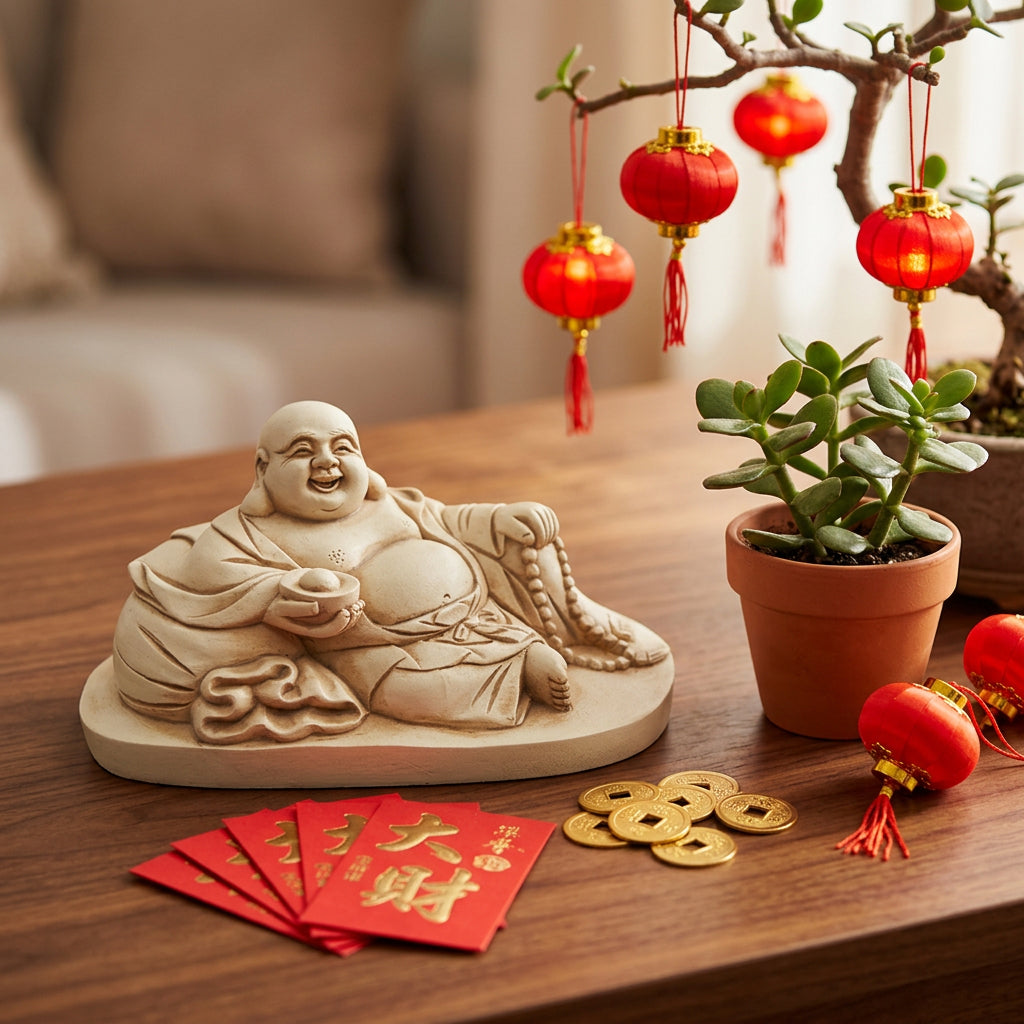
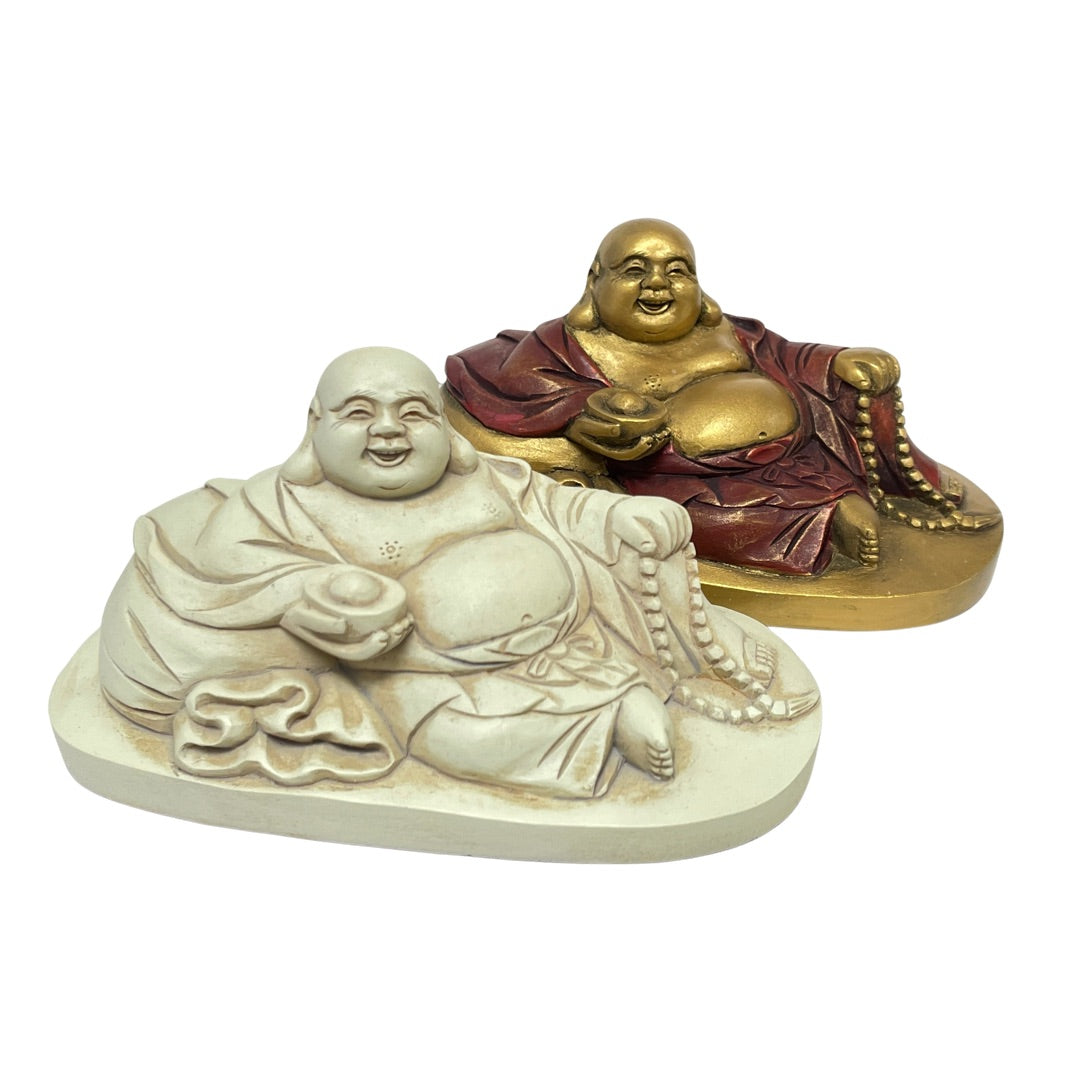
This antique white Happy Buddha statue shows Budai on one elbow. His cloth sack is banked behind him like a cushion. His eyes crinkle shut and his open mouth shows his teeth. The antique white finish is cream with tan shading in the recesses, like aged ivory or pale stone. He holds a small ingot in one hand. A strand of faceted prayer beads hangs from the other and spills onto the base.
Product Details
- Material: Resin
- Finish: Antique White
- Dimensions: 2.5 in H x 4.5 in L x 2 in D
- Weight: 0.7 lbs
- Collection: Asian Art
- Product number: O-088S
Contentment as a Pose
Many Budai figures sit upright. A reclining pose is rarer and stresses ease. Japanese Zen painters, including Hakuin Ekaku, show him meditating with his sack as a cushion. This laughing Buddha statue takes that idea literally, with the sack as both pillow and treasure.
From Grimace to Laugh
An 1088 stone rubbing at the Princeton University Art Museum shows Budai with a downcast, grim face. The museum suggests it may be an early image, made before his happy persona became standard. The Horniman Museum in London holds a soapstone Budai about 4 in high, smiling, with long earlobes. This Happy Buddha statue carries that carved-stone tradition forward in resin refined with a hand-painted antique finish.
The Monk Behind the Smile
Budai was a wandering Chan monk of the Later Liang dynasty, remembered as Qieci. A note dated 28 March 917 names him an incarnation of Maitreya, the future Buddha. In the West he is often mistaken for Gautama Buddha. In Chan tradition he is not. A laughing Buddha statue of this kind shows the monk, not the founder.
For a warmer look, this reclining Budai figurine is also made as a gold and red Budai. Its gilt tones recall Ming dynasty gilt-bronze figures. See more in our Asian Art Collection.
Placement and Care
At 4.5 in long and 0.7 lbs, this reclining Hotei figurine suits a shelf, windowsill, or desk. Dust it with a soft cloth. The pale finish shows grime, so keep this white Happy Buddha statue away from damp hands and harsh scrubbing.
Chan Teachers and Their Eccentric Saints
In the 12th century, Chan masters Dahui Zonggao and Hongzhi Zhengjue helped fold local legends into the Chan tradition. Likable, odd figures like Budai drew people of every background. A reclining Budai figurine like this one descends from that choice. Any Hotei figurine in Japan carries the same lineage. A white Happy Buddha statue is a modern descendant.
For More Reading from the Web
- Study the early grim-faced Budai on an 1088 stone rubbing. Budai with Staff and Bag - Princeton University Art Museum
- Compare a palm-sized soapstone Budai in London. Budai Heshang - Horniman Museum and Gardens
- Follow the monk from Chan legend to Zen painting. Budai - Wikipedia



FAQs
Got a question? We are here to answer