

Nike of Samothrace Statue | Hellenistic Woman with Wings
Nike of Samothrace Statue | Hellenistic Woman with Wings
SKU:GRE10
In stock
Couldn't load pickup availability
Alighting on the Prow: The Winged Victory Statue
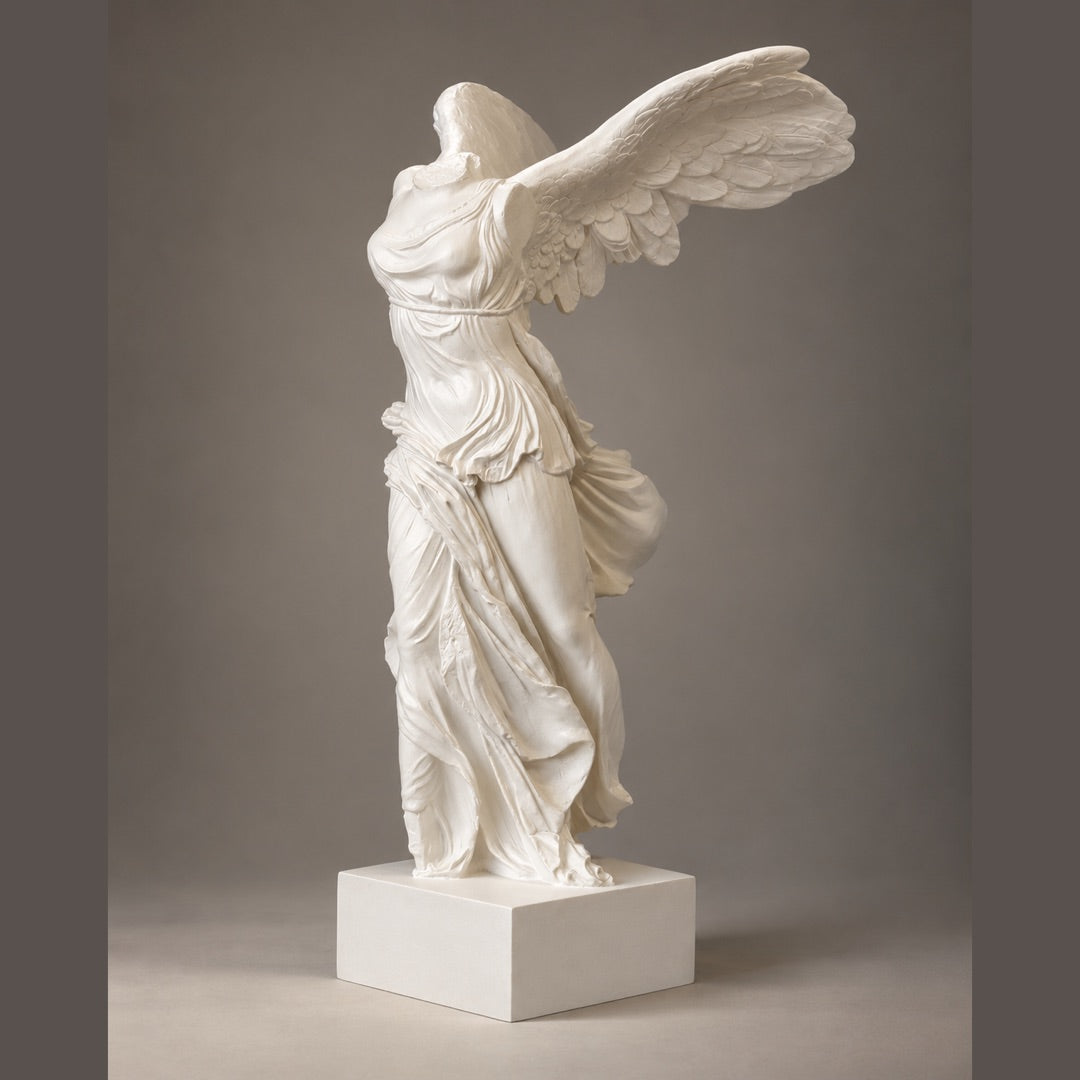
This Winged Victory statue catches the instant Nike lands on a ship, her drapery blown flat by imagined wind. It stands 10.5 in high in antique white resin.
The Nike of Samothrace replica brings a monumental marble to desk scale. The size includes its base.
Product Details
- Material: Resin with an antique white finish
- Dimensions: 10.5 in H x 6 in W x 6.75 in D, including base
- Weight: 2.5 lbs
- Collection: Parastone Museum Collection
- Style: Louvre Victory sculpture
- Product number: GRE10
A Victory Won at Sea
The marble original is dated about 200 to 190 BC, in the Hellenistic period. It once stood in the Sanctuary of the Great Gods on Samothrace.
Nike appears just landed on the prow of a warship. The monument likely marked a naval victory.
No dedication was found, so the donor remains unknown. Scholars have proposed Rhodes, partly because the ship base is Rhodian marble.
Drapery That Moves
Wind presses the fabric against the body and sends it billowing around her. This virtuosic carving makes the Hellenistic winged goddess statue a masterpiece.
The marble looks white today, but Greek sculpture was often painted. Find more in our Parastone Museum Replicas.
Discovery and the Louvre
Charles Champoiseau found the statue on Samothrace on April 13, 1863. It has stood at the top of the Daru staircase in the Louvre since 1884.
The right wing was missing when found and was later reconstructed. The Nike of Samothrace replica echoes that drama.
Display and Care
At 2.5 lbs, the Winged Victory statue suits a shelf, mantel, or desk. Dust this Hellenistic winged goddess statue with a soft dry cloth. Keep it away from damp air.
Hellenistic Sculpture in Brief
The Hellenistic age followed Alexander the Great. Sculptors favored motion, emotion, and richly carved drapery. A Louvre Victory sculpture shows all three. This Winged Victory statue brings them home.
For More Reading from the Web
- Read about the monument's discovery in 1863, its ship-prow base, and the debate over who dedicated it. Winged Victory of Samothrace - Wikipedia
FAQs
Got a question? We are here to answer